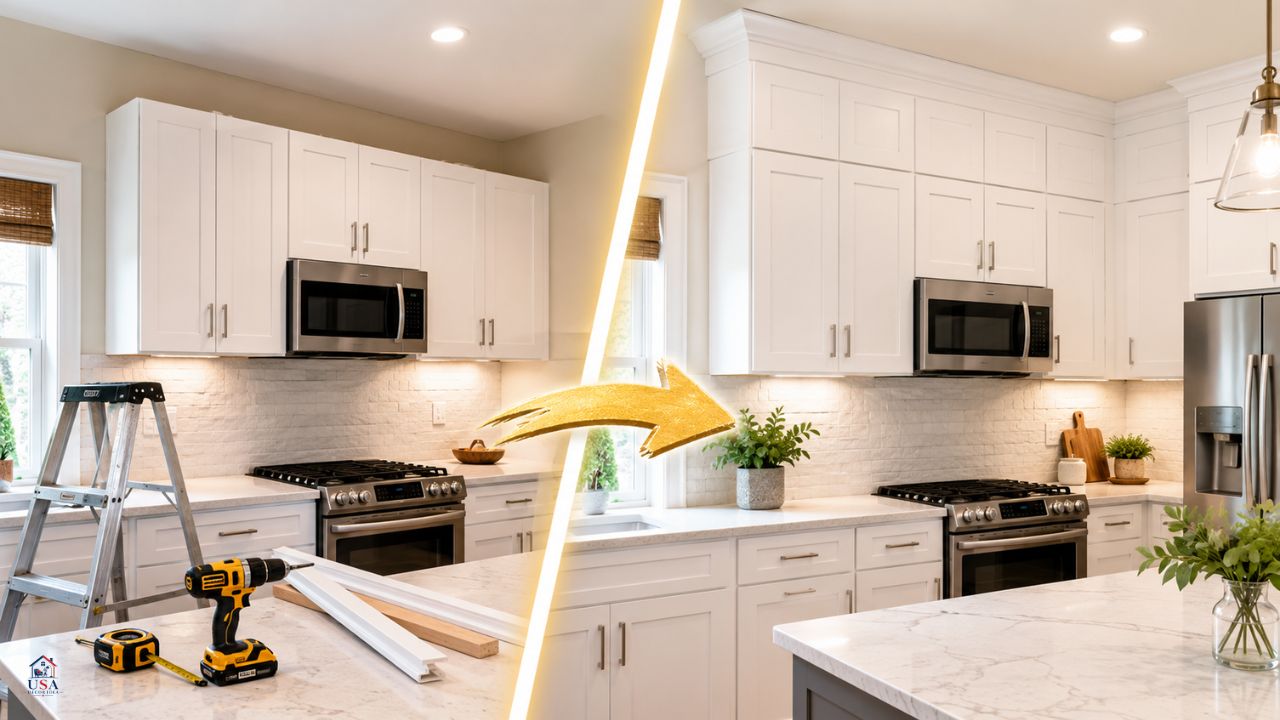
That awkward dusty gap above your cabinets can make even a beautiful kitchen feel unfinished. Extending kitchen cabinets to ceiling is one of those upgrades that instantly makes a room look taller, cleaner, and more custom.
It matters because the space above kitchen cabinets is often wasted. It collects grease, dust, baskets, faux plants, and random serving trays nobody wants to move. When you take the cabinets upward, you gain storage, visual height, and a built-in look without always needing a full kitchen remodel.
The good news? You do not always have to rip out your existing cabinetry. Depending on your layout, ceiling height, budget, and cabinet style, you may be able to use cabinet toppers, stacked boxes, small upper cabinets, glass-front doors, trim, crown molding, or custom filler panels.
This guide walks through how the project works, when it makes sense, what options look best, and how to avoid the mistakes that make cabinet extensions look like an afterthought.
Why Extending Kitchen Cabinets to Ceiling Makes Such a Big Difference
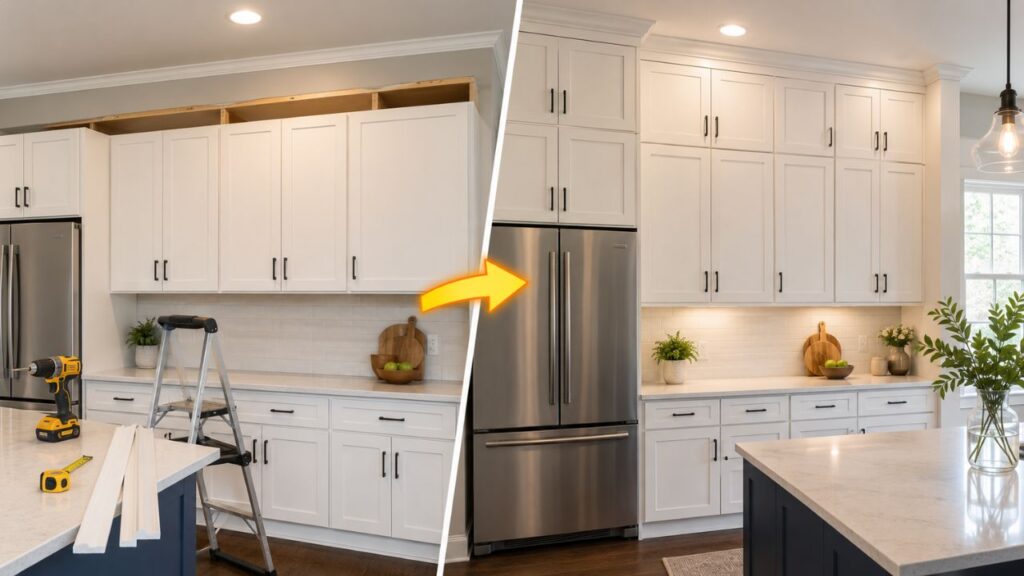
Extending kitchen cabinets to ceiling changes the way your kitchen feels before anyone notices the details. Your eye follows the cabinets upward, which makes the ceiling feel higher and the room more intentional.
The biggest benefit is visual continuity. Standard upper cabinets often stop 12 to 18 inches below the ceiling, leaving a shadowy gap. Closing that gap makes the wall look finished from counter to ceiling.
It can also create useful storage. The highest cabinets are not ideal for everyday plates or coffee mugs, but they are perfect for seasonal dishes, holiday trays, cake stands, extra glassware, picnic supplies, and appliances you use only a few times a year.
There is also a cleaning benefit. Open space above cabinets tends to collect dust and cooking residue. Once you enclose space above kitchen cabinets, there is less exposed surface to maintain.
Best Ways to Extend Kitchen Cabinets to the Ceiling
There are several ways to handle extending kitchen cabinets to ceiling, and the right choice depends on your existing cabinets, ceiling height, and budget.
Add Small Cabinets Above Existing Cabinets
One popular approach is adding small cabinets above existing cabinets. This creates a stacked cabinet look and can feel very high-end, especially when the upper boxes line up with the cabinet doors below.
This works especially well with shaker kitchen cabinets to ceiling, white kitchen cabinets to ceiling, and kitchens where the existing cabinet boxes are sturdy and level. You can choose solid doors for hidden storage or glass doors for display.
Use Cabinet Toppers
Kitchen cabinet toppers are decorative or functional additions placed above existing cabinets. They can be simple box extensions, framed cubbies, glass-front units, or trim-built structures.
Adding toppers to kitchen cabinets is often easier than replacing all the upper cabinetry. Toppers can be painted to match your cabinets so the whole wall looks like one continuous unit.
Build Boxes Above the Cabinets
Another common solution is building boxes above kitchen cabinets. These are usually wood-framed or plywood boxes that fill the empty space and are finished with paint, trim, or cabinet doors.
This is a practical option when you want the look of kitchen cabinets that go to ceiling without installing real working cabinets all the way up.
Add Crown Molding and Filler Panels
For smaller gaps, you may not need full cabinet extensions. Crown molding, stacked trim, and flat filler panels can close the gap visually.
This works best when the gap above cabinets is shallow. If the space is large, trim alone may look heavy or awkward.
Planning Before You Start
Before extending kitchen cabinets to ceiling, measure carefully. Older homes often have ceilings that are not perfectly level, and even a small slope can become obvious when cabinets run all the way upward.
Start by measuring the height from the top of your current upper cabinets to the ceiling in several places. Measure at the left side, middle, and right side of each cabinet run.
Also check cabinet depth. New upper boxes or toppers should usually match the depth of the existing upper cabinets. If they are too deep or too shallow, the finished project may look mismatched.
You also need to consider doors. If you add cabinets above kitchen cabinets, the upper doors should align with the lower doors when possible. Good alignment makes the entire cabinet wall look designed, not patched together.
DIY or Hire a Professional?
A confident DIYer can handle diy extend kitchen cabinets to ceiling projects if the plan involves simple boxes, trim, painting, and basic carpentry. But if you are moving cabinets, changing electrical, installing heavy wall cabinets, or dealing with uneven ceilings, a professional may be worth it.
Good DIY Projects
You may be able to DIY:
- cabinet extension to ceiling with simple framed boxes
- adding height to kitchen cabinets using plywood and trim
- fill gap above kitchen cabinets with panels
- cabinet toppers with decorative molding
- cubbies above kitchen cabinets for display storage
Projects That May Need a Pro
Consider hiring help if you want to:
- raise cabinets to ceiling
- move cabinets up to ceiling
- install heavy upper kitchen cabinets
- add electrical lighting inside glass cabinets
- modify soffits, plumbing, vents, or structural framing
The higher the cabinets go, the more important secure fastening becomes. Upper cabinet boxes must be attached to studs or proper blocking, not just drywall.
How to Make Existing Cabinets Look Taller
Many homeowners search for how to make kitchen cabinets look taller because they want the look without replacing everything. The trick is to make the extension feel like part of the original cabinet design.
Paint is a big part of that. If your extensions, trim, and doors are painted the same color as your existing cabinets, the transition becomes much less noticeable.
Door style also matters. If your current doors are shaker, use shaker-style doors above. If your cabinets are slab, keep the upper extension simple and flat.
Trim can hide seams. Crown molding at the ceiling and a small trim band between the old cabinets and new boxes can make the entire structure feel intentional.
Cabinet Extension Ideas That Look Custom
The best kitchen cabinet extension ideas depend on whether you want storage, display, or a clean architectural look.
Glass Cabinets Above Kitchen Cabinets
Adding glass cabinets above kitchen cabinets can make the kitchen feel lighter. This works well if the upper cabinets are used for pretty dishes, vases, glassware, or decorative objects.
Glass fronts are especially attractive in kitchens with high ceilings because they break up a tall wall of solid cabinet doors.
Closed Storage Cabinets
Closed doors are best if you want practical storage. This is ideal for above kitchen cabinet storage, especially for items you do not want visible.
Open Cubbies
Cubbies above kitchen cabinets can work in casual kitchens, farmhouse kitchens, and spaces where you want baskets or display pieces. Just remember that open cubbies still need dusting.
Faux Cabinet Extensions
If you do not need storage, faux boxes can create the look of kitchen cabinets up to the ceiling for less money. These are often built with plywood, MDF, or trim boards.
Step-by-Step: How to Extend Kitchen Cabinets to the Ceiling
Here is a practical overview of how to extend kitchen cabinets to the ceiling without replacing every upper cabinet.
1. Measure the Space
Measure the distance from the top of the cabinets to the ceiling. Check every cabinet section because ceilings and cabinet tops may not be level.
2. Decide on Storage or Decorative Fill
Choose whether you want working cabinets, open cubbies, closed boxes, glass toppers, or simple filler panels.
3. Match Cabinet Style
Try to match the existing door profile, cabinet depth, paint color, and trim style. This helps the new upper section blend with the old cabinetry.
4. Build or Install Upper Boxes
You can use stock cabinets, custom cabinet boxes, or built extensions. Secure everything properly to wall studs or blocking.
5. Add Trim and Crown Molding
Trim hides small gaps and makes the project look finished. Crown molding is especially helpful where the cabinets meet the ceiling.
6. Caulk, Prime, and Paint
Caulk seams, fill nail holes, sand rough spots, prime raw wood, and paint everything for a seamless result.
Common Mistakes to Avoid
One mistake is ignoring ceiling unevenness. When cabinets touch the ceiling, every gap shows. Scribing trim or using crown molding helps hide small irregularities.
Another mistake is making the upper boxes look too small. Tiny boxes above tall cabinets can look awkward unless they are carefully proportioned.
A third mistake is mixing too many styles. If the lower cabinets are traditional and the toppers are modern, the extension may look disconnected.
Also avoid overloading high cabinets with heavy items. Store lighter, less-used things up high and keep daily essentials within easy reach.
What About Kitchens With High Ceilings?
High ceiling kitchen cabinets can be beautiful, but they need balance. In a kitchen with 10-foot or higher ceilings, taking cabinets all the way up may require very tall stacked cabinetry.
In these rooms, you might use a two-tier cabinet design: standard upper cabinets below and smaller display cabinets above. Another option is to stop below the ceiling and use a strong crown detail, especially if the ceiling is extremely high.
For very tall spaces, ceiling to counter kitchen cabinets or pantry-style towers may look better than trying to stretch every wall cabinet upward.
Related Project Terms and Ideas
Homeowners describe this upgrade in many ways, including extend cabinets to ceiling, extending cabinets to ceiling, extend kitchen cabinets to ceiling, kitchen cabinets to ceiling, kitchen cabinets to the ceiling, taking cabinets to the ceiling, upper cabinets to ceiling, wall cabinets to ceiling, wall to ceiling kitchen cabinets, kitchen cabinets up to ceiling, kitchen cabinets up to the ceiling, up to ceiling kitchen cabinets, to ceiling kitchen cabinets, ceiling kitchen cabinets, ceiling cabinets, ceiling cabinet, cabinet to ceiling, cabinets to ceiling, cabinets to the ceiling, cabinets up to ceiling, and kitchen with cabinets to ceiling.
Other common project descriptions include how to extend cabinets to ceiling, how to extend kitchen cabinets, how to extend kitchen cabinets to ceiling, how to extend kitchen cabinets to the ceiling, how to make cabinets go to ceiling, make cabinets go to ceiling, how to take cabinets to the ceiling, how to add height to kitchen cabinets, add height to kitchen cabinets, how to make cabinets taller, how to make kitchen cabinets taller, how to make a cabinet taller, making kitchen cabinets taller, and make kitchen cabinets taller.
For storage-focused designs, people often talk about add cabinets above kitchen cabinets, adding cabinets above kitchen cabinets, adding cabinets on top of existing cabinets, adding cabinets above existing cabinets, adding cabinets to ceiling, add kitchen cabinets to ceiling, adding kitchen cabinets to ceiling, adding upper cabinets, add upper cabinets, adding upper cabinets to existing kitchen, adding upper cabinets to existing cabinets, adding top cabinets in kitchen, adding kitchen cabinets, adding kitchen cabinets to existing cabinets, adding cabinets to existing kitchen, adding a cabinet to existing kitchen, how to add cabinets to existing kitchen, how to add cabinets above kitchen cabinets, how to add cabinets on top of existing cabinets, how to add more cabinets in kitchen, and can you add cabinets on top of existing.
If the goal is filling or enclosing the open gap, useful phrases include fill space above cabinets, fill gap above kitchen cabinets, space above kitchen cabinets, empty space above kitchen cabinets, gap above kitchen cabinets, enclose space above kitchen cabinets, space above kitchen cabinets ideas, how to use space above kitchen cabinets, above cabinet storage, above kitchen cabinet storage, above cabinet cabinets, cabinets above cabinets, cabinets above kitchen cabinets, small cabinets above kitchen cabinets, small upper cabinets, short upper cabinets, top of kitchen cabinets, top cupboard, top cupboard, and top of kitchen cabinets.
For construction language, related terms include cabinet extensions, cabinet extension, kitchen cabinet extension, kitchen cabinet extension to ceiling, kitchen cabinet extensions, cabinet extenders, kitchen cabinet extenders, kitchen cabinet extenders to ceiling, extended kitchen cabinets, extending kitchen cabinets, extending upper kitchen cabinets, extending cabinets to ceiling diy, extend cabinets to ceiling diy, extend kitchen cabinets to ceiling diy, diy cabinets to ceiling, diy upper cabinets to ceiling, diy extend cabinets to ceiling, building upper cabinet boxes, building upper kitchen cabinets, building boxes above kitchen cabinets, upper cabinet boxes, box above cabinets, boxes above kitchen cabinets, how to build boxes above kitchen cabinets, how to build upper kitchen cabinets, how to build upper kitchen cabinets, and how to make kitchen cabinets.
Style and layout phrases include shaker cabinets to ceiling, shaker kitchen cabinets to ceiling, white kitchen cabinets to ceiling, upper kitchen cabinets, upper kitchen cabinet, kitchen upper cabinet, upper cabinet, upper kitchen cabinets ideas, kitchen cupboards to ceiling, kitchen units to ceiling, kitchens with cabinets to ceiling, ceiling to floor kitchen cabinets, drop ceiling above kitchen cabinets, tall kitchen cabinets to ceiling, extending kitchen cabinets into dining room, kitchen cabinet extension ideas, ideas for top of kitchen cabinets, kitchen cabinet toppers, cabinet toppers, adding storage above kitchen cabinets, adding glass cabinets above kitchen cabinets, raise cabinets to ceiling, raising kitchen cabinets to ceiling, raising cabinets to ceiling, raising cabinets, how to raise kitchen cabinets, moving kitchen cabinets up, move cabinets up to ceiling, how to move cabinets up, extending cabinets to ceiling before and after, and extending kitchen cabinets to ceiling before and after.
Cost Factors to Consider
The cost of extending kitchen cabinets to ceiling depends on materials, labor, cabinet style, and whether you want real storage or only a decorative enclosure.
Simple filler panels and trim are usually the most budget-friendly. Built boxes with doors cost more. Custom stacked cabinets, glass doors, lighting, and professional finishing cost the most.
Painting also affects the budget. If your cabinets are already painted, matching the color may be simple. If they are stained wood, matching the grain and finish can be harder.
Hardware can add cost too. Upper cabinet doors need hinges, knobs, pulls, and sometimes magnetic catches. If you want the new upper doors to match the existing ones, factor that in early.
Is This Upgrade Worth It?
For many kitchens, yes. Extending kitchen cabinets to ceiling can make an older kitchen feel newer without changing the whole layout.
It is especially worth considering if your cabinets are in good condition, your layout works, and the biggest issue is that the upper wall feels unfinished. It can also be a smart middle-ground project when a full remodel is not realistic.
However, it may not be worth it if your current cabinets are damaged, poorly installed, or not worth building onto. In that case, replacing the upper cabinets or planning a full cabinet redesign may be better.
FAQ
Can you extend existing kitchen cabinets to the ceiling?
Yes. Existing cabinets can often be extended with stacked cabinets, custom boxes, filler panels, crown molding, or decorative toppers. The best method depends on cabinet condition and ceiling height.
Is extending kitchen cabinets to ceiling a DIY project?
It can be. Simple trim, filler boxes, and lightweight toppers are realistic for experienced DIYers. Heavy cabinets, electrical work, uneven ceilings, or structural changes are better handled by a professional.
What can I put above kitchen cabinets instead of decor?
You can add closed storage, glass cabinets, open cubbies, faux cabinet boxes, crown molding, or panels that fully enclose the gap.
Do cabinets to the ceiling make a kitchen look bigger?
Often, yes. Cabinets that run upward draw the eye vertically, which can make the room feel taller and more finished.
Are ceiling-height cabinets hard to reach?
The top shelves are harder to reach, so they are best for rarely used items. Keep everyday dishes, glasses, and pantry goods in lower, easier-to-access cabinets.
Can I add cabinets on top of existing cabinets?
Yes, if the existing cabinets are secure, level, and strong enough to support the design. The added cabinets should also be properly fastened to the wall.
What is the best style for cabinet extensions?
The best style usually matches your existing cabinetry. Shaker doors, flat panels, glass doors, and simple trim are all popular options.
How do I make cabinet extensions look built-in?
Match the cabinet color, align door widths, use consistent trim, caulk seams carefully, and finish the top with crown molding or a clean ceiling detail.
Conclusion
Extending kitchen cabinets to ceiling is a powerful way to turn an ordinary kitchen wall into something that looks intentional, custom, and complete. Whether you use cabinet toppers, stacked cabinets, filler boxes, glass fronts, or crown molding, the goal is the same: remove the awkward gap and create a cleaner, taller, more useful kitchen.
The best results come from careful measuring, matching the existing cabinet style, and finishing every seam like it was always meant to be there. Done well, this upgrade adds storage, reduces dust, and gives your kitchen that polished built-in look people notice immediately.