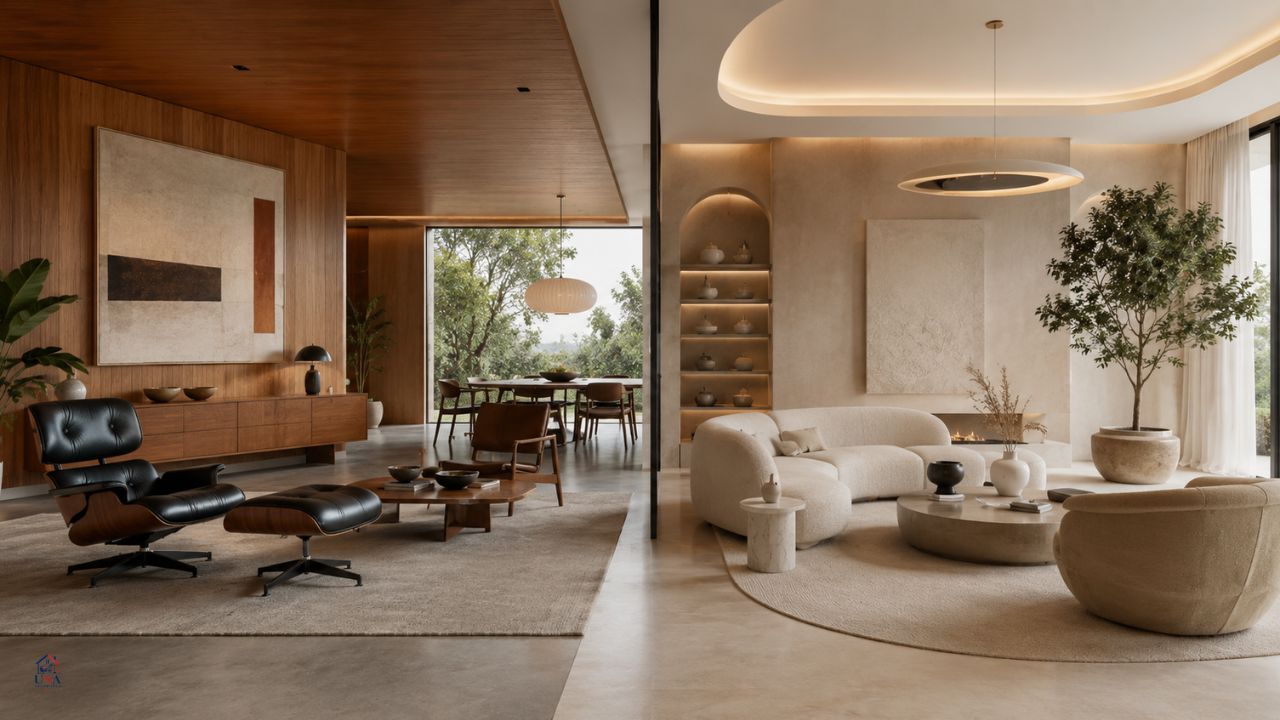
Walk into any furniture store or browse any home décor website and you will almost always see two words used interchangeably: contemporary vs modern. Most people assume they mean the same thing. After all, both words sound like they describe something sleek, clean, and of the current era. But here is the truth — these two terms are actually quite different, and confusing them could leave you with a home that looks nothing like what you imagined.
If you have ever typed “modern vs contemporary” into a search bar at 11 PM while trying to figure out why that sofa you love is labeled differently on two different websites, you are not alone. This is one of the most commonly misunderstood distinctions in the world of interior design and architecture.
This guide is going to clear all of that up. Whether you are redesigning a living room, building from scratch, or just a curious mind who wants to understand design language better, you will walk away from this article with a crystal-clear understanding of contemporary design, modern design, and everything that sits between them.
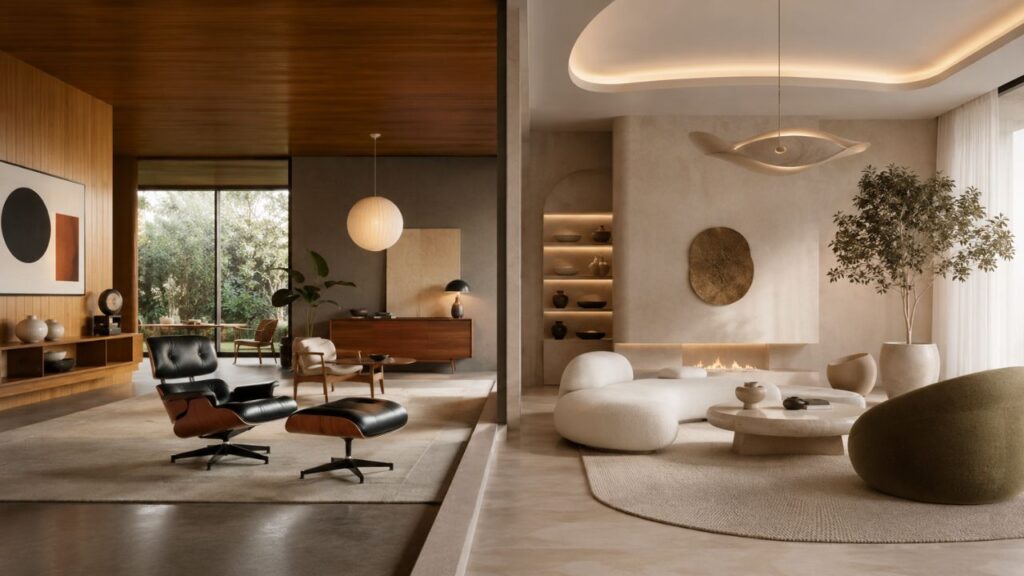
Understanding the Basics: What Does “Contemporary” and “Modern” Actually Mean?
Before we compare the two, it helps to understand each one on its own terms. The confusion between contemporary and modern is not just a casual mix-up — it stems from the fact that both words, in everyday language, mean “of the present time.” In design, however, they carry entirely different historical and aesthetic meanings.
What Is Modern Design?
Modern design — also called modernist design or the modern design style — refers to a specific design movement that emerged in the late 19th century and ran through most of the 20th century, roughly from the 1920s to the 1970s. It was a response to the ornate, heavily decorated Victorian era. Modernists stripped everything back to its bare bones. The philosophy was simple: form follows function.
So when someone asks what is modern design, the accurate answer is that it is a fixed, historical design movement defined by clean lines, natural materials like wood and leather, open spaces, and a strict “less is more” mentality. Think Bauhaus architecture, Eames chairs, and the classic mid-century modern aesthetic. These are all examples of modern design — and none of them are “modern” in the sense that they are happening right now.
The modern design meaning centers on neutrality, restraint, and timelessness. Colors are typically warm and earthy — think tans, browns, ochres, and warm whites. Materials favor natural textures. Ornamentation is almost entirely absent. It is a precise, defined style frozen at a particular moment in design history.
What Is Contemporary Design?
Here is where things get interesting. What is contemporary design? Unlike modern design, contemporary design does not refer to a fixed point in history. By definition, contemporary design means whatever is happening right now — this very moment. The contemporary design definition is inherently fluid and ever-evolving.
The contemporary design meaning shifts with the times. In the 1970s, contemporary design looked very different from what it looks like today. What makes something “contemporary” is not a specific aesthetic — it is its relationship to the current moment in time. However, in practice, when designers and homeowners today use the term “contemporary design style“, they typically refer to a look that is clean, sophisticated, current, and slightly edgy — borrowing from multiple movements rather than adhering strictly to one.
Today’s contemporary interiors tend to feature bold architectural shapes, neutral color palettes with dramatic pops of color, mixed textures, and sustainable or innovative materials. It is design that feels of-the-moment without being trendy or throwaway.
Contemporary vs Modern Design: The Core Differences Explained
Now that we have laid the groundwork, let us dig into the real difference between modern and contemporary design — because understanding this distinction changes how you approach any room or building project.
Time Period vs. Living Trend
The most fundamental difference between contemporary and modern is this: modern is historical, and contemporary is current. Modern design is a movement that has already happened. Contemporary design is always happening. This is the most important thing to remember when comparing contemporary vs modern design.
Color Palettes
Color is one of the clearest ways to distinguish between the two styles at a glance.
Modern design favors warm, earthy tones — think chocolate brown, caramel, warm beige, olive green, and rust. These colors echo the natural materials the modernists loved.
Contemporary design leans toward cooler, more neutral tones — whites, grays, blacks — often punctuated by a single bold accent color. The palette is typically cleaner and more minimal, with high contrast being a signature element.
Materials and Textures
In modern design, you will see a lot of natural wood, stone, leather, and wool. Materials are celebrated for their natural qualities. In contemporary interior design, materials are more varied and experimental. Glass, polished concrete, lacquered surfaces, recycled materials, and mixed metals are all fair game. The contemporary design movement embraces innovation and often incorporates sustainable or eco-friendly materials.
Lines and Shapes
Modern design is known for its horizontal lines and organic curves — furniture that hugs the ground and flows naturally. Contemporary design plays with bolder, more dramatic geometric forms. Sharp angles, curved walls, unexpected shapes, and sculptural furniture are all hallmarks of contemporary interiors.
Furniture
When comparing contemporary vs modern furniture, the distinction becomes tactile. Modern furniture (think Eames lounges, Barcelona chairs, Tulip tables) has iconic, fixed designs that are still manufactured and sold today. Contemporary furniture is more fluid — it might include modular sofas, cantilevered shelves, or chairs with unexpected silhouettes. The contemporary furniture meaning reflects a piece that feels relevant to today’s lifestyle, often prioritizing comfort alongside aesthetics.
Quick Comparison Table
| Characteristic | Modern Design | Contemporary Design |
| Time Period | 1920s–1970s | Present day / evolving |
| Color Palette | Warm, earthy tones | Cool neutrals + bold accents |
| Materials | Wood, leather, stone | Glass, concrete, mixed metals |
| Lines | Horizontal, organic curves | Bold geometric, sharp angles |
| Furniture | Iconic fixed designs | Fluid, experimental |
| Feel | Warm, grounded, timeless | Sleek, sophisticated, current |
Modern vs Contemporary Interior Design: Room by Room
Understanding the difference between modern and contemporary interior design becomes much more practical when you apply it room by room. Let us walk through the home and see how these styles manifest in real spaces.
Living Room
A modern living room is anchored by a low-profile sofa in a warm neutral tone, a natural wood coffee table, maybe an Arco floor lamp, and a Persian rug in muted tones. Everything feels grounded and deliberate. A contemporary interior design living room, on the other hand, might feature a sectional in charcoal gray, a glass-and-metal coffee table, recessed lighting, and a single oversized abstract painting that dominates one wall. The energy is more dynamic, more urban.
Kitchen
Modern kitchens favor warm wood cabinetry, open shelving, and natural stone countertops. Contemporary kitchens push toward handleless cabinetry, waterfall-edge quartz counters, matte black fixtures, and integrated smart appliances. The contemporary kitchen design is as much about technology and functionality as it is about aesthetics.
Bedroom
In a modern bedroom, you would find a platform bed in walnut wood, linen bedding in warm white or earthy tones, and minimal décor — maybe a single piece of pottery and a reading lamp. Contemporary bedrooms often incorporate more architectural drama: an upholstered statement headboard, layered lighting, geometric nightstands, and textural contrast between smooth and rough surfaces.
Bathroom
Modern bathrooms feature clean white subway tiles, brass or copper fixtures, and freestanding tubs with classic silhouettes. Contemporary bathrooms embrace large-format tiles, floating vanities, matte black or brushed nickel hardware, and frameless glass shower enclosures. The contemporary style is less referential and more sculptural.
What Is Contemporary Interior Design? A Deeper Dive
Since “contemporary interior design” is a term you will encounter constantly in real estate listings, interior design portfolios, and furniture catalogs, it deserves its own focused exploration.
When people ask what is contemporary interior design, they are usually trying to understand what makes a space feel fresh, current, and refined without being cold or sterile. The answer lies in a few core principles.
Principle 1: Simplicity With Depth
Contemporary interiors strip away clutter, but they are not empty. Every element is chosen deliberately, and textures, materials, and form create visual interest in place of decorative knick-knacks. A single sculptural vase, a richly textured throw, a statement light fixture — these do the heavy lifting.
Principle 2: Neutral Foundations, Bold Accents
The contemporary design meaning in practice often comes down to this formula: build a neutral foundation, then introduce drama through carefully chosen accents. Black and white with a single jolt of deep teal. Gray with warm gold hardware. The restraint makes the accents hit harder.
Principle 3: Embracing Innovation
Contemporary design is not afraid of new materials, new technologies, and new ideas. Smart home integration, sustainable building materials, 3D-printed furniture, and bio-inspired design are all finding their way into contemporary interiors. This openness to innovation is central to the contemporary design movement.
Principle 4: Borrowed from Many
One of the defining characteristics of contemporary design is its willingness to borrow from other styles. A contemporary room might feature mid-century modern lighting, Scandinavian minimalist furniture, and industrial-style open shelving — all living together harmoniously. This eclecticism is a feature, not a bug. The contemporary design style definition is fundamentally inclusive.
The Contemporary Design Movement: A Brief History
While contemporary design resists being pinned to one era, the contemporary design movement as we know it today really began gaining shape in the late 20th century, particularly from the 1970s onward as modernism started to feel dated and the postmodern movement opened the door to experimentation and eclecticism.
By the 1990s and into the 2000s, contemporary design had become a distinct visual language — shaped by globalization, digital technology, environmental consciousness, and a blending of cultural influences from around the world. Today, contemporary design reflects our era’s values: sustainability, multiculturalism, function, and a deep awareness of the world around us.
Some of the key influences on today’s contemporary design landscape include Scandinavian minimalism, Japanese wabi-sabi philosophy, industrial design, biophilic design principles, and even digital aesthetics drawn from screen culture and technology.
Modern Contemporary Interior Design: When the Two Worlds Merge
Here is a term that trips up even design-savvy homeowners: modern contemporary interior design. Is it a blend of the two? Yes, and intentionally so.
The modern contemporary style takes the best of both worlds. From modern design, it borrows the warmth of natural materials, the clean lines, and the timeless quality of well-made furniture with classic proportions. From contemporary design, it takes the current color sensibility, the bold architectural gestures, and the openness to new materials and forms.
The result is what many designers today call modern contemporary design — spaces that feel grounded but not stale, sophisticated but not cold, current but not trend-chasing. Many of the most admired homes you see in design magazines today live in this middle ground.
If you love the warmth of mid-century modern furniture but want a color palette that feels fresh and current, you are naturally drawn to modern contemporary interiors. If you are renovating a 1960s home and want to preserve its bones while making it feel alive today, modern contemporary is the sweet spot.
Characteristics of Modern Contemporary Interior Design
- Clean lines with warmth — the geometry of modernism softened by natural textures
- Neutral color base (cool gray, warm white, soft taupe) with deliberate accent colors
- A mix of natural wood alongside glass, metal, or concrete
- Iconic furniture pieces mixed with current, trend-aware accents
- Integrated technology that blends invisibly into the aesthetic
- Art and decorative elements that feel meaningful, not decorative for its own sake
Is Contemporary the Same as Modern? Clearing Up the Confusion Once and for All
“Is contemporary the same as modern?” “Are contemporary and modern the same?” “Is modern and contemporary the same?” These questions flood interior design forums constantly, and the answer is a clear no — but with an important asterisk.
In everyday language, yes, the words are often used interchangeably. A real estate agent might describe a house as “modern” when they mean it feels current and up-to-date. A furniture retailer might tag a sofa as “contemporary” when they simply mean it is not antique or traditional. In casual use, these words blur together.
In the professional world of design, architecture, and interior decoration, however, they are distinct. Modern is historical. Contemporary is current. The difference between contemporary and modern design is real, meaningful, and worth understanding — especially if you are working with a designer, shopping for furniture, or trying to create a cohesive aesthetic in your home.
What causes the most confusion is that many people today want their homes to feel “modern” — by which they mean current, fresh, and clean. But what they are actually describing is contemporary design. Real modern design, the mid-century modernist aesthetic, is actually quite specific and quite warm — it is not the cool, minimal, gray-on-gray look that many people picture when they say “modern.”
Contemporary vs Modern Design in Architecture and Homes
The contemporary vs modern home debate also plays out in architecture. Modern homes, architecturally speaking, refer to houses designed in the modernist tradition — flat or low-pitched roofs, open floor plans, large windows, and integration with the landscape. Think Frank Lloyd Wright’s Fallingwater or the Case Study Houses of post-war California.
A contemporary house interior design in 2025 might incorporate those same open floor plan principles but pair them with today’s materials, today’s technology, and today’s aesthetic sensibilities. It might have a more dramatic exterior form, incorporate passive solar design, feature reclaimed wood alongside smart glass, and integrate indoor-outdoor living in ways that reflect our current lifestyle.
The modern home vs contemporary home comparison really comes down to: is this home rooted in a specific historical movement, or does it reflect the design thinking of the present day? Both can be beautiful. Both can be timeless in their own way. The key is intention and coherence.
How to Choose Between Contemporary and Modern Design for Your Space
Now that you understand what both styles truly mean, how do you decide which one is right for your home, office, or project?
Choose Modern Design If…
- You love the warmth of natural wood, leather, and organic textures
- You are drawn to iconic, timeless furniture pieces with historical significance
- You prefer a warm, earthy color palette over cool, high-contrast tones
- You want a design that feels grounded and unchanging, not tied to current trends
- You love mid-century aesthetics and want to honor that design legacy
Choose Contemporary Design If…
- You want your space to feel current, sophisticated, and of-the-moment
- You enjoy mixing styles and borrowing from multiple design traditions
- You prefer a cooler color palette with bold, intentional accents
- You are interested in sustainable materials, new technologies, and innovative forms
- You want flexibility — contemporary design evolves, and so can your space
Choose Modern Contemporary If…
- You want the best of both — warmth and currency, timelessness and freshness
- You are working with a home that has modernist bones but needs a current refresh
- You want a style that is polished and cohesive without being rigidly faithful to one era
Contemporary Design Examples: What It Looks Like in Practice
Sometimes the best way to understand a style is to see it described in vivid detail. Here are some contemporary design examples that illustrate the core principles of the style.
Example 1: The Urban Loft
Polished concrete floors. Exposed steel beams painted matte black. A long, low sectional sofa in deep charcoal. A single large abstract painting in deep teal and gold. Industrial-style pendant lights over a kitchen island with waterfall-edge white quartz. Tall windows. No curtains. The city as the view. This is contemporary design — raw, refined, and thoroughly of the moment.
Example 2: The Suburban Contemporary Home
Crisp white walls. Wide-plank light oak hardwood floors. A kitchen with handleless flat-front cabinetry in warm gray, matte black hardware, and an apron-front sink in matte white. A dining table in bleached oak with a dramatic sculptural base. Chairs in cognac leather. A living room with a fireplace clad in floor-to-ceiling large-format porcelain tile. Carefully chosen art. Plants. Natural light flooding every corner. This is contemporary design for everyday life — livable, elegant, unpretentious.
Example 3: The Contemporary Office
Open-plan workspace with acoustic ceiling panels, modular workstations in white and warm wood, breakout areas with bold upholstered seating in deep emerald green, and a reception desk that reads more like a sculptural art piece than a piece of office furniture. Technology integrated invisibly. This is contemporary design applied to commercial space — human-centered, forward-looking, and aspirational.
International Contemporary Design Style and Global Influences
One of the most fascinating aspects of international contemporary design style is how global it has become. Contemporary design in Tokyo looks different from contemporary design in Milan, which looks different from contemporary design in São Paulo — yet all three share recognizable DNA: clean lines, an interest in materiality, and a deep connection to the present moment.
Japanese contemporary design brings the wabi-sabi philosophy of imperfection and transience to the style — rough textures, humble materials, and a deep quietness. Scandinavian contemporary design adds the concept of hygge (coziness, togetherness) — warm lighting, natural materials, and a connection to outdoor life. Italian contemporary design leans into craftsmanship, bold color, and the sculptural quality of furniture as art. Each culture inflects the style with its own sensibility, making contemporary design one of the richest and most diverse visual languages in the world.
Common Mistakes People Make When Mixing Contemporary and Modern
Now that you know the difference, here are the most common mistakes people make when trying to achieve these styles in their own homes — and how to avoid them.
Mistake 1: Using “Modern” to Mean “Current”
If your designer says they are going for a modern look and you picture a cool, gray, minimalist space, you might be surprised when the furniture arrives in warm walnut tones and the palette turns earthy. Always confirm what your designer means when they say modern. Do they mean the historical modernist style, or do they mean contemporary?
Mistake 2: Letting Contemporary Become Trendy
Contemporary design is meant to be current without being disposable. The risk of chasing what is trendy is that a space can look dated within a few years. The best contemporary interiors anchor themselves in quality, restraint, and thoughtful design — not in whatever color Pantone declared this year.
Mistake 3: Creating a Cold Space in the Name of Contemporary
Contemporary does not mean sterile. If your space feels cold, bare, and unwelcoming, you have taken the minimalism too far. Warmth — through texture, layering, lighting, and meaningful objects — is essential to a livable contemporary interior.
Mistake 4: Buying Modern Replicas and Calling It Contemporary
Many furniture stores sell replicas of mid-century modern classics. While these pieces are beautiful, loading your space with them does not create a contemporary interior — it creates a modern interior, and likely not an authentic one. Contemporary furniture vs modern furniture is a real distinction that affects the entire feel of a room.
Frequently Asked Questions
What is the main difference between contemporary vs modern design?
Modern design refers to a specific historical movement from roughly the 1920s to 1970s, characterized by warm neutrals, natural materials, and a “form follows function” philosophy. Contemporary design refers to whatever is current right now — it is always evolving. The key difference is that modern is fixed in time while contemporary moves with the times.
What does contemporary design mean in interior design?
In interior design, contemporary design meaning refers to a style that reflects current trends and sensibilities — typically featuring neutral color palettes, clean lines, mixed materials, and sophisticated simplicity. It is defined by what is relevant today rather than by a single historical movement.
Are modern and contemporary the same thing?
No. While the words are often used interchangeably in casual conversation, they refer to distinct design styles. Modern design is rooted in a specific 20th-century aesthetic movement. Contemporary design is fluid and always current. They share some similarities — both value clean lines and minimal ornamentation — but differ in palette, materials, and philosophy.
What is contemporary furniture?
Contemporary furniture refers to pieces that reflect current design trends and sensibilities. Unlike modern furniture, which includes iconic, historically fixed designs, contemporary furniture is ever-changing. It tends to prioritize current forms, innovative materials, and a balance between aesthetics and comfort. The contemporary furniture definition essentially means: furniture that feels relevant right now.
What is modern contemporary style?
The modern contemporary style is a blend of both traditions. It takes the warmth and timelessness of mid-century modernist design and pairs it with the fresh palette, innovative materials, and current sensibilities of contemporary design. The result is a style that feels grounded yet alive — neither rigidly historical nor aggressively trendy.
How do I know if my space is modern or contemporary?
Look at the color palette and materials. If your space features warm earthy tones — tans, browns, warm whites — and natural materials like wood, leather, and stone, it leans modern. If it features cool neutrals, mixed metals, polished surfaces, and a more eclectic mix of influences, it is contemporary. A blend of both signals a modern contemporary aesthetic.
What is the difference between modern and contemporary art?
Similar to design, modern art refers to work produced roughly from the 1860s to the 1970s — movements like Impressionism, Cubism, Abstract Expressionism, and Surrealism. Contemporary art refers to art being made today. The two sometimes overlap in galleries, and many artists working today are influenced by the modern art tradition, but the terms describe different eras.
What does contemporary mean in design contexts generally?
The contemporary meaning in any design context — whether interior design, architecture, furniture, or product design — is essentially the same: it describes work that belongs to the present time. It is design that is happening now, shaped by current cultural, technological, and aesthetic forces. What makes it powerful is that its contemporary look meaning shifts as the world does.
Can I mix modern and contemporary design?
Absolutely, and many of the most beautiful interiors do exactly this. The modern contemporary approach is a recognized and admired design style in its own right. The key is intentionality — choose pieces from each tradition that share similar proportions, and tie them together with a cohesive color palette and consistent material quality.
What is contemporary decor?
Contemporary decor — sometimes called contemporary interior decor — refers to decorative elements that feel current and sophisticated. This includes abstract or sculptural art, statement lighting, organic forms in vases and bowls, textural throws and pillows, and minimal but meaningful accessories. The contemporary decor definition is always shifting, but always anchored in restraint and intention.
Conclusion
The confusion between contemporary vs modern is understandable — after all, both words sound like they mean the same thing in everyday speech. But in the world of design, they represent two genuinely different philosophies, histories, and aesthetics.
Modern design is a specific, historically grounded movement defined by warmth, natural materials, organic lines, and the belief that function should drive form. Contemporary design is the living, breathing expression of right now — fluid, eclectic, forward-looking, and always in motion.
Understanding the difference between modern and contemporary does not just make you a more informed design consumer — it helps you make better decisions for your own space. Whether you are drawn to the timeless warmth of modernism, the sophistication of pure contemporary, or the satisfying balance of modern contemporary, knowing the language means you can articulate your vision and bring it to life with confidence.
Design is, at its heart, about how you want to live. Now that you know the difference, you can choose with your eyes wide open.