
There’s a certain satisfaction in cleaning your home top to bottom—until you crouch down and finally look at those dark, grimy grooves your windows slide along. Learning how to clean window tracks is one of those tasks that rarely makes it onto the weekly chores list, yet the payoff is enormous: smoother-gliding windows, better airflow, fewer allergens, and a home that genuinely looks cared for from top to bottom.
Most people wipe down the glass and call it a day. But the window tracks—those narrow channels that collect dead insects, dust, pollen, mold spores, and years of grime—often get completely ignored. The problem compounds over time. Dirt packs tighter, moisture encourages mold, and what started as a quick five-minute job turns into a serious cleaning project.
The good news? You don’t need expensive equipment or a professional cleaner. With a handful of everyday supplies and the right technique, cleaning window tracks, sills, seals, and frames is entirely doable in an afternoon. This guide covers everything—from the basic wipe-down to deep cleaning vinyl tracks, wooden sills, aluminum frames, and sliding window channels—so you’ll never dread this chore again.
Why Cleaning Window Tracks and Sills Actually Matters
Before diving into the how-to, it helps to understand why window track cleaning belongs on your regular maintenance schedule. Window tracks are essentially open channels exposed to outdoor air every time you crack a window. Rain, wind, insects, and airborne debris all find their way in.
Over time, this creates a mixture of organic matter and moisture that becomes a breeding ground for mold and mildew. Dirty window sills can trigger allergies, accelerate frame deterioration, and make your windows stick or squeak when you try to open them.
Regular window sill cleaning and track maintenance also extends the lifespan of your windows significantly. Grit and debris act like sandpaper on sliding mechanisms. Keeping things clean reduces wear, protects window seals, and keeps weatherstripping pliable and effective.
How Often Should You Clean Window Tracks?
The short answer depends on your environment:
- Every 3 months — ideal for most homes in mild climates.
- Monthly — recommended if you live near a busy road, coastal area, or somewhere with high pollen counts.
- Twice a year (minimum) — the absolute baseline, ideally once in spring and once in autumn before cold weather sets in.
- After storms or heavy rain — moisture drives grime deep into tracks; clean promptly to prevent mold.
What You’ll Need: Tools and Cleaning Products
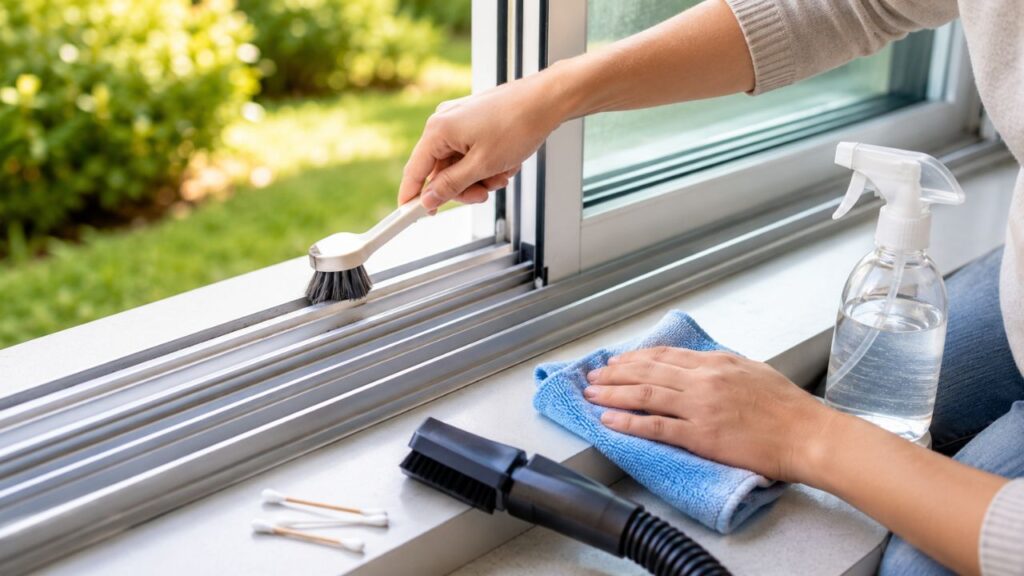
You don’t need a specialized window track cleaner from a hardware store (though they exist and work well). Most of what you need is probably already sitting under your kitchen sink.
Basic Supplies for Cleaning Window Tracks and Sills
- White vinegar or an all-purpose household cleaner
- Baking soda
- Old toothbrush or a stiff-bristled detail brush
- Butter knife or flat-head screwdriver (wrapped in a cloth)
- Cotton swabs or Q-tips for tight corners
- Microfiber cloths or old rags
- Spray bottle
- Small vacuum cleaner or handheld vacuum with a crevice tool
- Warm water
- Mild dish soap
Optional but Helpful Tools
- Steam cleaner for window tracks — powerful for dissolving mold and packed grime without chemicals
- Window track cleaning tool — purpose-built brushes that fit standard track widths
- Best window track cleaning tool for tight spaces: a grout brush or bottle brush
- Vacuum for window sills with a soft brush attachment
- Window sill cleaner spray (commercial formulas with antibacterial properties)
A quick note on commercial products: a dedicated window track cleaner or window sill cleaner can save time on heavily soiled tracks, especially those with built-up mold. However, a DIY vinegar and baking soda solution is equally effective and far more cost-efficient for regular maintenance.
How to Clean Window Tracks: Step-by-Step
This is the core method—practical, proven, and genuinely effective. Follow these steps in order for the best results. The entire process takes about 15–30 minutes per window, depending on how dirty the tracks are.
Step 1: Dry Removal of Loose Debris
Start dry. Use a small vacuum cleaner with a crevice tool to suck out loose dirt, dead insects, and debris from the window tracks. If you don’t have a vacuum handy, a dry paintbrush works well to sweep debris into a pile you can wipe away with a cloth.
Skipping this step and going straight to liquid cleaners just turns dust into mud—making the job harder, not easier. Always vacuum or brush first.
Step 2: Apply Your Cleaning Solution
Sprinkle a generous amount of baking soda along the length of the track. Then spray white vinegar over it. You’ll see it fizz and bubble—this reaction lifts grime and kills mold spores effectively. Let it sit for 5–10 minutes.
Alternatively, mix a solution of equal parts water and white vinegar in a spray bottle and apply it directly. For particularly dirty window sills and tracks, add a few drops of dish soap to the mix.
Step 3: Scrub with a Toothbrush or Detail Brush
An old toothbrush is genuinely the best tool for window track cleaning in tight corners. Work the bristles along the track, paying special attention to corners and crevices where grime packs in densest. A butter knife wrapped in a cloth is perfect for running along the very bottom of deep tracks.
For the corners where the brush can’t quite reach, a cotton swab dipped in vinegar solution does the job beautifully. This is the part people most often skip—and it’s where the most visible grime hides.
Step 4: Wipe Clean with a Damp Cloth
Once you’ve scrubbed everything loose, use a damp microfiber cloth to wipe out the track. Work from one end to the other in a single direction. You may need to rinse and repeat two or three times until the cloth comes away clean.
Fold the cloth into a thin strip and press it into the track for maximum contact. For deep tracks, you can wrap a cloth around a butter knife or ruler and run it along the groove—this is one of the most popular cleaning window tracks hacks and it works extremely well.
Step 5: Dry the Tracks Thoroughly
Moisture left sitting in tracks accelerates mold growth. After cleaning, use a dry cloth to wipe the tracks as dry as possible. On a warm day, leaving the windows open for 20–30 minutes to air dry is ideal.
How to Clean Window Sills: The Right Approach
Window sill cleaning follows a slightly different approach to track cleaning, mainly because sills have more surface area and are more visible. The best way to clean window sills depends on the material—painted wood, vinyl, and stone sills each have different requirements.
How to Clean Painted Window Sills
Painted window sills are common in older homes and need gentle handling to avoid stripping the paint. Avoid abrasive scrubbers and acidic cleaners. Instead, use a mild dish soap solution with warm water. For stubborn marks on how to clean painted window sills, a Magic Eraser works well without scratching the surface.
Dry immediately after cleaning to prevent moisture seeping under the paint and causing peeling. If you notice mold on painted sills, a diluted bleach solution (one part bleach to ten parts water) will kill spores effectively—just rinse thoroughly afterward.
How to Clean Wooden Window Sills
Wood requires extra care when wet. For how to clean wood window sills, or how to clean wooden window sills specifically, never saturate the wood. Work with a barely damp cloth and a gentle cleaner. Dry immediately and thoroughly.
For how to clean dirty wood window sills with ingrained grime, a paste of baking soda and water can be gently worked in with a soft cloth, then wiped clean. Follow up with a light application of wood conditioner or linseed oil to prevent drying and cracking.
How to Clean Vinyl Window Sills and Frames
Vinyl is durable and forgiving. For how to clean vinyl window frames and sills, an all-purpose cleaner or vinegar solution works perfectly. Vinyl can handle slightly more vigorous scrubbing than wood or painted surfaces. A soft-bristle brush is fine; avoid steel wool or anything that will scratch the surface, as scratches trap future dirt.
For how to clean vinyl window tracks specifically, the vinegar and baking soda method described earlier is ideal. Vinyl is non-porous, so it cleans up very well.
How to Clean Window Frames Inside and Outside
Window frame cleaning is easy to overlook but makes a dramatic difference to the overall look of your windows. Frames accumulate dust, spider webs, oxidation stains, and general airborne grime.
How to Clean Window Frames Inside
For how to clean window frames inside, start by dusting with a dry microfiber cloth. Then apply a mild all-purpose spray and wipe down with a clean cloth. Pay attention to corners and edges where dust collects.
On how to clean inside window frames with tighter profiles (common in modern double-glazed units), a cotton swab dipped in cleaning solution handles the narrow channels around the glass. For how to clean window sills inside, the same approach applies—wipe, clean, dry.
How to Clean Window Frames Outside
Exterior frame cleaning involves more exposure to stubborn dirt and weathering. For how to clean exterior window sills and frames, start with a rinse using a garden hose on a gentle setting to remove surface dirt. Then apply your cleaner, scrub with a soft brush, and rinse again.
For how to clean aluminium window frames inside or outside, avoid strongly acidic cleaners. A dedicated aluminium cleaner or a mild soap solution with warm water is perfect. Rinse thoroughly to prevent soap residue attracting more dirt.
How to Clean Old Window Frames
Older frames—especially timber ones—may have multiple layers of paint, weathered finishes, and ingrained grime. For how to clean old window frames, a gentle approach is essential. Use warm water with mild soap, a soft cloth, and patience. For oxidized aluminum or chalky painted frames, a specialist restorer or a fine abrasive pad (used carefully) can bring back the original finish.
How to Clean Window Seals Properly
Window seals are the rubber or silicone strips that run around the edge of your window glass and frame, creating an airtight barrier. Neglected seals become discolored, brittle, and eventually fail—leading to drafts, condensation between panes, and energy loss.
Best Way to Clean Window Seals
Cleaning window seals requires gentle products to avoid degrading the rubber. The best way to clean window seals involves using a mild soap solution or a dedicated window seal cleaner. Apply the solution with a soft cloth or sponge, work gently along the seal, and rinse with clean water.
Avoid bleach on rubber seals unless absolutely necessary for mold—bleach can degrade rubber over time with repeated use. For window seal cleaning with mold present, a diluted tea tree oil solution is a gentler antimicrobial alternative. How to clean window seals affected by heavy black mold may require a specialist seal cleaner or replacement if the seal has deteriorated.
How to Clean Sliding Window Tracks vs. Fixed Window Tracks
How to clean sliding window tracks deserves special mention because the sliding mechanism adds complexity. Remove the sliding panel if possible—most modern sliding windows lift out of the track. With the panel removed, you have full access to the entire track length.
Clean the track thoroughly using the steps above, then clean the channel in the sliding panel itself. Before reinstalling, apply a light coating of silicone lubricant along the track—this dramatically improves sliding action and reduces future grime adhesion.
Cleaning Window Tracks Hack: Pro Tips That Actually Work
There are a few genuinely clever approaches that make window track cleaning faster and less frustrating. Here are the best ones, sourced from professional cleaners and experienced homeowners.
The Butter Knife Cloth Trick
Wrap a microfiber cloth tightly around the tip of a butter knife. This creates a custom cleaning tool perfectly shaped for track grooves. Run it along the track and the cloth picks up grime with surprising efficiency. This is arguably the best cleaning window tracks hack for speed.
The Vinegar Spray Soak
Spray undiluted white vinegar generously into tracks and let it sit for 10–15 minutes before scrubbing. The acidity loosens grime, kills mold, and dissolves mineral deposits from hard water.
The Toothpick Corner Clear
Wooden toothpicks are perfect for clearing the very ends of track corners where brushes can’t reach. Quick, precise, and you can reach the easiest way to clean window tracks in corners without special tools.
Steam Cleaning
A steam cleaner for window tracks is genuinely transformative for heavily soiled channels. The high-temperature steam dissolves packed grime, kills mold spores, and sanitizes without chemicals. It is also effective as a steam cleaner for window sills. Follow the steam with a dry cloth wipe and the results are exceptional. Steam clean window tracks is one of the easiest way to clean window tracks that are heavily soiled.
The Cotton Ball Rinse
After scrubbing, soak a cotton ball in clean water and run it along the track to rinse away cleaning solution residue. The soft texture picks up remaining grime without scratching anything.
The Silicone Lubricant Finish
After cleaning and drying, apply a tiny amount of silicone lubricant along clean tracks. This prevents future grime adhesion and keeps sliding windows moving smoothly.
How to Deep Clean Window Sills and Tracks
Sometimes a regular clean isn’t enough. If you’re dealing with windows that haven’t been properly maintained in years, a deep clean is necessary. Here’s how to deep clean window sills and tracks effectively.
Deep Clean Method for Severely Dirty Window Sills
- Remove all loose debris with a vacuum or brush.
- Apply a generous amount of baking soda to all surfaces.
- Spray with undiluted white vinegar and leave for 15 minutes.
- Scrub with a stiff-bristled brush, working the paste into all crevices.
- For stubborn stains, apply a paste of baking soda and dish soap and leave for another 10 minutes.
- Wipe down with a hot, damp cloth—multiple passes until completely clean.
- Rinse with clean water and dry thoroughly.
- For mold: follow up with a diluted bleach or tea tree oil spray, leave for 5 minutes, then rinse.
This full process covers how to clean dirty window sills and the worst window tract buildup. It takes time but genuinely restores tracks and sills to near-original condition.
How to Clean Window Tracks Without a Vacuum Cleaner
Not everyone has a vacuum with a crevice attachment. Here’s how to clean window tracks without vacuum cleaner access—equally effective with a bit more manual effort.
- Use a dry, stiff paintbrush to sweep loose debris toward one end of the track.
- Fold a piece of paper into a thin wedge to scoop out the swept pile.
- Apply your cleaning solution and scrub with a toothbrush.
- Use the butter knife cloth method to wipe out loosened grime.
- Finish with cotton swabs for corners.
- A blast of compressed air (from a can or a small pump) can dislodge packed debris effectively before the wet clean.
How to Keep Window Sills and Tracks Clean Longer
The best cleaning strategy is one that reduces how often you need to do a deep clean. Here’s how to keep window sills clean and tracks free of buildup between sessions.
- Silicone lubricant on tracks — creates a barrier that makes grime less adhesive.
- Monthly quick wipe — a 5-minute pass with a damp cloth every month prevents buildup entirely.
- Keep windows closed during high-pollen or dusty conditions — limits the volume of material entering tracks.
- Fix drafts immediately — gaps in seals draw in more debris. Address window seal issues early.
- Use a vacuum for window sills weekly — especially in dusty rooms or near exterior doors.
- Apply a window sill water repellent — available for vinyl and stone sills; reduces moisture ingress.
Best Way to Clean Window Tracks by Window Type
Different window types require slightly different approaches. Here’s a quick guide to the best way to clean window tracks across the most common window designs.
Sliding Windows
Remove the panel for full track access. Use the full step-by-step method, then lubricate with silicone. The easiest way to clean window tracks on sliding units is always to remove the panel first.
Casement Windows
Casement window tracks are usually shallower. A toothbrush, cotton swabs, and a damp cloth cover the entire process efficiently. Clean window sill tracks and frame channels in the same pass.
Double-Hung Windows
Both the upper and lower sashes have their own channels. Clean each separately. Lower tracks tend to be dirtier. For how to clean window sill tracks on double-hung units, work from the bottom sash channel up.
Fixed Windows
Fixed windows have no moving tracks, but the frame rebate and sill still accumulate grime. Focus on window sill cleaning and frame edges. Window frame cleaning with a soft brush and damp cloth covers everything you need.
Frequently Asked Questions
What is the easiest way to clean window tracks?
The easiest way to clean window tracks is the vinegar and baking soda method combined with the butter knife cloth trick. Apply vinegar and baking soda, let it fizz, scrub with a toothbrush, then wipe clean with a cloth wrapped around a butter knife for reach into narrow grooves.
What is the best way to clean window sills?
The best way to clean window sills depends on the material. For vinyl and painted sills, a mild all-purpose spray with a microfiber cloth works excellently. For wooden sills, use a barely damp cloth with mild soap and dry immediately. For stubborn stains, a baking soda paste works well across all materials.
What should I use to clean window sills?
What to use to clean window sills: white vinegar solution, mild dish soap and water, baking soda paste, or a commercial window sill cleaner spray. Avoid abrasive scrubbers on painted or vinyl surfaces. For mold, a diluted bleach solution (rinsed thoroughly) or tea tree oil solution is effective.
Can I use a steam cleaner for window tracks?
Yes—a steam cleaner for window tracks is one of the most effective methods for heavily soiled channels. High-temperature steam dissolves packed grime and kills mold without harsh chemicals. Follow up with a dry cloth wipe. Steam clean window tracks gives exceptional results on tracks that haven’t been cleaned in years.
How do I clean window seals without damaging them?
For how to clean window seals safely, use a mild soap and water solution or a dedicated window seal cleaner. Apply with a soft cloth and rinse clean. Avoid bleach with regular use as it can degrade rubber seals over time. How to clean window seal areas with mold: diluted tea tree oil solution is a gentler antimicrobial option that won’t damage the rubber.
How do you clean sliding window tracks?
For how to clean sliding window tracks: if possible, remove the sliding panel completely for full track access. Vacuum out loose debris, apply vinegar and baking soda solution, scrub with a toothbrush, and wipe clean. Clean the panel channel separately. After drying, apply silicone lubricant for smooth operation.
What is the best window track cleaning tool?
The best window track cleaning tool for most people is simply an old toothbrush combined with the butter knife cloth method—inexpensive and highly effective. For those who want a purpose-built option, commercially available window track cleaning tools with narrow brushes fit standard track widths well. A steam cleaner is the most powerful tool for the worst buildup.
How do I clean window frames inside?
For how to clean window frames inside: dust with a dry cloth first, then apply a mild all-purpose spray and wipe clean. Use cotton swabs for narrow frame channels around the glass. For how to clean inside window frames with aluminum profiles, a dedicated aluminum cleaner prevents oxidation staining. Always dry frames thoroughly after cleaning.
How do I stop window sills getting dirty so quickly?
To keep window sills clean longer: apply silicone lubricant to tracks to reduce grime adhesion, do a quick monthly wipe, use a vacuum for window sills weekly in dusty rooms, and seal any drafts or gaps that draw in outdoor debris. Keeping windows closed during high-pollen or windy conditions also dramatically reduces how quickly tracks and sills accumulate dirt.
Can I clean window tracks without removing the window?
Absolutely. You do not need to remove windows for standard window track cleaning. The full step-by-step method—vacuum, apply solution, scrub with toothbrush, wipe with cloth—works effectively with windows in place. Removing sliding panels makes the job easier but is entirely optional.
Conclusion
Knowing how to clean window tracks properly transforms one of the most neglected household tasks into a manageable, even satisfying part of your regular cleaning routine. Clean tracks mean smoother windows, better indoor air quality, and a home that looks genuinely well-maintained from top to bottom.
The key is consistency over intensity. A quick monthly wipe-down takes five minutes and prevents the deep clean from ever becoming a big project. When you do need to clean window sills, window seals, frames, and tracks more thoroughly, the methods above—vinegar and baking soda, the butter knife cloth trick, steam cleaning for tough buildup—cover every scenario reliably.
Whether you’re dealing with vinyl tracks, wooden sills, aluminum frames, or sliding window channels, the principles are the same: dry first, clean with the right solution, scrub into every corner, wipe clean, dry thoroughly. Do that regularly and your windows will reward you with years of smooth, clean, trouble-free operation.