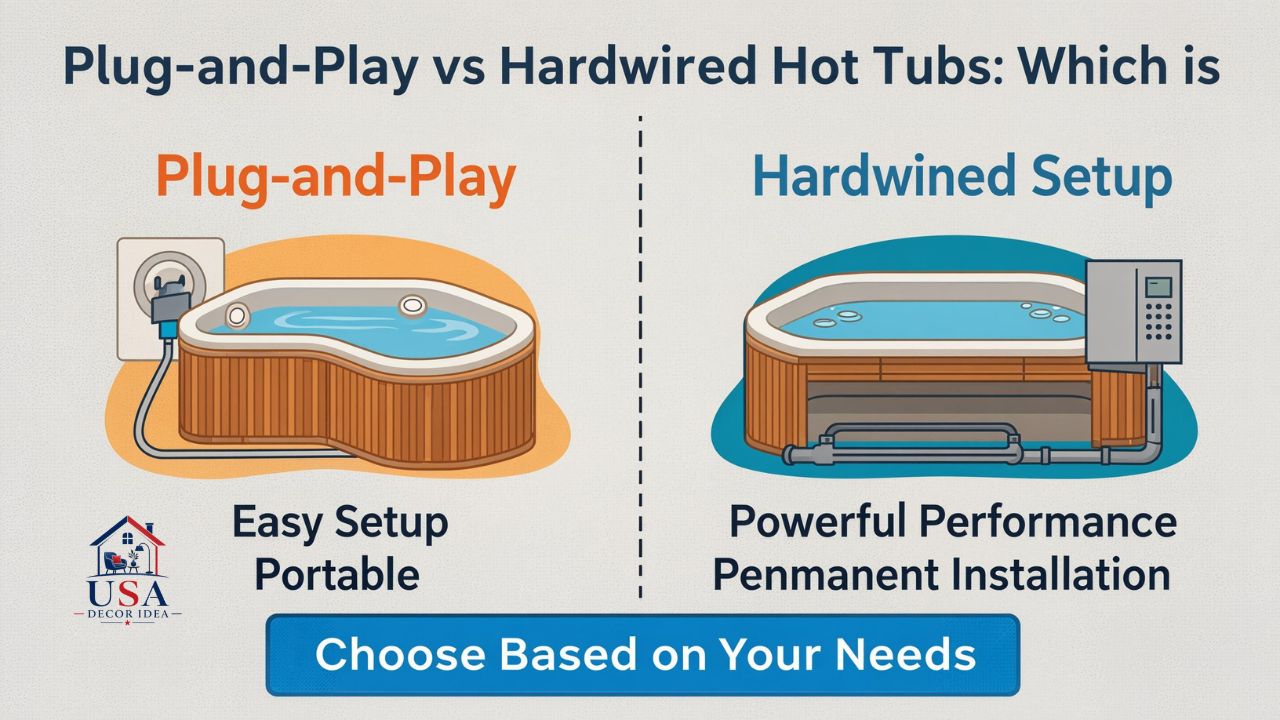
Backyard wellness spaces have become increasingly popular as homeowners seek ways to relax, recover, and spend more time outdoors. For many Idaho residents, installing a hot tub is one of the most rewarding upgrades they can make. However, one important question often comes up before purchasing: should you choose a plug-and-play hot tub or a hardwired model?
While many articles provide generic comparisons between 110V and 240V spas, some homeowners face a unique challenge: cold winter temperatures. The local climate can significantly impact performance, energy efficiency, and overall enjoyment. Understanding how each type of hot tub performs during Idaho winters can help you make the right investment for year-round use.
Understanding the Basics: 110V vs. 240V Hot Tubs
Before comparing performance, it’s important to understand the difference between these two systems.
A plug-and-play hot tub operates on a standard 110V household outlet. Typically requiring a 15-amp circuit, these tubs can be plugged directly into an outdoor GFCI-protected outlet without professional electrical work.
A hardwired hot tub operates on a dedicated 240V, 50-amp electrical circuit installed by a licensed electrician. These systems deliver significantly more power to the heater and pumps, making them the preferred option for many homeowners seeking a premium spa experience.
Whether you’re researching installation or comparing options, understanding these electrical differences is the foundation of making an informed purchase.
The Pros and Cons of Plug-and-Play Hot Tubs
Plug-and-play models appeal to many buyers because of their convenience and affordability.
Advantages
- Lower upfront purchase and installation costs
- No electrician required in most situations
- Quick setup and easy relocation
- Ideal for renters or temporary living situations
- Simple access to spa ownership
Disadvantages
- Slower water heating times
- Less powerful jet performance
- Limited electrical capacity
- Heater and high-speed jets cannot operate simultaneously
This final limitation is especially important. When the jets are running at full speed, the heater shuts off to stay within the electrical limits of the 110V system. In warm climates, this may not be noticeable. In Idaho winters, however, it can significantly affect comfort.
For shoppers exploring hot tubs on a tight budget, plug-and-play models can still provide a satisfying experience, but it’s important to understand their limitations before buying.
The Pros and Cons of Hardwired Hot Tubs
Hardwired spas require a larger initial investment but deliver superior performance in almost every category.
Advantages
- Heater and jets operate simultaneously
- Faster heating and heat recovery
- Stronger hydrotherapy massage
- Better performance in cold weather
- Greater energy efficiency over time
- Enhanced overall spa experience
Disadvantages
- Higher installation costs
- Requires professional electrical work
- Permanent placement once installed
- Potential permitting requirements depending on local regulations
When evaluating hot tubs, many homeowners discover that 240V models provide the best long-term value despite their higher initial cost. Their ability to maintain temperature and deliver stronger jet performance often outweighs the upfront expense.
How Idaho Winters Impact Your Hot Tub Choice
This is where the decision becomes especially important for local homeowners.
Cold region winters frequently bring freezing temperatures, snow, and extended cold periods. These conditions can expose the weaknesses of a 110V system.
When the cover is removed and jets are activated in a plug-and-play spa, the heater stops operating. During cold weather, water temperatures may gradually drop as heat escapes into the surrounding air. Some owners report losing several degrees during longer soaking sessions, particularly during storms or sub-freezing evenings.
A 240V hot tub avoids this issue because the heater continues operating while the jets run. This keeps the water temperature consistent even during prolonged winter use. For homeowners considering hot tubs in places such as Boise, Idaho, winter performance should be a major factor in their decision-making. A hardwired system provides a more reliable and enjoyable experience throughout the coldest months of the year.
Operating costs also deserve consideration. Although a 240V system uses more power initially, it often maintains temperature more efficiently. Repeated reheating cycles in freezing weather can reduce the efficiency advantage of some plug-and-play models over time.
Which Hot Tub Is Right for Your Lifestyle?
The best choice depends on how you plan to use your spa.
A Plug-and-Play Hot Tub May Be Right If:
- You rent your home
- You plan to move within a few years
- You want the lowest upfront investment
- You use the spa occasionally
- You prioritize convenience over performance
A Hardwired Hot Tub May Be Right If:
- You own your home
- You plan to use the spa year-round
- You enjoy winter soaking
- You want stronger hydrotherapy
- You are seeking maximum long-term value
Many homeowners upgrading from inflatable spas to permanent hot tubs in Boise, Idaho, find that hardwired systems deliver the substantial performance improvement they’re looking for.
For those seeking both exercise and relaxation, a swim spa installation may be worth considering. Swim spas offer resistance-based fitness opportunities and hydrotherapy benefits, but they always require hardwired electrical service.
Frequently Asked Questions About Hot Tubs in Idaho
Which is better: a plug-and-play hot tub or a hardwired one?
Neither is strictly better, but they serve different needs: a plug-and-play (110V) hot tub is cheaper and easier to install, while a hardwired (240V) hot tub offers superior heating and stronger jets for cold climates. Homeowners who plan to use their spa throughout winter generally benefit more from a hardwired system because it maintains water temperature while delivering full jet performance.
Are plug-and-play hot tubs worth it?
Yes, plug-and-play hot tubs can be an excellent value for buyers seeking affordability and convenience. They are ideal for casual users, renters, and homeowners who want minimal installation requirements. However, expectations should be aligned with their lower heating capacity and jet power.
What are the disadvantages of plug-and-play hot tubs?
The primary disadvantages include slower heating, weaker hydrotherapy performance, and the inability to run the heater and high-speed jets simultaneously. These limitations become more noticeable during Idaho’s colder months.
Will a hot tub help with sciatica?
Many people find hydrotherapy beneficial for reducing muscle tension and improving circulation around irritated nerves. Warm water and massage jets may help relieve sciatica-related discomfort. A hot tub homeownerwho chooses a 240V configuration typically gets stronger jet pressure, which can enhance deep-tissue massage benefits.
Why is there a 15-minute rule for the hot tub?
The 15-minute guideline exists to help prevent overheating and dehydration. Extended exposure to hot water can increase the risk of hyperthermia, dizziness, and fatigue. Many spas also include automatic jet timers that cycle off after a set period to promote safe usage.
For most homeowners seeking a permanent backyard retreat, a hardwired 240V hot tub is the better long-term investment. The ability to maintain heat during winter, deliver stronger hydrotherapy, and provide a more consistent soaking experience makes it particularly well-suited for Idaho’s climate. That said, plug-and-play models remain an excellent entry point for budget-conscious buyers or those seeking flexibility. The key is matching the spa to your lifestyle, expectations, and how often you’ll enjoy crisp Idaho evenings under the stars.