Ask anyone who’s tried it, and they’ll tell you the same thing: apartment gardening isn’t a smaller, sadder version of “real” gardening. It’s its own discipline, with its own tricks, its own failures, and its own genuine rewards. I’ve killed more basil plants on a fourth-floor balcony than I’d like to admit, and I’ve also grown tomatoes on that same balcony that neighbors asked to buy off me. Both things are true, and both are part of the learning curve.
If you’ve been searching for how to start an apartment garden, you’ve probably noticed most articles either oversimplify (“just buy a pot!”) or overcomplicate things with equipment lists that cost more than your rent. This guide sits in the middle. It’s written for people who live in condos, rented flats, studio units, and high-rises, and who want a genuinely productive apartment garden without pretending they have a backyard.
By the end, you’ll know how to size up your space, pick the right containers, choose plants that actually survive your specific light conditions, and avoid the mistakes that quietly kill most first-time attempts at gardening in an apartment.
Understanding Your Space Before You Buy a Single Plant
The single biggest mistake people make with an apartment garden is buying plants before assessing their space. Light, wind, and weight limits matter more than enthusiasm.
Step 1: Track Your Light for a Week
Before anything else, spend a week just watching. Note which windows or balcony corners get direct sun, and for how long.
- Full sun (6+ hours): South-facing balconies in most Northern Hemisphere cities. Great for tomatoes, peppers, and most flowering plants.
- Partial sun (3–5 hours): East or west-facing spaces. Good for leafy greens, herbs, and many flowers.
- Low light (under 3 hours): North-facing rooms or heavily shaded balconies. Better suited to ferns, pothos, and shade-tolerant herbs like mint.
This single week of observation will save you more money and heartbreak than any product on the market.
Step 2: Check Weight Limits and Building Rules
An apartment balcony garden isn’t just about aesthetics — it’s about structural reality. Balconies have weight limits, and wet soil is heavy. A single large ceramic pot filled with saturated potting mix can weigh 40–60 pounds. Multiply that by six pots and you’re looking at real load. Check your lease or HOA rules, and when in doubt, favor lightweight plastic or fabric grow bags over stone and ceramic.
Step 3: Think About Wind and Exposure
Higher floors mean more wind, which dries out soil faster and can snap tall plants like sunflowers. If you’re above the third floor, stick to compact varieties, use heavier bottom-weighted pots, and consider a simple trellis anchored securely rather than tall freestanding stakes.
Apartment Gardening Ideas That Actually Work
There’s no shortage of apartment gardening ideas floating around online, but not all of them hold up once soil, gravity, and real weather get involved. Here are the approaches that consistently work for renters and small-space dwellers.
1. Vertical Growing Systems
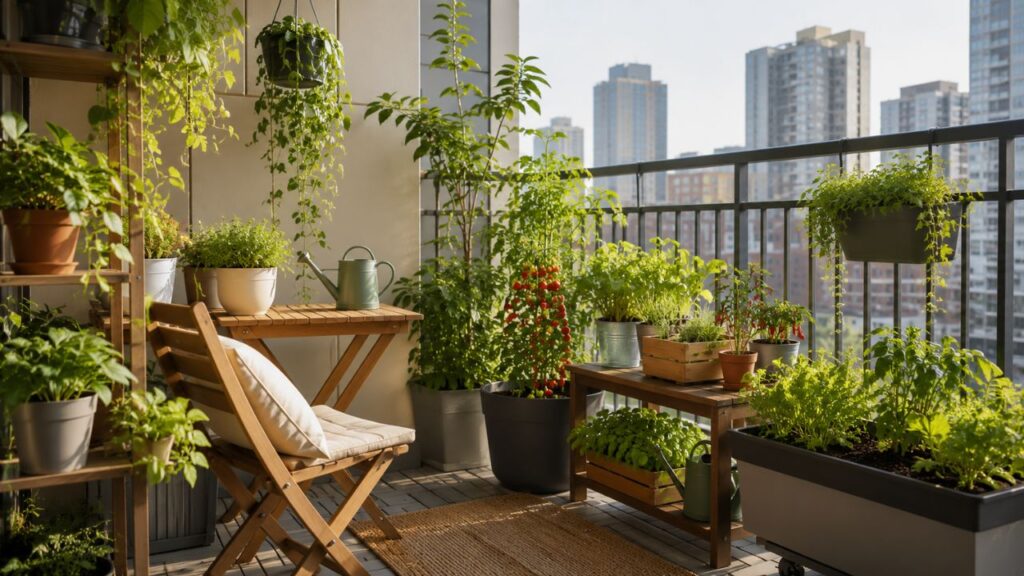
When floor space is limited, go up. Wall-mounted planters, tiered plant stands, and hanging baskets let you multiply your growing area without adding square footage. A simple over-the-railing planter box can double as both a privacy screen and a productive herb bed.
2. Self-Watering Containers
These are a genuine game changer for anyone who travels or forgets to water (no judgment — most of us do). A self-watering container has a reservoir at the bottom that wicks moisture up as the soil dries, which is especially useful for an apartment vegetable garden where consistent moisture matters for fruiting plants like tomatoes and cucumbers.
3. Windowsill Micro-Gardens
Not everyone has a balcony, and that’s fine. A sturdy windowsill with decent light can host a rotating cast of herbs, microgreens, and compact flowering plants. This is often the entry point for people first exploring indoor apartment gardening.
4. Community and Rooftop Plots
If your building has a shared rooftop or courtyard, or your city has community garden programs (organizations like the American Community Gardening Association maintain directories of local plots), that’s worth exploring for anything that needs more root room than a container allows, like squash or larger tomato varieties.
5. Grow Light Setups for Dim Apartments
For units with minimal natural light, a basic LED grow light — even an inexpensive clip-on model — can support a small indoor apartment vegetable garden year-round. This has become one of the more popular apartment gardening ideas among people in north-facing or basement-level units.
Building an Apartment Balcony Garden Step by Step
A well-planned apartment patio garden or balcony setup follows a logical build order. Skipping steps is usually where things go wrong.
Step 1 — Measure your actual usable space. Not the whole balcony — the space that gets sun and isn’t a walking path.
Step 2 — Choose your containers based on what you’re growing. Deep-rooted plants like tomatoes need at least 12–18 inches of depth. Herbs and lettuces can thrive in containers as shallow as 6–8 inches.
Step 3 — Pick a quality potting mix, not garden soil. Garden soil compacts in containers and drains poorly. A bagged potting mix formulated for containers (often labeled with perlite or coco coir content) drains properly and stays light enough for roots to spread.
Step 4 — Set up a simple watering rhythm. Most container plants need water when the top inch of soil is dry. In hot weather, that can mean daily watering; in cooler months, every few days.
Step 5 — Add support structures early. If you’re growing anything that climbs or gets top-heavy, install trellises or stakes before the plant needs them, not after it’s already flopping over.
Step 6 — Group plants with similar needs together. Sun-lovers with sun-lovers, shade-tolerant plants together. This “companion zoning” makes watering and care far more efficient than scattering pots randomly.
How to Grow Flowers in an Apartment
People often assume flowers are harder than vegetables, but the opposite is frequently true. If you want to grow flowers in an apartment, the key is matching bloom type to your light and space realities rather than picking whatever looks nice at the garden center.
For full-sun balconies: Marigolds, petunias, and zinnias are reliable, colorful, and forgiving of inconsistent watering.
For partial sun: Begonias and impatiens handle a few hours of shade without sulking.
For low-light rooms: African violets and peace lilies (technically foliage-forward but reliably flowering) do surprisingly well.
For vertical or hanging displays: Trailing petunias, lobelia, and nasturtiums cascade beautifully from railing planters and hanging baskets, and nasturtiums are edible too, which is a nice bonus for anyone blending an apartment garden with a flower bed for both beauty and function.
A quick, honest tip from experience: buy flowering annuals already in bud rather than seed, especially your first season. Seeds are cheaper and more satisfying long-term, but starting with budded plants gives you a faster confidence win while you’re still learning your space’s quirks.
Apartment Indoor Vegetable Garden: What Actually Grows Indoors
An apartment indoor vegetable garden requires managing expectations. Full-sized tomatoes rarely thrive purely indoors without supplemental lighting, but plenty of crops do genuinely well.
Reliable Indoor Vegetables
- Leafy greens (lettuce, spinach, arugula) — fast-growing and tolerant of moderate light
- Herbs (basil, chives, parsley, mint) — the classic starting point for indoor growers
- Microgreens — ready in 7–14 days, ideal for people who want quick wins
- Green onions — regrow endlessly from kitchen scraps in a glass of water or small pot
- Cherry tomatoes (dwarf varieties) — with a sunny south window or grow light, compact varieties like ‘Tiny Tim’ can fruit indoors
Apartment Indoor Vegetable Garden Ideas Worth Trying
A kitchen herb shelf near a window is the classic starting setup, but there are more creative options too. Stackable hydroponic units (brands like AeroGarden have popularized these) automate lighting and watering for people who want vegetables without soil mess. A simple three-tier wire shelving unit fitted with grow lights can also become a compact indoor growing station that fits in a closet-sized corner.
The honest limitation here: light is almost always the bottleneck indoors, not soil or watering. If your vegetables are leggy, pale, or slow to fruit, the fix is almost always more light, not more fertilizer.
Comparison Table: Choosing the Right Apartment Garden Setup
| Setup Type | Best For | Space Needed | Light Requirement | Difficulty |
|---|---|---|---|---|
| Windowsill herb garden | Beginners, small kitchens | Minimal | Medium–High | Easy |
| Balcony container garden | Vegetables, flowers | Medium | High | Moderate |
| Vertical wall planter | Small balconies, patios | Low floor space | Medium–High | Moderate |
| Hanging basket garden | Flowers, trailing herbs | Overhead space | Medium–High | Easy |
| Indoor grow light station | Low-light apartments | Small footprint | Low (light supplied) | Moderate |
| Self-watering containers | Busy or traveling growers | Medium | Medium–High | Easy |
Soil, Water, and Feeding: The Practical Basics
Apartment gardens live or die on container care fundamentals, because unlike ground soil, container soil dries out faster and depletes nutrients faster too.
Soil: Use a well-draining potting mix, refreshed or amended yearly. Reused soil without added nutrients is one of the quietest reasons container plants stagnate.
Water: Check moisture with a finger test before watering on a fixed schedule. Overwatering, not underwatering, kills more container plants.
Feeding: Container plants need more frequent feeding than ground plants because nutrients wash out with each watering. A balanced liquid fertilizer every 2–4 weeks during the growing season keeps most vegetables and flowering plants productive.
Drainage: Every container needs drainage holes. Without them, roots sit in standing water and rot, regardless of how carefully you water.
Common Problems in Apartment Gardens (And Real Fixes)
Problem: Leggy, weak seedlings. Almost always a light issue. Move plants closer to windows or add a grow light.
Problem: Yellowing leaves on vegetables. Usually overwatering or nitrogen deficiency. Let soil dry slightly between waterings and check your feeding schedule.
Problem: Pests appearing out of nowhere. Indoor and balcony plants can still get aphids, spider mites, or fungus gnats, often introduced through new plants or bagged soil. A diluted insecticidal soap spray handles most minor infestations without harsh chemicals.
Problem: Plants drying out too fast on hot balconies. Group pots together to create shared humidity, use mulch on soil surfaces, and switch to self-watering containers if you’re away often.
Problem: HOA or landlord restrictions on balcony use. Many buildings allow container gardens but restrict permanent fixtures. Freestanding planters, railing-mounted boxes with removable brackets, and hanging systems typically stay within most lease terms, but it’s worth confirming in writing before investing in a full setup.
Seasonal Planning for Apartment Gardens
Apartment gardens, like any garden, follow seasonal rhythms — the containers just make the transitions easier to manage.
Spring: Start seeds indoors on a sunny windowsill 4–6 weeks before your last frost date. This is prime time to plan your apartment balcony garden layout for the year.
Summer: Peak growing season for most vegetables and flowers. Watering frequency increases; shade cloth can help protect tender plants during heat waves.
Fall: Shift toward cool-season crops like lettuce, kale, and pansies. Bring tender potted plants indoors before the first frost.
Winter: Indoor apartment gardening takes over. Herbs, microgreens, and grow-light setups keep things productive when outdoor growing pauses.
Case Study: A 90-Square-Foot Balcony, One Growing Season
A reader in a mid-rise apartment started with six containers on a south-facing 90-square-foot balcony — three for vegetables, two for flowers, one shared herb pot. Using a basic potting mix, drip irrigation on a timer, and vertical trellising for cucumbers, that space produced enough cherry tomatoes, basil, and lettuce over one summer to noticeably cut a weekly grocery bill, plus a steady rotation of cut zinnias for the kitchen table. Nothing exotic — just consistent light tracking, proper container sizing, and a watering routine that didn’t rely on memory alone. That’s the pattern behind most successful small-space growing stories: unglamorous consistency beats elaborate setups.
Tools and Supplies That Are Actually Worth Buying
Walk into any garden center and you’ll find a wall of gadgets promising to transform your apartment garden overnight. Most of them are unnecessary. Here’s what genuinely earns a spot in a small-space setup, based on what actually gets used season after season rather than what looks good in a photo.
A moisture meter. Cheap, simple, and more reliable than guessing by touch, especially for deeper containers where the surface looks dry but the root zone is still soaked.
A watering can with a long, narrow spout. Sounds minor, but precision matters when you’re watering a windowsill row of small pots without soaking your floor or windowsill.
Pruning snips. A dedicated small pair, not kitchen scissors, keeps herbs and flowering plants tidy and encourages bushier growth rather than leggy stems.
Saucer trays. Every container needs one underneath to catch runoff, particularly indoors or on balconies above a neighbor’s unit.
A basic clip-on grow light. For anyone serious about an apartment indoor vegetable garden, this single purchase does more to fix weak, pale growth than any fertilizer will.
Stackable or railing planters. These maximize usable space without needing floor real estate, which matters enormously on a compact apartment patio garden.
What you can skip, at least early on: elaborate irrigation timers, decorative ceramic pots (plastic nursery pots work fine under a decorative sleeve), and most “miracle” soil additives sold as separate products from a standard potting mix.
Matching Plants to Realistic Apartment Conditions
One pattern shows up again and again with new growers: they fall in love with a plant online, buy it, and then spend months fighting their apartment’s actual conditions instead of picking something suited to them from the start. A little matchmaking upfront saves a lot of frustration later.
If You Have a Hot, Sun-Baked South Balcony
Lean into heat-lovers. Tomatoes, peppers, marigolds, zinnias, and rosemary all handle intense afternoon sun and don’t mind soil that dries out a bit faster than average. Mulching the soil surface with straw or bark helps retain moisture through the hottest stretch of summer.
If You Have a Breezy, Bright North-Facing Balcony
Cooler-loving plants do best here. Lettuce, spinach, pansies, and most leafy herbs like cilantro tolerate the lower light and appreciate not baking in direct sun all day.
If You Only Have Interior Rooms With No Direct Sun
This is where an apartment indoor garden built around artificial light makes the most sense. Snake plants, pothos, and ZZ plants will survive on ambient light alone, but if you want anything edible, budget for a grow light rather than fighting a losing battle against a dim north-facing window.
If You Have a Tiny Studio With One Good Window
Concentrate your efforts. Rather than scattering a dozen struggling pots across the apartment, build one well-lit, well-tended shelf or windowsill row. A small, thriving indoor apartment garden beats a large, half-dead one every time, both for your sanity and for the plants.
Why Container Size Matters More Than People Expect
New growers consistently underestimate pot size, and it’s one of the most common reasons an apartment vegetable garden underperforms. A tomato plant crammed into a 6-inch pot will survive, technically, but it will produce a fraction of what it could in an 18-inch container with proper depth for root development.
As a rough guide:
- Herbs and lettuces: 6–8 inch pots, or shared containers with several inches between plants
- Peppers and dwarf tomatoes: 12–14 inch pots minimum
- Full-size tomato varieties and cucumbers: 18–24 inch pots or grow bags
- Root vegetables like carrots: deep, narrow containers of at least 12 inches to allow the roots to extend fully
Undersized containers also dry out faster, which compounds watering stress on top of restricted root growth. If you’re only going to upgrade one thing after reading this, let it be container size rather than fertilizer brand or plant variety.
The Psychology of Sticking With It
Something rarely discussed in gardening content: the biggest reason apartment gardens fail isn’t pests, weather, or bad soil. It’s that people give up after one disappointing season and never adjust their approach. A wilted basil plant in July doesn’t mean you have a black thumb. It usually means the pot was too small, the watering schedule didn’t match the heat, or the plant needed more shade than it got.
Treat your first season as data collection, not a final verdict. Note what thrived, what struggled, and where the light actually fell once you tracked it properly instead of guessing. Most experienced apartment gardeners will tell you their second season looked completely different, and dramatically more successful, than their first, simply because they stopped repeating the same mismatched plant-to-space decisions.
Sustainability and Small-Space Growing
There’s a practical environmental angle to apartment gardening worth mentioning honestly, without overselling it. A few pots of herbs and vegetables on a balcony won’t replace a grocery trip, but they do reduce plastic packaging waste, cut down on produce that travels long distances before reaching your kitchen, and give kitchen scraps like vegetable trimmings a second life through simple composting methods designed for small spaces, such as countertop bokashi bins or worm composting systems sized for apartments.
Even a modest apartment garden creates a small but real feedback loop: less waste, fresher food, and a better sense of where your meals actually come from.
Frequently Asked Questions
Can you really have a full garden in an apartment? Yes, within realistic limits. You won’t grow corn or pumpkins, but a productive mix of vegetables, herbs, and flowers is entirely achievable in containers, on balconies, or indoors with the right light.
What is the easiest plant to start apartment gardening with? Herbs, particularly mint, chives, and basil, are the most forgiving starting point. They tolerate mild neglect and reward you quickly, which builds confidence for more demanding plants later.
How much sunlight does an apartment vegetable garden need? Fruiting vegetables like tomatoes and peppers need at least 6 hours of direct sun daily. Leafy greens and herbs can manage with 3–4 hours or bright indirect light.
Do apartment gardens need special soil? Yes — use a bagged potting mix designed for containers rather than garden soil, which compacts and drains poorly in pots.
Can I grow vegetables with no balcony at all? Yes. A sunny windowsill or a grow-light shelf can support a genuine indoor apartment vegetable garden, focused on leafy greens, herbs, and microgreens.
How do I stop pests without harming an indoor apartment garden? Inspect new plants before bringing them in, isolate anything questionable for a week, and treat minor infestations with diluted insecticidal soap rather than harsh pesticides indoors.
Is apartment gardening expensive to start? Not necessarily. A few containers, a bag of potting mix, and a handful of seedlings can start for less than the cost of a dinner out. Costs scale up with grow lights and self-watering systems, but those are optional upgrades, not requirements.
A Final Word on Getting Started
Don’t wait for the “perfect” setup before starting your apartment garden. Buy one pot, one bag of potting mix, and one plant suited to your actual light conditions. Get it right. Then add a second, and a third. The apartment gardeners with the most impressive balconies and windowsills didn’t get there by planning an elaborate system on day one — they got there by growing one thing successfully, learning from it, and expanding gradually from a place of real experience rather than guesswork.
Whatever your space looks like right now, a studio apartment with one window, a fourth-floor balcony, or a shared rooftop, there’s a version of apartment gardening that fits it. The plants don’t care how much square footage you have. They care about light, water, and soil that drains properly. Get those three things right, and the rest tends to follow.