A client of mine — I’ll call her Priya, since she’d rather not have her name in a random article on the internet — spent four months redoing her kitchen and changed her mind about handles three separate times. She started with brass pulls, moved to matte black bars, and ended up ripping both out in favor of something with no hardware at all. “I didn’t even know handleless kitchen cabinets were a real category until my carpenter mentioned it,” she told me. “Now I can’t imagine going back.”
That’s the thing about this style. Most people don’t walk into a showroom looking for it. They stumble onto it, usually because they’re tired of handles catching on sleeves, collecting grease, or just cluttering up a look they’re trying to keep simple. Once they see it in person, the decision tends to happen fast.
This guide walks through everything worth knowing before you commit — how handleless cabinets actually open, what they cost compared to standard cabinetry, which mechanisms hold up over time, and where people usually go wrong when planning a handle less kitchen. I’ve pulled from installation notes, conversations with joinery specialists, and a fair number of kitchens I’ve walked through over the years. No fluff, just the practical stuff.
What Are Handleless Kitchen Cabinets, Exactly?
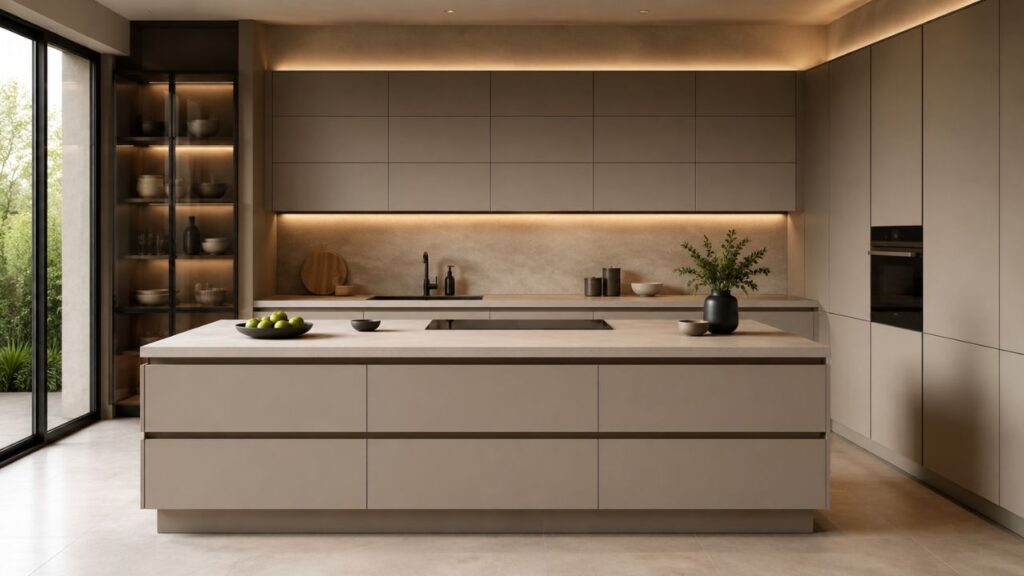
Handleless kitchen cabinets are cabinet doors and drawers designed to open without any visible knob, bar, or pull. Instead of hardware, the door itself includes a built-in opening mechanism — usually a recessed groove, a push-to-open catch, or a motorized system that pops the door open with a light tap.
The idea isn’t new. European manufacturers, particularly in Germany and Italy, have been building kitchen cabinets without handles since the 1990s, mostly as part of the broader minimalist design movement. What’s changed recently is accessibility — the mechanisms used to be expensive and finicky, and now they’re standard options at most mid-range cabinet makers, not just the high-end custom shops.
If you search for “no handle kitchen cabinets” online, you’ll notice most of the images fall into one of three camps: sleek European-style flat-panel kitchens, Scandinavian minimalist setups, or ultra-modern black-and-white contrast kitchens. That’s not a coincidence — the style photographs well because it removes visual noise, which is exactly why designers reach for it.
Why People Choose a Handleless Kitchen
There are a few recurring reasons homeowners give when asked why they went this route:
- They want a cleaner line from cabinet to cabinet, without hardware breaking up the surface
- Small kitchens feel less cramped when there’s nothing sticking out to bump into
- Cleaning is simpler — no crevices around pulls for grease and crumbs to hide in
- It photographs and resells well, since it reads as “updated” rather than dated
- Kids and pets are less likely to catch clothing or collars on protruding hardware
None of these reasons are dramatic on their own. But stacked together, they explain why the handleless kitchen has moved from a niche European import to something you’ll see in ordinary suburban renovations across the US, UK, and Australia.
How Handleless Cabinet Doors Actually Open
This is the part people skip past in showroom brochures, and it’s the part that actually matters once you’re living with the kitchen day to day. There are four main systems in use, and each behaves differently.
1. Groove or Channel Handles (Integrated Pulls)
A groove is cut into the top or side edge of the door, deep enough to hook a few fingers into. From a few feet away it looks handleless, but technically it’s a recessed handle rather than a true mechanism-based opener. This is the most budget-friendly option and the one you’ll see most often in rental-friendly renovations.
2. Push-to-Open (Push-Latch) Systems
A small mechanical latch sits behind the door. Press on the door face and it releases with a soft click, then springs open a few centimeters so you can grab the edge. Blum and Hettich are the two manufacturers that dominate this space, and their tip-on mechanisms are what most cabinet makers install by default when a client asks for handleless cabinet doors detail without extra electronics.
The downside: push-latch hardware wears down with heavy use, typically needing adjustment or replacement after several years of daily kitchen traffic — think five to eight years in a busy household.
3. Motion-Sensor / Motorized Opening
Higher-end kitchens sometimes use a sensor strip under the counter edge — wave your hand or foot near it, and the door or drawer opens electronically. This is the most expensive route, and it introduces a new failure point: batteries, wiring, or the sensor board itself can fail, and repairs usually require calling the original installer rather than a general handyman.
4. Angled or Sloped Profile Doors
This is what most people picture when they hear “handleless kitchen profile.” The door has a slight angle cut along the top edge, creating a natural finger grip without a groove or mechanism. It’s simple, cheap to manufacture, and virtually maintenance-free, which is why it’s become the default choice for budget-conscious handleless cabinets.
Handleless vs. Traditional Cabinets: A Side-by-Side Look
| Feature | Handleless Cabinets | Traditional Cabinets with Handles |
|---|---|---|
| Visual style | Clean, minimal, seamless | Classic, varied, more textured |
| Average cost premium | 8–20% higher | Baseline |
| Cleaning | Fewer crevices, faster wipe-down | Handles need separate cleaning |
| Accessibility | Can be harder for people with limited grip strength (unless push-to-open) | Easier grip for all ages |
| Longevity of hardware | Push-latch systems need periodic servicing | Standard hinges/pulls are simple to replace |
| Resale appeal | Strong in modern/urban markets | Broader appeal in traditional markets |
| DIY installation | Harder — requires precise millwork | Easier — handles bolt on after the fact |
Neither option is objectively “better.” It depends on the kitchen, the household, and honestly, how much patience you have for maintenance down the line.
Cost Breakdown: What Handleless Cabinets Actually Cost
I get asked this constantly, so let’s be direct about it. Based on quotes gathered from cabinet fabricators in the US and UK through 2025 and early 2026, here’s roughly where the numbers land:
- Groove-style handleless cabinets: Add almost nothing to the base cabinet price — sometimes 2–5% more than standard doors, since it’s just a milling change.
- Push-to-open (Blum/Hettich) mechanisms: Roughly $15–$40 per door or drawer for the hardware, plus labor for precise alignment.
- Motorized/sensor systems: $150–$400 per unit, which adds up fast across a full kitchen — this is usually reserved for a handful of feature cabinets rather than the whole run.
- Angled profile doors: Often priced the same as standard shaker or flat-panel doors, since the milling cost is comparable.
A mid-size kitchen with 20–25 cabinet doors and drawers going fully handleless with push-to-open hardware typically runs an extra $800–$1,500 compared to the same layout with standard pulls. That’s a rough range — regional labor costs and cabinet material shift it in either direction.
Materials and Finishes That Work Best
Not every cabinet material suits a handleless kitchen. Because your hand and fingers make direct contact with the door edge (rather than a separate handle), the finish needs to hold up to oils, grip pressure, and repeated contact without showing wear immediately.
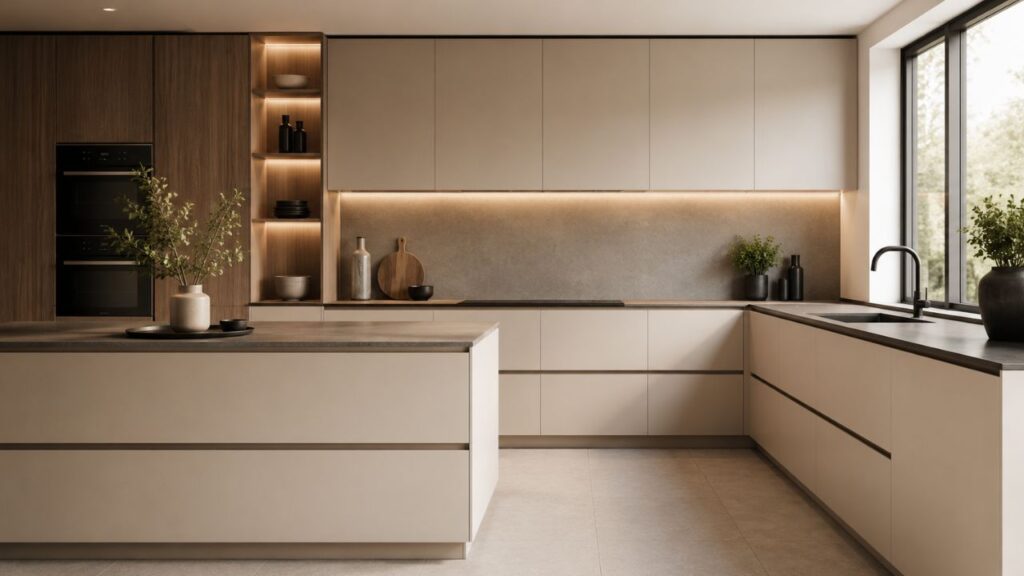
Matte lacquer and matte laminate are the most forgiving finishes — fingerprints and light scuffs don’t show as easily as they do on gloss. High-gloss acrylic looks striking in photos but shows every fingerprint within days, which is worth knowing before you commit to an all-white, all-gloss handleless cabinets setup. Wood veneer and natural timber work well with angled profile doors, since the grain naturally hides wear at the finger groove.
If you’re set on gloss, ask your fabricator about anti-fingerprint coatings — several manufacturers now offer a nano-coating layer specifically because so many handleless kitchen clients complained about visible smudging within the first month.
Common Mistakes People Make When Planning a Handle Less Kitchen
I’ve seen the same handful of planning errors repeat across dozens of kitchen projects, so it’s worth flagging them early.
Skipping the mechanism conversation entirely. Clients pick the look from a photo and assume the cabinet maker will figure out “the handleless part” later. But groove doors, push-latch, and motorized systems all require different cabinet box construction — you can’t swap between them easily after the boxes are built.
Underestimating drawer weight limits. Push-to-open mechanisms have a maximum load rating, and heavy drawers (think a fully loaded pot-and-pan drawer) can strain the latch over time, leading to drawers that no longer catch properly. Ask your supplier for the load rating before assigning heavy items to push-latch drawers.
Ignoring grip access for elderly or disabled household members. Groove and angled profiles need a decent pinch grip, which can be tough for anyone with arthritis or limited hand strength. If accessibility matters in your home, push-to-open or motorized systems are the safer call.
Choosing high-gloss without asking about fingerprints. Covered above, but it’s worth repeating because it’s the single most common regret I hear about a year after installation.
Not testing the mechanism in the showroom before ordering. A push-latch feels different in person than it looks in a video. Go touch one before you commit an entire kitchen’s worth of doors to a mechanism you’ve never physically used.
Handleless Kitchen Cabinets by Room Size
Small kitchens (under 100 sq ft): This is where handleless cabinets genuinely earn their reputation. Removing protruding hardware means less to catch on, less visual clutter, and a kitchen that reads larger than it is. Angled profile doors work particularly well here since they don’t require extra clearance for a mechanism.
Mid-size kitchens (100–200 sq ft): Push-to-open systems shine in this range — you get the clean look without sacrificing much convenience, and the cost premium is manageable across a moderate number of doors.
Large or open-plan kitchens (200+ sq ft): Motorized systems make more sense here, especially on island cabinetry, since the extra cost per unit is spread across a design that’s already investing heavily in a statement look.
Maintenance: Keeping a Handleless Kitchen Working Long-Term
A handleless kitchen isn’t maintenance-free, despite what some marketing pages imply. Here’s what actually needs attention:
- Push-latch mechanisms should be checked annually — tightening the mounting screws prevents the most common failure, which is the latch loosening and no longer catching.
- Groove edges collect grime faster than flat surfaces because fingers touch the same spot repeatedly. A quick wipe with a damp microfiber cloth once a week keeps this from building up.
- Motorized sensors occasionally need a firmware reset or battery swap, depending on the brand — check your installation manual rather than guessing.
- Soft-close dampers, which are almost always paired with handleless systems, wear out gradually. If a door starts slamming instead of closing gently, the damper — not the whole mechanism — is usually the fix.
Frequently Asked Questions
What are handleless kitchen cabinets called in the design world? They’re most often described as handleless cabinets, integrated-handle cabinets, or J-pull cabinets when the groove design is used. In the UK, you’ll also hear “handle-free” as an alternative term for the same style.
Are kitchen cabinets without handles harder to clean than regular ones? Generally, no — they’re easier. Without separate handles, there are fewer small crevices for grease and dust to collect in. The main exception is groove-style doors, which need a quick wipe-down at the finger contact point more often than flat surfaces.
Do handleless cabinets cost more than standard cabinets? Usually, yes, though the premium varies a lot by mechanism. Groove-style doors add very little to the price, while motorized push-open systems can add several hundred dollars per cabinet. A full kitchen typically runs 8–20% more than an equivalent kitchen with standard pulls.
Can I retrofit my existing kitchen to remove handles? Sometimes, but it depends on the cabinet doors you already have. Retrofitting groove or push-latch hardware onto existing doors is possible in some cases, but a true handleless cabinet doors detail — where the door itself is shaped for the mechanism — usually requires new doors rather than a simple hardware swap.
Is a handleless kitchen a passing trend, or will it stay in style? It’s been a mainstay in European kitchen design for over two decades at this point, which suggests it’s more of a durable design category than a short-lived trend. That said, styles shift, and gloss-heavy handleless kitchens from the early 2010s already look a little dated compared to today’s matte, warmer-toned versions.
Do push-to-open handleless cabinets work well for people with weak grip strength? They tend to work better than groove or angled profiles, since a light press is all that’s needed rather than a pinch grip. For households with elderly residents or anyone managing arthritis, this is usually the more practical mechanism to choose.