Walk into ten different kitchens and ask people what they’d change, and almost half will say the same thing: “I wish my cabinets had more personality.” That’s exactly why espresso cabinets have quietly become one of the most requested upgrades in kitchen renovations across the country.
They’re warm. They’re rich. And honestly, they make a kitchen feel finished in a way that builder-grade oak or flat white cabinetry rarely does.
But here’s the catch nobody tells you upfront: picking espresso cabinets is the easy part. Figuring out what goes around them — the walls, the counters, the floors — is where most homeowners get stuck.
This guide walks through everything, from what espresso cabinetry actually is, to the best color schemes for kitchens with dark cabinets, to the small mistakes that quietly ruin an otherwise gorgeous design.
Why Espresso Cabinets Are Taking Over Modern Kitchens
There’s a reason designers keep circling back to this finish year after year. Espresso cabinets sit in this perfect middle ground — darker and moodier than honey oak, but warmer and softer than true black.
That warmth matters more than people realize. A kitchen with pure black cabinetry can feel sharp, almost clinical, if it’s not handled carefully. Espresso, on the other hand, has brown undertones that read as cozy rather than cold.
A few reasons homeowners keep choosing this finish:
- It hides daily wear better than lighter wood tones
- It pairs with almost any countertop material
- It photographs beautifully, which matters if you’re ever planning to sell
- It works in both traditional and contemporary kitchens
I remember helping a friend plan her kitchen remodel last year. She’d narrowed it down to gray or espresso, and the moment she saw a sample board with espresso cabinetry next to warm brass hardware, the decision basically made itself. The wood grain still showed through, the color had depth, and it didn’t scream “trend” the way some gray cabinetry already started to by 2023.
What Exactly Are Espresso Cabinets?
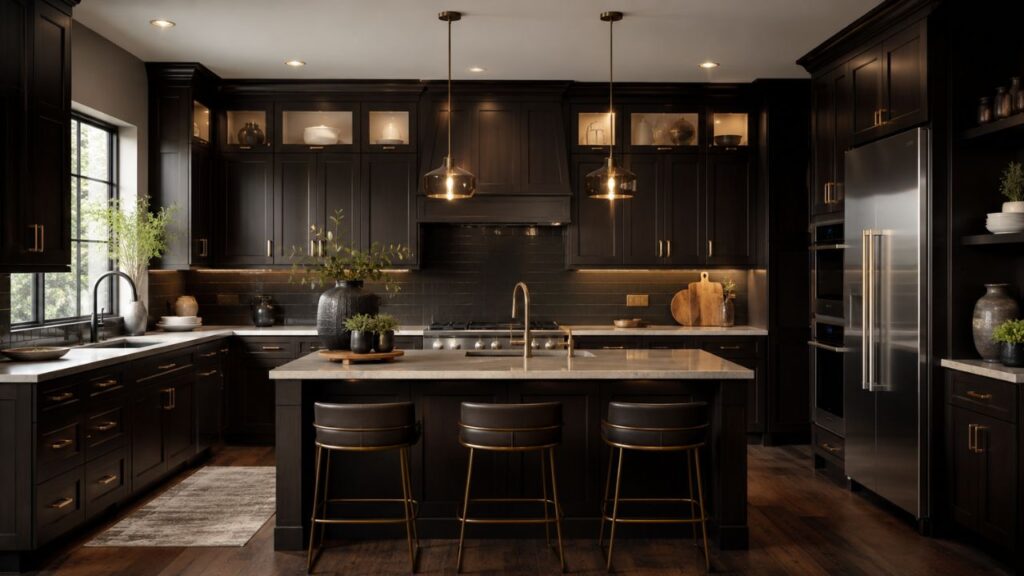
Let’s clear up some confusion first. Espresso isn’t a wood species — it’s a stain color, usually applied over oak, maple, birch, or MDF. Think of it as dark roasted coffee crossed with chocolate, with a hint of red or purple depending on the manufacturer.
This matters because espresso cabinets can vary quite a bit between brands. Some lean warmer and more reddish-brown. Others lean cooler, almost charcoal-brown. Before ordering, always look at a physical sample in your actual kitchen lighting, not just a photo online.
Espresso vs. Other Dark Cabinet Finishes
People often lump all dark cabinetry together, but there are real differences:
- Espresso — warm, brown-based, slightly reddish undertone
- Black — neutral, can feel stark or modern
- Charcoal — gray-based, cooler and more industrial
- Walnut — natural wood grain visible, less uniform color
If you want drama without losing warmth, espresso usually wins. If you want something sleeker and more minimal, true black or charcoal might suit your taste better.
Color Schemes for Kitchens with Dark Cabinets That Actually Work
This is the part most people search for, and honestly, it’s where the real design decisions happen. Good color schemes for kitchens with dark cabinets aren’t about finding one “correct” answer — they’re about matching the mood you want.
Below are four approaches that consistently work, based on what designers actually recommend and what holds up in real homes (not just showroom photos).
1. Warm Neutrals and Cream Tones
This is the safest, most universally flattering pairing. Think cream walls, beige or taupe backsplash tile, and warm white countertops with subtle veining.
Why it works: warm neutrals soften the intensity of dark cabinetry without fighting it. The kitchen still reads as bright and open, even with espresso cabinets anchoring the lower half of the room.
This combination is one of the most popular color schemes for kitchens with dark cabinets because it photographs well and rarely looks dated.
2. Cool Contrasts with White or Light Gray
If you want more visual punch, pair dark cabinetry with crisp white upper cabinets or a white quartz countertop. The contrast does a lot of heavy lifting here.
This two-tone approach has been popular for nearly a decade now, and for good reason. It breaks up the visual weight of an all-dark kitchen and keeps the space feeling airy.
A light gray subway tile backsplash works particularly well here, bridging the gap between the white countertop and the dark wood.
3. Bold Jewel Tones for a Statement Kitchen
Not every homeowner wants safe and neutral. Deep emerald green, navy blue, or even a moody burgundy accent wall can turn espresso cabinets into part of a much richer, more dramatic design.
This works especially well in kitchens with good natural light, since jewel tones can feel heavy in dim spaces. Pair with brass or gold hardware to really make the colors pop.
4. Monochrome Moody Look
For a kitchen that feels like a high-end restaurant, lean into the darkness entirely. Charcoal walls, black hardware, and dark stone countertops alongside espresso cabinets create a cohesive, almost cinematic effect.
This is one of the more advanced color schemes for kitchens with dark cabinets, and it’s not for everyone — it needs strong lighting and enough reflective surfaces (think glossy tile or polished stone) to keep the room from feeling like a cave.
Choosing Countertops, Backsplash, and Flooring for Espresso Cabinets
Picking the right surfaces around your cabinetry is honestly more important than the cabinet color itself. Get this wrong, and even gorgeous espresso cabinets can feel mismatched or unfinished.
Countertops
White or light quartz remains the top choice because it creates contrast and keeps the kitchen from feeling too dark overall. If you prefer something warmer, a beige granite with gold or brown flecks pulls the espresso tones into the counter itself.
Avoid pairing dark cabinets with dark countertops unless you’re deliberately going for that monochrome look mentioned earlier — otherwise the kitchen can lose definition and feel flat.
Backsplash
This is your chance to add texture and personality. Some reliable options:
- White subway tile (classic, never goes out of style)
- Cream or beige mosaic tile (adds warmth)
- Patterned tile in soft blues or greens (adds character without overwhelming)
Flooring
Medium-toned wood floors create a nice visual bridge between dark cabinetry and lighter walls. If you’re using tile, a warm gray or beige with subtle texture keeps things grounded without competing with the cabinetry.
Lighting Tips for Dark Cabinet Kitchens
Here’s something that gets overlooked constantly: lighting changes everything about how espresso cabinets actually look day to day.
A kitchen that looked rich and inviting in the showroom can suddenly feel dim and heavy at home if the lighting plan isn’t right. A few practical fixes:
- Add under-cabinet lighting — it brightens countertops and reduces shadows
- Use warm white bulbs (around 2700K-3000K) rather than cool white, which can clash with the brown undertones
- Maximize natural light wherever possible; sheer curtains over heavy drapes help
- Consider pendant lighting over islands to add a layer of ambient warmth
Good lighting is honestly the unsung hero of any dark cabinet kitchen design.
Real-Life Example: A Small Kitchen That Got It Right
A neighbor of mine renovated her 1990s kitchen two summers ago. The original cabinets were honey oak — fine, but dated. She went with espresso cabinets on the lower units, kept white uppers, and paired everything with a soft cream quartz countertop and warm gray hexagon floor tile.
The result genuinely surprised me. The kitchen felt bigger, not smaller, despite the dark lower cabinetry. Why? Because she balanced the darkness with light walls, ample lighting, and a backsplash that bounced light around the room.
This is the exact principle behind most successful color schemes for kitchens with dark cabinets: balance, not avoidance. You don’t need to fear dark cabinetry making a small kitchen feel cramped — you just need to plan the surrounding elements thoughtfully.
Common Mistakes to Avoid With Espresso Cabinets
After seeing plenty of kitchen renovations go right (and a few go sideways), a few patterns stand out.
Mistake 1: Ignoring Natural Light Levels
A north-facing kitchen with limited windows is not the best candidate for an all-dark scheme. If your kitchen doesn’t get much sun, balance espresso cabinets with plenty of white or cream elements rather than going fully moody.
Mistake 2: Matching Hardware Too Closely to the Cabinet Color
Bronze-on-bronze can disappear entirely, making the cabinetry look flat. Brushed nickel, matte black, or brass hardware tends to stand out and add visual interest against espresso tones.
Mistake 3: Overlooking the Ceiling
A dark kitchen with a stark white ceiling can sometimes feel disconnected. A soft cream or warm white ceiling color often ties the room together more naturally.
Mistake 4: Forgetting About Resale Value
Bold color schemes for kitchens with dark cabinets can be stunning, but if you’re planning to sell within a few years, lean toward more universally appealing pairings — cream, white, and soft gray tend to attract more buyers than emerald or navy accent walls.
Are Espresso Cabinets Still in Style?
Good question — and one worth asking before committing to a full renovation. Trends shift, but espresso has stuck around longer than most “trendy” cabinet colors because it’s rooted in warmth rather than novelty.
Unlike some short-lived trends, this finish has shown remarkable staying power across both traditional and modern kitchen styles. It’s less about chasing a fad and more about choosing a finish with genuine longevity.
How Do You Keep Dark Cabinets From Making a Kitchen Feel Smaller?
This is probably the most common worry homeowners bring up. The honest answer: it’s not the cabinet color that shrinks a room — it’s poor contrast and weak lighting.
Pair dark lower cabinets with lighter upper elements, keep countertops on the brighter side, and make sure your lighting plan includes both ambient and task lighting. Done right, dark cabinetry can actually make a kitchen feel more grounded and intentional, not smaller.
Maintenance and Care for Espresso Cabinets
One underrated perk: dark finishes hide smudges, water spots, and daily fingerprints far better than white or light wood cabinetry.
Still, a few care habits keep them looking sharp:
- Wipe spills immediately to avoid water rings on the finish
- Use a soft microfiber cloth rather than abrasive sponges
- Avoid harsh ammonia-based cleaners, which can dull the stain over time
- Apply a small amount of furniture polish every few months to maintain richness
With basic care, espresso cabinets can easily last 15-20 years without needing a refinish.
Bringing It All Together
Choosing espresso cabinets is really just the starting point. The real design work happens in the layers around them — the countertop tone, the backsplash texture, the wall color, and the lighting plan that ties it all together.
If there’s one thing worth remembering, it’s this: the most successful color schemes for kitchens with dark cabinets aren’t built around fear of “too dark.” They’re built around balance — pairing rich, warm cabinetry with enough light, texture, and contrast to let the whole room breathe.
So before you finalize your sample board, ask yourself a couple of honest questions. How much natural light does your kitchen actually get throughout the day? And are you designing for how you live now, or for resale value five years from now?
There’s no universally right answer, but knowing where you stand on those two questions will guide nearly every other decision — countertop, backsplash, paint color, hardware finish — that follows.
Action step: Before buying a single sample, take a photo of your current kitchen at three different times of day — morning, midday, and evening. That’s the lighting your espresso cabinets will actually live in, and it’s the single best way to choose a color scheme that still feels right a year from now.