Here’s something nobody tells you when you move into a new place or start a renovation: lighting is the one design decision that gets made last and regretted first. You paint the walls, pick the sofa, agonize over the rug — and then you grab whatever light fixture looks nice at the store on a Saturday afternoon. Six months later, you’re sitting under a ceiling light fixture that makes your living room look like a dentist’s waiting room.
I’ve spent years helping people plan out their homes room by room, and the pattern is always the same. People think lighting is about finding a pretty light fixture. It’s not. It’s about understanding what the room actually needs, then finding the fixture that does that job well. Once you flip that order — function first, style second — shopping gets a lot easier, whether you’re browsing home depot lighting on a lunch break or scrolling through lamps plus at midnight.
This guide walks through the whole thing: how lighting actually works, the different types of lighting you’ll run into, what separates a good light fixture from a bad one, and where to actually buy the stuff without regretting it later.
First, Let’s Talk About Lumens (Because Watts Won’t Save You Anymore)
If you grew up shopping for light bulbs by wattage, I have some news: that system barely applies anymore. LED bulbs use a fraction of the watts of old incandescent bulbs, so wattage tells you almost nothing about how bright something actually is. What you want to look at instead is lumens.
Lumens measure the actual amount of visible light a bulb or fixture puts out. More lumens means more brightness, full stop. A standard reading lamp might put out around 450 lumens, while a bright kitchen ceiling light fixture could push past 3,000 lumens across multiple bulbs.
Here’s a rough lumens lighting cheat sheet I give people who ask:
| Room | Recommended Lumens | Typical Use |
|---|---|---|
| Bedroom (ambient) | 1,000–2,000 | Relaxed, soft light |
| Kitchen (task areas) | 3,000–5,000+ | Bright, functional |
| Living room | 1,500–3,000 | Layered, adjustable |
| Bathroom (vanity) | 1,500–2,000 | Clear, even light |
| Home office | 2,500–3,500 | Focused, glare-free |
When you’re comparing light fixtures online, check the lumens output before you check the price. A cheap fixture with weak lumens output will leave you buying a second lamp within a month anyway, so you haven’t actually saved money.
The Types of Lighting You Need to Know (And Why Most Rooms Need All Three)
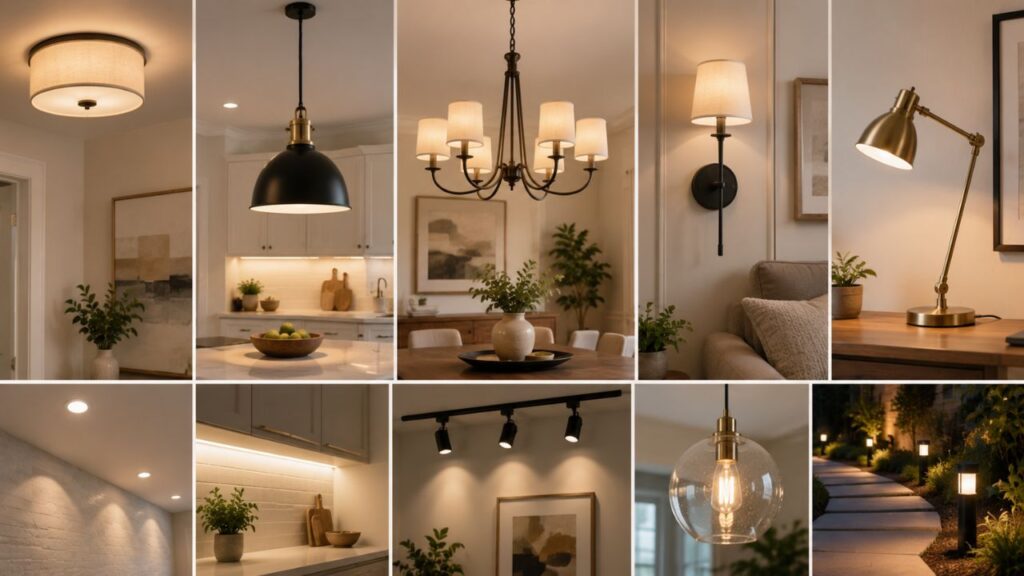
Ask ten designers about types of lighting and you’ll get the same three-category answer, because it’s genuinely the framework that works. Understanding these different types of lighting is the single biggest lever for making a room feel finished instead of flat.
1. Ambient Lighting
This is your general, whole-room light — the stuff that lets you walk through a space without bumping into furniture. Ceiling-mounted fixtures, recessed lighting, and central chandeliers usually handle this job.
2. Task Lighting
Task lighting is aimed at a specific activity: reading, cooking, applying makeup, working at a desk. Under-cabinet kitchen lights, desk lamps, and vanity bars all fall into this category.
3. Accent Lighting
Accent lighting is the mood-setter. It highlights art, architecture, or a bookshelf, and it’s usually the layer people forget to buy. A small picture light or a strategically placed floor lamp does wonders here.
When people ask me what type of lighting their living room needs, the honest answer is almost always “all three, layered.” A single overhead fixture, by itself, tends to flatten a room and cast harsh shadows on faces — which is exactly why professionally designed spaces rarely rely on just one source.
If you’re mapping out lighting types room by room, here’s a simple way to think about types of lighting for home use:
- Living room: ambient (ceiling light fixture) + accent (floor lamp, wall sconces)
- Bedroom: ambient (flush mount) + task (bedside lamps)
- Kitchen: ambient (ceiling) + task (under-cabinet) + accent (pendant over island)
- Home office: task (desk lamp) + ambient (overhead)
- Bathroom: task (vanity bar) + ambient (ceiling)
Understanding these different types of lights before you shop keeps you from overspending on one gorgeous chandelier while your kitchen counter stays dim enough to slice your finger while chopping onions.
Lighting Categories: Breaking Down the Fixtures Themselves
Beyond the functional types of lights, there’s also a separate way to sort things — by the physical lighting fixtures themselves. Knowing these lighting categories helps you actually search for what you want instead of wandering a showroom aimlessly.
- Ceiling light fixture — flush mounts, semi-flush mounts, and chandeliers that attach directly to the ceiling
- Pendant lights — hung on a cord or rod, usually over islands, tables, or entryways
- Chandeliers — multi-arm, multi-bulb fixtures, often the centerpiece of a dining room or entry
- Wall sconces — mounted directly to the wall, great for hallways and accent lighting
- Table and floor lamps — freestanding, flexible, and the easiest way to add task or accent light
- Recessed lighting — built into the ceiling for a clean, low-profile look
Most of the light fixtures you’ll shop for fall into one of these lighting categories, and once you know which category you actually need, filtering search results gets a lot faster.
Chandeliers Deserve Their Own Section (Because People Overthink Them)
A chandelier is one of those light fixtures that people either love immediately or assume is out of their budget. Neither instinct is quite right. Chandeliers today range from $80 flush-mount versions to multi-thousand-dollar statement pieces, and the right one depends entirely on ceiling height and room proportion, not just budget.
A good rule of thumb: your chandelier’s diameter (in inches) should roughly match the room’s width (in feet). So a 12-foot-wide dining room does well with a chandelier around 24–30 inches across. Go smaller and it disappears visually; go bigger and it dominates the room.
Chandeliers aren’t only for dining rooms anymore, either. I’ve seen small chandeliers used beautifully in bathrooms over soaking tubs, in entryways, and even in walk-in closets. If you’re shopping for chandeliers and want something that reads as more traditional lighting, look for candelabra-style arms and warm brass or bronze finishes. If you want something more contemporary, linear or drum-shaped chandeliers tend to fit modern spaces better.
Traditional Lighting vs. Modern Light Fixtures — What’s the Actual Difference?
This comes up constantly: someone wants “elegant” lighting but isn’t sure if that means traditional lighting fixtures or something more current. Here’s the honest breakdown.
Traditional light fixtures tend to feature:
- Warm metal finishes (brass, bronze, aged gold)
- Ornate detailing, scrollwork, or candle-style bulbs
- Symmetrical, classic silhouettes
- Materials like crystal, glass, or wrought iron
Modern light fixtures, by contrast, usually go for:
- Clean lines and geometric shapes
- Matte black, brushed nickel, or mixed-metal finishes
- Minimal ornamentation
- Exposed bulbs or sculptural glass shades
There’s also a growing middle category — modern traditional light fixtures — that blends both worlds. Think a classic candelabra chandelier shape but finished in matte black instead of gold, or a traditional lighting silhouette with clean, unfussy lines. This hybrid style has become one of the most popular categories in the last few years because it works in both older homes and newer builds without looking out of place in either.
If your home has crown molding, hardwood floors, and older architectural bones, traditional lighting fixtures generally look more intentional. If you’re in a newer build with open-concept rooms and simple trim, modern light fixtures tend to feel more cohesive. And if you genuinely can’t decide, modern traditional light fixtures are the safest middle ground.
Where to Actually Buy Lighting (A Real Comparison)
I get asked this constantly, so let’s just compare the major players directly.
Home Depot
Home depot lighting is the go-to for people who want something in-stock, affordable, and easy to install without waiting three weeks for shipping. Home depot light fixtures cover everything from basic flush mounts to full chandeliers, and the in-store lighting section lets you actually see brightness and finish in person before buying. If you need home depot lights same-day for a rental or a quick fix, this is usually the fastest option, though the design selection skews more practical than boutique.
Lamps Plus
Lamps Plus has built a reputation as one of the largest specialty lighting retailers, with an enormous range of lamps, ceiling fixtures, and outdoor lighting. If you’re shopping for lamps specifically — table lamps, floor lamps, unique statement pieces — lamps plus tends to have far more variety than a big-box hardware store. A quick tip: before checking out, search for a lamps plus coupon code, since they run frequent seasonal promotions that can knock a meaningful percentage off a larger order.
West Elm
West elm lighting leans design-forward. If you want something that looks like it came out of an interior design magazine, west elm light fixtures are worth browsing — think sculptural pendants, organic-shaped table lamps, and finishes that skew warm and modern. It’s a smaller selection than Lamps Plus, but the design quality per item tends to be higher, and it pairs naturally with West Elm’s furniture if you’re furnishing a whole room at once.
Capital Lighting
Capital lighting (sometimes searched as capitol lighting) is a bit different from the others — it’s more of a manufacturer and wholesale-style brand than a direct-to-consumer retailer, though many of their products are available through lighting showrooms and online retailers. The capital lighting fixture company has built a solid reputation among interior designers for well-made, mid-to-high-end pieces. If you’re after a capital lighting chandelier, expect more refined detailing than mass-market options, and their capital lighting pendants are a favorite among people doing kitchen islands or dining nooks who want something a step above generic.
Quick Comparison Table
| Retailer | Best For | Price Range | Selection Style |
|---|---|---|---|
| Home Depot | Fast, practical fixtures | $ – $$ | Functional, in-stock |
| Lamps Plus | Widest lamp selection | $ – $$$ | Broad, specialty |
| West Elm | Design-forward pieces | $$ – $$$ | Curated, modern |
| Capital Lighting | Designer-grade fixtures | $$ – $$$$ | Refined, showroom-style |
Bringing It Back to the Lighting Household as a Whole
It’s easy to shop room by room and lose sight of how your whole lighting household should feel together. If your living room runs warm and traditional but your kitchen is stark and cool-toned, the transition between rooms feels jarring, even if each individual space looks fine on its own.
A simple fix: pick one or two consistent metal finishes (say, matte black and warm brass) and use them across every room. Then vary bulb temperature intentionally — warmer bulbs (2700K–3000K) in living spaces and bedrooms, slightly cooler bulbs (3500K–4000K) in kitchens and bathrooms where task visibility matters more. This one adjustment does more for a cohesive lighting household than any single fixture purchase ever will.
A Simple Room-by-Room Lighting Plan
If you want a starting point rather than starting from scratch, here’s a practical layout:
- Entryway: A small chandelier or statement pendant sets the tone immediately
- Living room: Ceiling light fixture for ambient light, plus one floor lamp and one table lamp for layering
- Dining room: Chandelier sized to the table, dimmable if possible
- Kitchen: Recessed ambient lighting, pendant lights over the island, under-cabinet task lighting
- Bedroom: Flush mount or ceiling fan light combo, plus two bedside lamps
- Bathroom: Vanity bar with high lumens output, plus a smaller accent fixture if space allows
- Home office: Adjustable desk lamp with a warmer bulb to reduce eye strain during long hours
Frequently Asked Questions
What’s the difference between light fixtures and lighting fixtures? Nothing, really — they’re the same thing. “Light fixture” and “lighting fixtures” are used interchangeably by retailers, designers, and shoppers alike, so you won’t miss anything searching either term.
How many lumens do I actually need for a living room? Most living rooms look and feel right somewhere between 1,500 and 3,000 total lumens, spread across multiple sources rather than one single bulb. A single 3,000-lumen bulb overhead often feels harsher than the same total spread across a ceiling fixture, a lamp, and an accent light.
Are chandeliers only for dining rooms? No. Chandeliers work well in entryways, bathrooms, bedrooms, and even walk-in closets, as long as the scale matches the room. A smaller chandelier can be a great alternative to a plain flush mount almost anywhere.
What type of lighting is best for a home office? A layered approach works best: ambient overhead light plus a dedicated task lamp with a warmer bulb (around 3000K) angled to reduce glare on your screen.
Is Capital Lighting the same as Capitol Lighting? People search both spellings, but “Capital Lighting” is the correct brand name for the fixture company. “Capitol” is simply the more common misspelling that shows up in search.
Do I need different light fixtures for a traditional home versus a modern one? Not strictly, but traditional light fixtures with warm metals and classic silhouettes tend to suit older homes with more architectural detail, while modern light fixtures with clean lines fit newer, minimalist spaces more naturally. Modern traditional light fixtures are a solid middle ground if you’re unsure.
Where can I find a lamps plus coupon code? Lamps Plus regularly runs seasonal promotions and email sign-up discounts, so it’s worth checking their site or a quick search before completing a larger order — codes change frequently enough that it’s worth checking each time you shop.
A Few Final Thoughts
Lighting is one of those home decisions that pays off quietly. Nobody walks into a room and says “wow, great lumens,” but they absolutely notice when a space feels warm, functional, and put together — and they notice even more when it doesn’t. Start with what the room needs to do, layer your different types of lighting accordingly, and let style be the last decision rather than the first.