
I’ve redesigned eleven living rooms in the past six years — three of my own (across three different rentals, because that’s just how life goes), and eight for friends and clients who got tired of staring at a room that never quite felt finished. Every single time, the process started the same way: someone opened their laptop, typed “living room ideas” into a search bar, and got served fifty photos of rooms that looked nothing like their actual apartment.
That’s the gap this guide is trying to close. If you’ve ever searched room mein sitting area design or typed room ko decorate kaise karen into Google at 11 p.m. because your living room just isn’t working anymore, you already know the frustration. The photos are gorgeous. The advice is vague. And your couch is still against the wrong wall.
So here’s what we’re actually going to do. This is a working guide — the kind of thing a designer friend would text you, not a mood board. We’ll cover living room design, layout logic, color choices, lighting, budget fixes, small-space tricks, and the specific trends worth paying attention to in 2025. Along the way I’ll point out where most advice goes wrong and what to do instead.
What People Actually Mean When They Search “Living Room Ideas”
Before jumping into furniture arrangements, it helps to understand the different reasons someone lands on an article like this. In my experience helping clients, the search almost always falls into one of four buckets:
- They just moved in and have an empty box of a room with no idea where to start.
- They’re bored with a space that technically “works” but feels flat — this is where most living room decor ideas searches come from.
- They’re renting and need solutions that don’t involve paint or nail holes.
- They want a specific look — modern, cozy, minimalist, maximalist — and need a plan to get there.
Knowing which bucket you’re in changes everything about what advice actually applies to you. A rental fix and a full renovation are not the same project, even though both get lumped under “living room interior design” in most generic articles.
Start With Function, Not Furniture
This is the piece almost every design article skips, and it’s the one that matters most. Before you buy a single throw pillow, answer this: what is this room actually for?
A living room that hosts movie nights three times a week needs a completely different layout than one built for entertaining twelve people on a Saturday. I once worked with a couple who’d bought a beautiful sectional because it looked incredible in a showroom — and then discovered it blocked the only path to their kitchen. Gorgeous couch, unusable room.
Ask yourself:
- Do you watch TV here, read here, or both?
- Do kids or pets need floor space?
- How many people usually sit in this room at once?
- Is this a sitting area design meant for quiet conversation, or a hub for the whole household?
Answering these questions first is the single biggest difference between a room that photographs well and a room that actually functions. Good home decor ideas always start with how a space is used, not how it looks in a single photo.
Building the Foundation: Layout and Flow
Anchor the Room Around One Focal Point
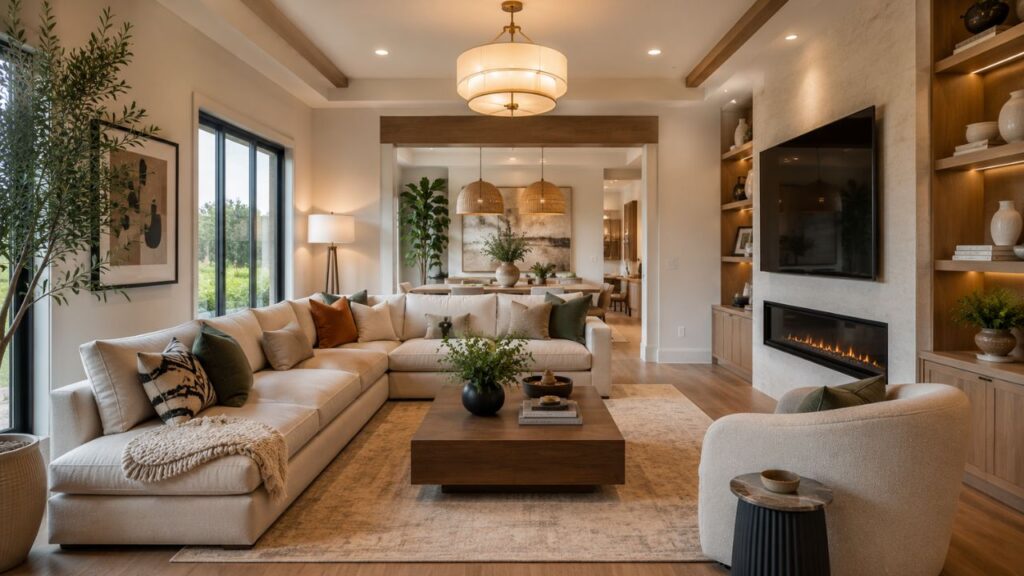
Every well-designed living room has a single point your eye lands on first — a fireplace, a window, a media wall, or even a striking piece of art. Arrange your seating to face or frame that point rather than scattering furniture around the room’s edges. This one shift alone makes a space feel intentional instead of accidental.
Leave Room to Walk
A common mistake in living room design ideas you’ll see online is furniture pushed flush against every wall to “maximize space.” In practice, this usually makes a room feel bigger in photos and smaller in real life. Aim for at least 30 inches of walking space between major pieces, and don’t be afraid to float a sofa away from the wall if the room allows it — it often makes the space feel more considered.
The Conversation Circle
If entertaining matters to you, arrange seating so people can talk without shouting across the room. A loveseat and two armchairs angled toward a coffee table will almost always outperform a single long sofa facing a blank wall. This is the backbone of good sitting area design, and it’s free — it just requires rearranging what you already own before buying anything new.
Color Palettes That Hold Up Over Time
Trends come and go, but a few color approaches consistently work well in real homes:
| Palette Style | Best For | Watch Out For |
|---|---|---|
| Warm neutrals (greige, oatmeal, warm white) | Small or dark rooms needing to feel airy | Can read as flat without texture |
| Deep, moody tones (forest green, charcoal, navy) | Rooms with good natural light | Overwhelming in small, dim spaces |
| Earthy terracotta and clay | Spaces wanting warmth without going dark | Clashes with cool-toned wood floors |
| Classic monochrome with black accents | Modern, minimal spaces | Can feel cold without soft textiles |
A lot of people searching for modern living room inspiration assume “modern” means stark white and glass. In practice, the most livable modern rooms right now lean warm — think creamy whites, walnut tones, and one confident dark accent, rather than the cold, showroom-white aesthetic that dominated a decade ago.
Living Room Ideas 2025: What’s Actually Trending
I follow design fairs, retailer catalogs, and client requests closely enough to say this with confidence: the loudest trends online aren’t always the ones showing up in real homes. Here’s what’s genuinely gaining traction in living room ideas 2025, based on both showroom data and what clients are actually asking for:
- Curved furniture — rounded sofas and organic-shaped coffee tables softening otherwise boxy rooms.
- Layered lighting over one central overhead fixture — floor lamps, table lamps, and picture lights used together.
- Warm minimalism — fewer objects, but each one intentional, rather than sparse-for-the-sake-of-sparse.
- Nature-adjacent textures — boucle, linen, rattan, and unlacquered brass replacing high-gloss finishes.
- Statement ceilings — color or wallpaper overhead instead of another accent wall.
If you’re chasing living room decor ideas 2025 specifically, the throughline is texture and warmth over stark contrast. Rooms are being asked to feel lived-in, not staged.
Cozy Living Room Ideas for Spaces That Feel Stiff
Cozy doesn’t mean cluttered, and it doesn’t require a fireplace. The formula I use with clients chasing cozy living room ideas comes down to layering:
- Textiles first — a chunky throw, two mismatched cushion textures, and a low-pile rug do more for warmth than any single furniture purchase.
- Lower, warmer light — swap one overhead bulb for a warm-toned (2700K) lamp and the whole room reads differently by evening.
- Something soft underfoot — even renters can add a large area rug without commitment.
- Personal objects, not just decor — a shelf of actual books you’ve read beats a styled stack of decorative ones every time.
A room becomes cozy through small, sensory decisions rather than one big purchase. That’s also the fastest way to test how to decorate a living room on a weekend budget before committing to anything expensive.
Small Living Room? Here’s What Actually Works
Small spaces get the worst advice online — mostly “just use mirrors” repeated endlessly. Some things that genuinely help:
- Multi-functional furniture: an ottoman with storage, a console that doubles as a bar.
- Vertical storage to keep the floor visually clear.
- One large rug, not several small ones — small rugs make a room look choppier, not bigger.
- Furniture with visible legs instead of skirted pieces, which lets light pass underneath and opens up the floor visually.
This applies whether you’re working on a full living room home interior design overhaul or just trying to make a rental feel less cramped.
Chic Apartment Decor on a Real Budget
Not every good idea requires a big spend. For chic apartment decor that doesn’t look like it came from a single big-box catalog:
- Mix at least two different eras or styles of furniture — one vintage or thrifted piece next to something new instantly reads as curated rather than matched.
- Swap hardware on existing furniture before replacing it entirely.
- Frame prints, postcards, or even fabric scraps instead of buying pre-made large-scale art.
- Buy one genuinely good lamp rather than three mediocre ones.
Clients chasing chic apartment decor are often surprised that the “expensive-looking” rooms they admire usually have one or two splurge items and everything else sourced cheaply and thoughtfully.
Finding Real Inspiration (Without Losing Yourself in the Scroll)
Here’s something worth saying plainly: scrolling endless living room images can actually slow your project down instead of helping it. It’s easy to save two hundred pins of awesome rooms and end up more confused than when you started, because none of them share a common style.
A better approach:
- Save 10–15 photos that genuinely stop your scroll.
- Look for the one or two elements they all share (a color, a shape, a mood).
- Build your room around that shared thread, not around recreating any single photo exactly.
This is also where a good room photo or room design photo becomes genuinely useful — not as something to copy piece-for-piece, but as a reference for lighting angle, proportion, and how furniture actually sits in a real space rather than a styled showroom.
On a lighter note: if you’ve ever needed a tidy living room background for a video call, the same principles apply at a smaller scale — good lighting, one focal point, and a decluttered frame will always outperform an elaborate backdrop.
Materials and Textures Worth the Investment
Not every upgrade needs to be visible to matter. A few materials consistently earn their price:
- Performance fabric on sofas if you have kids or pets — it resists stains without looking clinical.
- Solid wood, even in one piece — a single solid coffee table anchors a room full of otherwise budget furniture.
- Natural fiber rugs (wool, jute) that age well instead of matting down within a year.
- Linen or cotton curtains over synthetic blends, which drape and filter light more naturally.
Common Mistakes I See Over and Over
- Buying the rug last. It should usually be one of your first decisions — it anchors the room’s color palette.
- One lighting source for the whole room. Layer at least three light sources: overhead, task, and ambient.
- Matching everything too perfectly. A room where every piece came from the same collection often reads as a showroom rather than a home.
- Ignoring scale. A too-small rug or an oversized sofa in a tight room throws off the entire proportion of the space, no matter how nice each piece is individually.
FAQ: Living Room Ideas
Q: What’s the best place to start when redesigning a living room? Start with layout and function before color or furniture shopping. Figure out how the room needs to be used, then build outward from there.
Q: How do I make a small living room feel bigger? Use one large rug instead of several small ones, choose furniture with visible legs, and keep vertical storage rather than spreading pieces along the floor.
Q: Room ko decorate kaise karen agar budget kam ho? Focus on textiles, lighting, and one or two statement pieces rather than replacing everything. A new rug, better lamps, and rearranged existing furniture can transform a room without a large budget.
Q: What colors are trending for living rooms in 2025? Warm neutrals, deep greens, and earthy terracotta tones are leading, generally paired with natural textures like linen, boucle, and rattan.
Q: How many light sources should a living room have? Aim for at least three: an overhead or ambient source, a task light for reading, and a warm accent lamp for evenings.
Q: Is it okay to mix furniture styles in one room? Yes — mixing eras and styles, when tied together by a shared color or material, usually looks more collected and personal than matching everything.
A Few Words on Making It Actually Feel Like Yours
The rooms that age well aren’t the ones that perfectly match a single trend cycle — they’re the ones built around how the people living there actually spend their time. A living room interior design plan is only as good as how well it fits your routines, not how closely it resembles the photo that inspired it.
Take the time to test a layout for a week before committing to it. Live with a rug sample before buying the large one. Notice which corner of the room you actually gravitate toward in the evening. Good living room design isn’t a single decision — it’s a series of small, correct ones, made in the order that actually matters.