A roof is easy to ignore until the first leak appears, the shingles start curling, or a storm makes you wonder what is really protecting your home. Choosing the right roofing materials is not just about color or curb appeal; it affects your budget, comfort, maintenance, insurance, resale value, and peace of mind.
Most homeowners start with one simple question: “What should my roof be made of?” The answer depends on your climate, roof slope, house style, neighborhood rules, and how long you plan to stay in the home. A budget-friendly asphalt roof may be perfect for one house, while metal, tile, slate, or synthetic products may be smarter for another.
The good news is that today’s market gives homeowners more choices than ever. From traditional shingles to modern panels and durable tiles, roofing materials now come in many styles, performance levels, and price points. This guide walks through the most common options in plain language so you can compare them with confidence.
Roofing Materials and Why the Right Choice Matters
Your roof is a full protective system, not just the outer surface you see from the street. Under the visible covering are decking, underlayment, flashing, ventilation, fasteners, drip edge, valleys, ridge caps, and other components that work together to move water away from the house. That is why a strong roof depends on both quality products and correct installation.
When people compare roofing materials, they often focus only on price. Cost matters, but it is not the whole story. A cheaper roof may be the right choice if you need an affordable replacement, but a longer-lasting product can offer better value if it reduces future tear-offs, repairs, and maintenance. Current cost guides show that roof replacement pricing varies widely by material, roof size, roof pitch, location, and labor conditions. Fixr notes that roof replacement is often priced by roof square footage, with broad average ranges by size and material, while This Old House reports that asphalt remains one of the most common residential choices because of its lower installed cost.
A good roof choice should answer five questions: How much can you spend now? How long do you want the roof to last? What weather does your home face? What look fits your house? And can your roof structure support the material?
Main Types of Roofing Materials
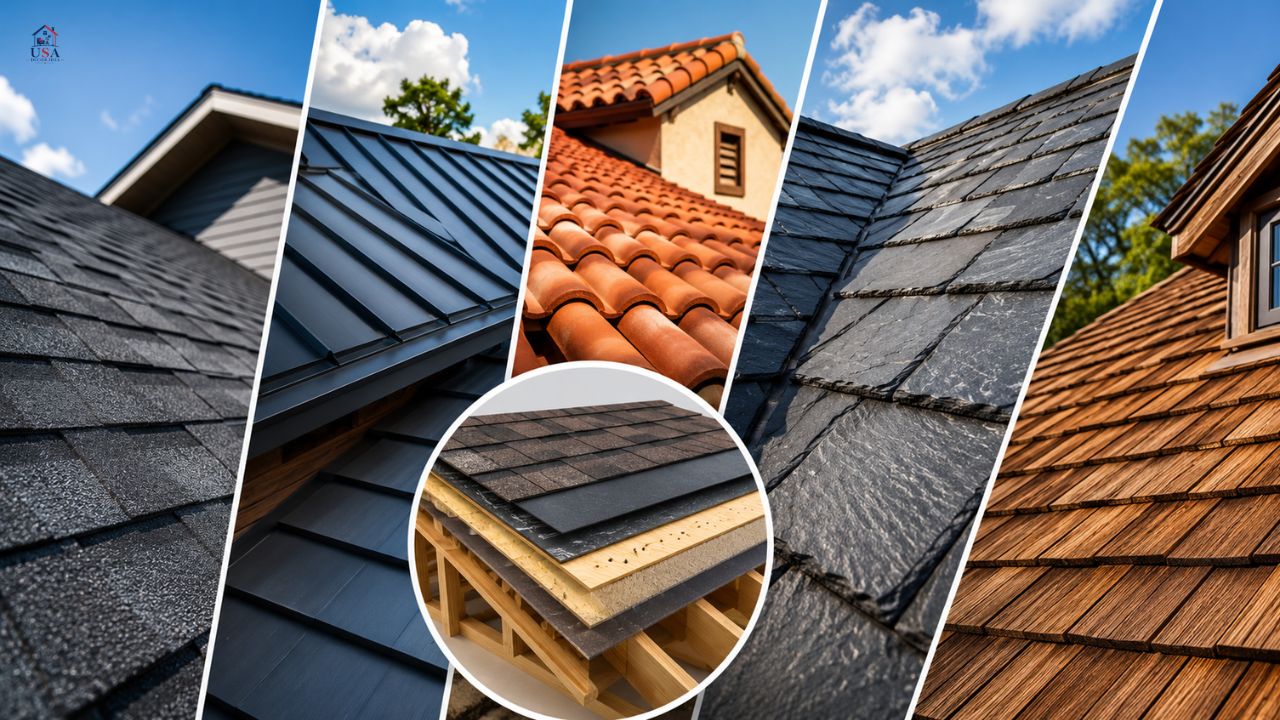
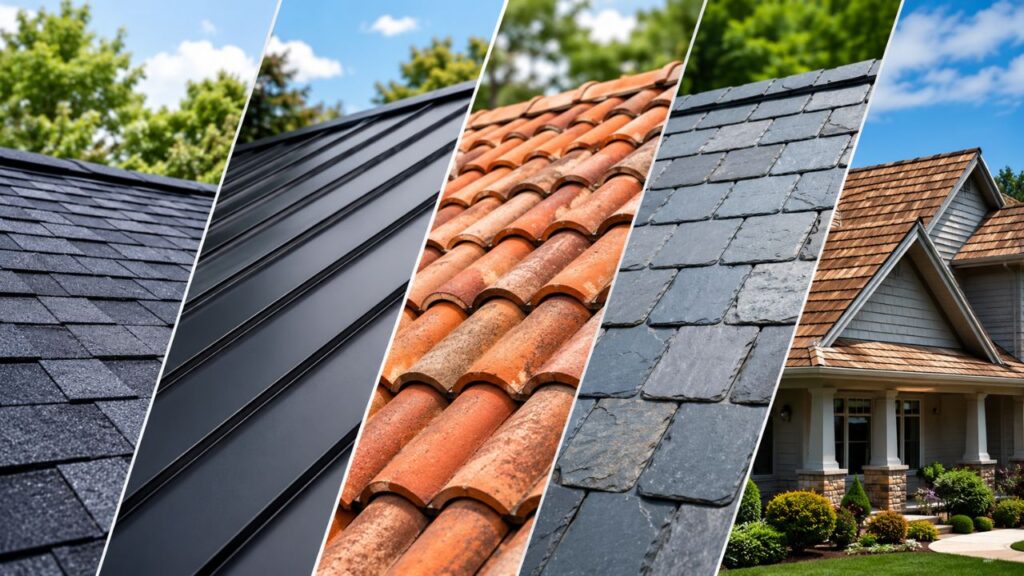
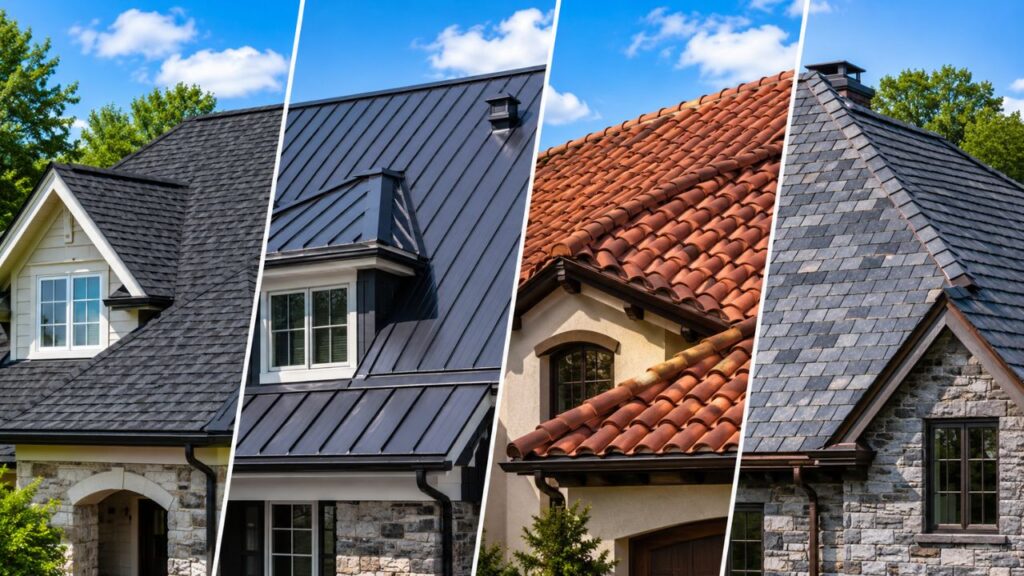
The most common types of roofing for homes include asphalt shingles, metal roofing, clay tile, concrete tile, slate, wood shingles or shakes, synthetic roofing, and flat-roof membranes. These are the common roofing materials most homeowners see in estimates, showrooms, and neighborhood roof replacements.
Industry guidance also separates steep-slope residential systems into major categories such as asphalt shingle systems, clay and concrete tile systems, metal shingle systems, slate systems, and wood shake or wood shingle systems. The National Roofing Contractors Association notes that steep-slope roof guidance covers system components such as roof decks, underlayments, primary roof coverings, accessories, reroofing, and construction details.
Asphalt Shingles
Asphalt shingles are the most familiar roofing material in many neighborhoods. They are popular because they are affordable, widely available, relatively easy to install, and offered in many colors. If you are asking about the cheapest roofing material, asphalt shingles are usually near the top of the list for standard residential roofs.
There are several types of roofing shingles, including three-tab shingles, architectural shingles, and designer shingles. Three-tab shingles are thinner and flatter. Architectural shingles are thicker, more dimensional, and more common on many modern homes. Designer shingles can mimic slate or wood shake at a lower cost than the real thing.
Asphalt shingles work well for many residential roofs, but quality matters. NRCA recommends asphalt shingles that comply with ASTM D3462, and it notes that compliant products are usually identified in manufacturer literature or package labeling. NRCA also explains that many fiberglass asphalt shingles have Class A fire ratings, while older organic shingles often have lower fire ratings.
Metal Roofing
Metal roofing has moved far beyond old barn panels. Today’s metal roofing types include standing seam panels, corrugated panels, metal shingles, metal tiles, aluminum, steel, zinc, and copper. Homeowners choose metal because it can last a long time, shed snow well, resist fire, and create a clean modern look.
For many houses, metal is one of the strongest roofing options when long service life matters. It is also lighter than tile or slate, which can make it easier to install on some homes. The upfront price is usually higher than asphalt, but homeowners who plan to stay in the home for decades may like the long-term value.
Metal also works with different design styles. A standing seam roof looks crisp on modern farmhouses and contemporary homes, while metal shingles can resemble slate, shake, or tile. If you are comparing metal roof options, ask about panel gauge, coating quality, fastener style, oil canning, hail resistance, and whether exposed or concealed fasteners are being used.
Clay and Concrete Tile
Tile is one of the most recognizable roof coverings, especially on Mediterranean, Spanish, Mission, Southwestern, and Florida-style homes. Clay tile has a classic warm look, while concrete tile can be made in many shapes and colors.
Tile can last a very long time, but it is heavy. NRCA specifically notes that clay or concrete tile is durable but may require verification that the home can support the added load when replacing another roof covering.
The main types of roof tiles include barrel tile, Spanish tile, flat tile, interlocking tile, clay tile, concrete tile, and lightweight tile profiles. Tile is beautiful and durable, but broken tiles, flashing issues, underlayment aging, and foot traffic damage can still create problems.
Slate Roofing
Natural slate is one of the most premium roof materials available. It has a distinctive appearance, excellent longevity, and strong fire resistance. On the right home, it can be stunning.
The tradeoffs are weight, cost, installation skill, and repair complexity. Slate is not a casual DIY product. It requires an experienced installer, suitable structure, proper flashing, and careful handling. For homeowners who love the look but not the price or weight, synthetic slate can be a practical alternative.
Wood Shingles and Wood Shakes
Wood roofs offer a warm, natural look that is difficult to duplicate. Wood shingles are usually machine-sawn and more uniform, while wood shakes are split and more rustic. NRCA notes that wood shakes and shingles are commonly made from cedar, redwood, Southern pine, and other woods, but some building codes limit their use because of fire-resistance concerns.
Wood can be charming, but it requires more maintenance than many modern products. It may not be ideal in wildfire-prone regions, very damp climates, or communities with strict fire codes. If you like the style, ask about treated products, local code approval, ventilation, and maintenance expectations.
Synthetic and Composite Roofing
Synthetic and composite products are designed to imitate slate, shake, or tile while reducing weight and sometimes lowering cost. These modern roofing materials may be made from polymers, rubber, recycled blends, or engineered composites.
The appeal is obvious: you can get the look of expensive natural materials without all the structural or maintenance demands. Still, warranties, product history, fire ratings, impact ratings, and installer experience should be reviewed closely.
Flat and Low-Slope Roofing
Flat roofs are not truly flat; they need slope and drainage. Common low-slope systems include TPO, PVC, EPDM rubber, modified bitumen, built-up roofing, and coated systems. These are different from steep-slope shingles and tiles because they are designed to handle slower water movement.
If your home has a porch roof, addition, garage, or modern flat roof section, ask contractors about drainage, seams, penetrations, insulation, ponding water, and warranty coverage.
Roofing Materials Comparison by Cost, Lifespan, and Style
A fair roofing materials comparison should look at more than the installed price. It should compare lifespan, repairs, climate performance, structural weight, appearance, and availability of qualified installers.
| Material | Typical Strength | Watch-Out | Best For |
|---|---|---|---|
| Asphalt shingles | Affordable and versatile | Shorter lifespan than premium choices | Budget-conscious homes |
| Metal | Durable and lightweight | Higher upfront cost | Long-term value and modern style |
| Clay tile | Classic and long-lasting | Heavy and brittle under foot traffic | Warm climates and Spanish-style homes |
| Concrete tile | Durable and versatile | Heavy; underlayment still matters | Long-lasting residential roofs |
| Slate | Premium natural beauty | Very expensive and heavy | Historic, luxury, and high-end homes |
| Wood shake | Natural charm | Fire and maintenance concerns | Rustic homes where codes allow |
| Synthetic | Lightweight style imitation | Product quality varies | Homes wanting slate/tile/shake look |
The cheapest roofing material for house projects is often asphalt shingles, while the most expensive roofing material is usually natural slate, copper, or high-end tile depending on the market. This Old House lists asphalt, wood shake, metal, and clay tile with wide cost and lifespan differences, while Fixr reports asphalt shingles as among the most common choices because of affordability and ease of installation.
Best Roofing Materials for Different Homes
There is no single “best” roof for everyone. The best choice is the one that fits your home, climate, budget, and long-term plans.
For starter homes, rentals, and tight budgets, asphalt shingles are usually the easiest recommendation. They are familiar, repairable, and widely installed. For homeowners who want a long-lasting roof with a clean look, metal is often worth comparing. For Spanish, Mediterranean, or coastal architecture, clay or concrete tile can be a natural fit. For historic or luxury properties, slate may be the dream choice.
For homes in hail-prone regions, ask about impact ratings. For wildfire-prone areas, look closely at fire ratings and local code requirements. For hot climates, consider color, reflectivity, ventilation, and attic heat. For cold regions, ask about ice barriers, snow shedding, and flashing details.
What Are Roofs Made Out Of?
If you have ever wondered what are roofs made out of, the answer is more layered than most people expect. A typical pitched roof may include roof decking, underlayment, ice and water barrier, starter shingles, field shingles or panels, flashing, pipe boots, vents, ridge caps, nails or screws, drip edge, and sealants.
So, what is roofing made of? The visible layer may be asphalt, steel, aluminum, copper, clay, concrete, slate, wood, rubber, plastic, polymer, or composite material. But the roof performs properly only when all layers work together. Even the best roofing materials can fail early if the deck is weak, the attic lacks ventilation, or flashing is installed poorly.
Choosing Roofing Materials for Your Climate
Climate should guide your choice. In hot, sunny regions, UV exposure and attic heat can age materials faster. In humid areas, algae-resistant shingles or suitable tile systems may help. In snowy climates, metal can shed snow efficiently, but snow guards may be needed near walkways. In high-wind areas, installation details, fasteners, and uplift ratings become especially important.
Better Homes & Gardens explains that roof lifespan depends on material, climate, installation quality, maintenance, and roof design, with asphalt, wood, metal, tile, and concrete roofs all having different expected lifespans.
A roof should not be chosen from a showroom sample alone. Ask how the material performs where you live. Local roofers know which products hold up against your wind, sun, rain, hail, salt air, freeze-thaw cycles, and building code requirements.
Highlighted Homeowner Vocabulary for Roofing Choices
When comparing estimates, you may hear many similar phrases. Homeowners and contractors often use types of roofing, roof materials, roofing options, types of roofing materials, different types of roofing, types of roof materials, different types of roofing material, roofing types, type of roofing materials, roof material types, types of roofs materials, different roofing materials, different types of roof materials, roof material, different types of roofing materials, roofing type, different types of roofs materials, roof types, roofing types residential, type of roofing, roof options, types roofing, and roofing material options to describe the same basic decision.
In product lists and estimates, you may also see roofing materials types, residential roofs, what are roofs made out of, roof types material, residential roofing types, materials for a roof, different roofing systems, roof material options, type of roof materials, different roof materials, different roof material types, all types of roofing materials, cheapest roofing material, roof types for homes, common roofing materials, different type of roof materials, roof coverings, different roof types, types of residential roofing, type of roof material, roof materials types, materials roofing, types of roof materials with pictures, residential roofing materials, residential types of roofs, types of roof coverings, roof types materials, and types of roof material.
Bilingual homeowners, contractors, and suppliers may use terms such as nombres de materiales para roofing, tipos de roofing, material de roofing, materiales de roofing, material para roofing, tipos de roof, nombres de materiales para roofing en ingles, tipos de shingles, tipos de rufin, material para roof, materiales para roofing, materiales para techos, materiales para techos exteriores, and material para techos de casas.
You may also hear broader phrases such as different kinds of roofing, roofing system, material for roof, types of roofs, type of roofing material, home roofing materials, types of residential roofs, material for roofing, roofing choices, roof type materials, different types roofing materials, roofing material types, roofing materials list, residential roof types, roofing type materials, residential roofing systems, kinds of roofing materials, different kinds of roofing materials, types of roof tiles, roof covering material, roof material type, residential roofing material, roof choices, roofing needs, type roofing, roof methods, what are the different types of roofing materials, what is roofing made of, type of roofs materials, types of roofing material, roof options for house, common roof materials, and roof covering types.
For budget planning, homeowners often compare low cost roofing materials, cheapest roofing materials, cheap roofing material, cheapest roof material, cheapest roofing options, least expensive roofing material, cheapest roof options, cheap roofs, cheapest roof type, cheapest type of roof, cheapest roofing, inexpensive roofing material, cheapest type of roofing, inexpensive roofing, cheap roof options, least expensive roofing, cheap diy roofing material, cheap roof materials, cheap roofing alternatives, low cost roofing ideas, cheap roofing ideas, cheapest roof covering, and what is the cheapest roof.
For metal, tile, sheets, and panels, useful phrases include metal roofing types, metal roof types, metal roof options, types of metal roofs, metal roofing materials, types of roofing sheets names, types of roofing sheets, roofing sheets types, materials used for roofing sheets, different types of roofing sheets, roof sheet types, roof sheet material, sheet roofing materials, types of roof panels, which roofing sheet is the best, 6 types of roofing sheets, metal roof types of roofing sheets names, tile roofing types, different types of roof tiles, house roof tiles types, new roof tiles, roof tiles prices, roof tiles types and prices, roof tiles types pictures, and what are roof tiles called.
For replacement planning, common phrases include roof replacement materials, types of roof replacement, roof replacement options, home roof replacement, what materials are needed to replace a roof, material list for roofing, materials needed for roofing a house, supplies needed for roofing, material needed for roofing, roof installation materials, types of roof installation, roofing products, residential roofing products, specialty residential roofing products, new residential roofing products, new residential roofing materials, latest roofing materials, new roof materials, new roof material, new roof types, new types of roofing, new roof system, and residential roofing products.
For home style and structure, phrases include house roof, roof for house, roof for a house, roofing house, roofing houses, roofing for houses, house roofing materials, house roof materials, home roofs, home roof, roof on a house, roof a house, roofs of houses, roofs on houses, houses roof, roofs for houses, roof houses, house roofs, roofing options for house, roof options for house, different roof types for houses, different types of residential roofs, different roof systems, different roofing systems, types of roof systems, roofing system types, roofing systems types, residential roofing system, residential roofing systems, roof system types, and standard roof.
How to Compare Roofing Estimates
A roof estimate should be detailed enough that you can compare apples to apples. Look for the brand and product line, underlayment type, flashing details, ventilation work, tear-off details, disposal, decking replacement price, warranty terms, and payment schedule.
Do not choose only by the lowest number. A low bid may leave out important details, such as replacing step flashing, adding ice and water protection, correcting ventilation, or removing old layers. Good roofers explain what they are installing and why.
Ask each contractor:
- What exact product are you installing?
- Is the old roof being removed?
- What underlayment is included?
- How are valleys and penetrations handled?
- What happens if damaged decking is found?
- What workmanship warranty is included?
- Are permits, disposal, and cleanup included?
- Who supervises the crew?
Cheapest and Most Expensive Roof Options
The cheapest roofing material is usually asphalt roll roofing for low-slope structures or basic asphalt shingles for pitched homes, depending on the roof type. For a normal house roof, asphalt shingles are usually the practical low-cost choice.
The most expensive roof material is often natural slate, copper, or premium clay tile. These choices can look beautiful and last a long time, but they demand a larger budget and specialized installation.
A smart homeowner looks at cost per year, not just cost today. A roof that costs more upfront but lasts twice as long may be reasonable if you plan to own the home long term. But if you need a safe, attractive, code-compliant roof right now, a more affordable system may be the better move.
FAQ
What are the best roofing materials for most homes?
For most homes, asphalt shingles, metal roofing, and concrete tile are the most practical choices. Asphalt is affordable, metal is long-lasting, and concrete tile offers durability with strong curb appeal.
What type of roofing material is best?
The best type of roofing material depends on your budget, climate, roof structure, and style goals. Asphalt is best for affordability, metal for durability, tile for warm-climate style, and slate for premium longevity.
What is the cheapest roofing material?
For many pitched homes, asphalt shingles are the cheapest roofing material that still provides reliable performance when installed correctly. For sheds or very low-slope structures, rolled roofing may cost less, but it is not ideal for most main house roofs.
What is the most common roofing material?
Asphalt shingles are the most common roofing material for many residential homes because they balance cost, availability, appearance, and ease of installation.
What are house roofs made of?
House roofs can be made of asphalt shingles, metal panels, clay tile, concrete tile, slate, wood shake, synthetic shingles, rubber membranes, or built-up systems. The visible surface is only one part of the complete roof assembly.
Are metal roofs better than shingles?
Metal roofs usually last longer than asphalt shingles and can offer excellent durability. Shingles usually cost less upfront and are easier to repair. The better choice depends on budget, climate, and how long you plan to stay in the home.
What are the different kinds of roofing materials?
The main different kinds of roofing materials are asphalt shingles, metal, clay tile, concrete tile, slate, wood, synthetic composite products, and flat-roof membranes.
What materials do I need for roofing?
Typical materials include roof covering, underlayment, flashing, drip edge, fasteners, vents, ridge caps, starter strips, sealants, and sometimes ice and water barrier. Exact supplies depend on the roof design and material.
What type of roof do I have?
You can usually identify your roof by its surface. Granular overlapping strips are asphalt shingles, long vertical seams are standing seam metal, curved red or brown pieces are tile, thin stone-like pieces may be slate, and thick rustic pieces may be wood shake.
What’s the best roofing material for long-term value?
Metal, tile, and slate often provide strong long-term value because they can last longer than basic shingles. However, asphalt can still be the best value when budget, local labor, and simple repairs matter most.
Conclusion
Choosing roofing materials is really about choosing how your home will handle weather, age, cost, and style for years to come. Asphalt shingles remain the practical favorite for many homeowners, metal is a strong long-term option, tile brings character and durability, slate offers premium beauty, wood creates natural warmth, and synthetic products give homeowners more design flexibility.
The best roof is not always the cheapest or the most expensive. It is the roof that fits your house, your climate, your budget, and your expectations. Take time to compare products, ask detailed questions, and work with a qualified contractor who understands the full system—not just the surface. A well-chosen roof does more than cover a house. It protects the life happening underneath it.