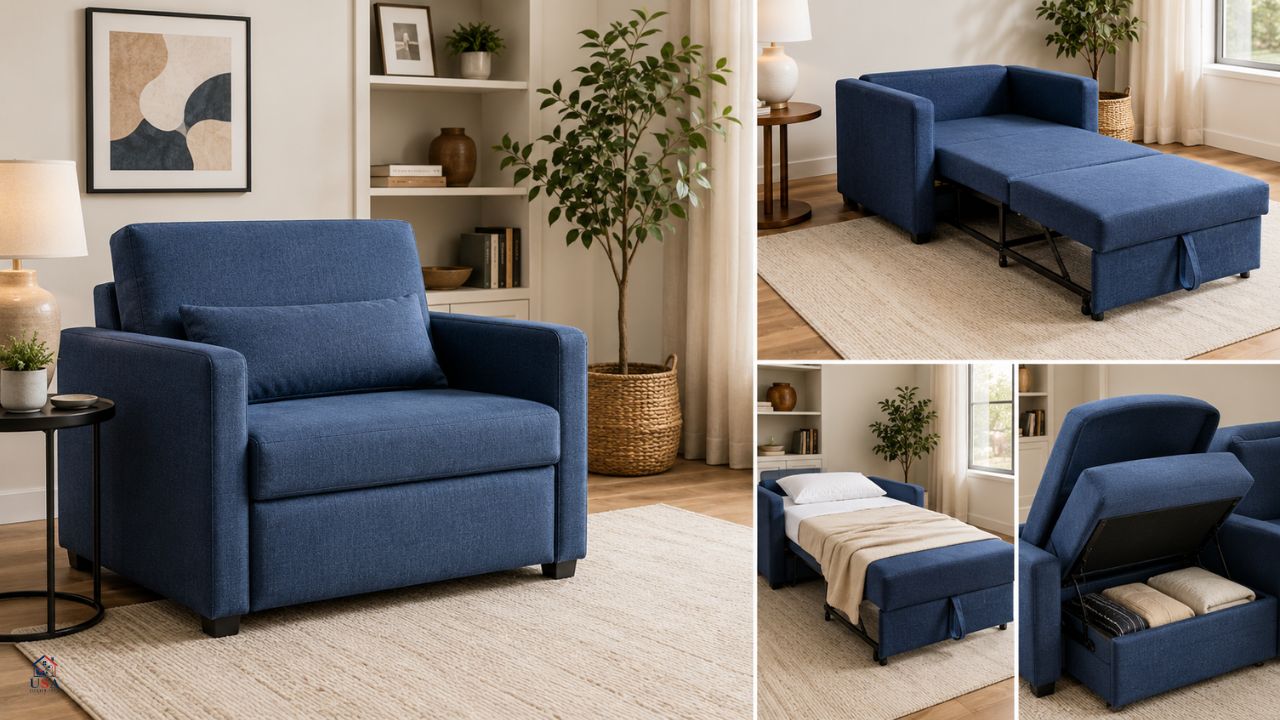
If you’re short on space but still want to be a gracious host, a sleeper chair might be the most practical piece of furniture you’re not yet using. It looks like a regular armchair during the day, blends into your living room or home office, and folds or converts into a single bed when a guest needs somewhere to sleep.
Unlike a full sleeper sofa or a sectional sofa with pull out bed, a sleeper chair takes up a fraction of the floor space while still solving the same overnight guest problem. That’s a big deal in a studio apartment, a home office, or a kid’s room where a queen-sized pull-out feels completely out of proportion.
This guide covers everything you need to know before buying one — from types and materials to comfort considerations, sizing, and who each style works best for.
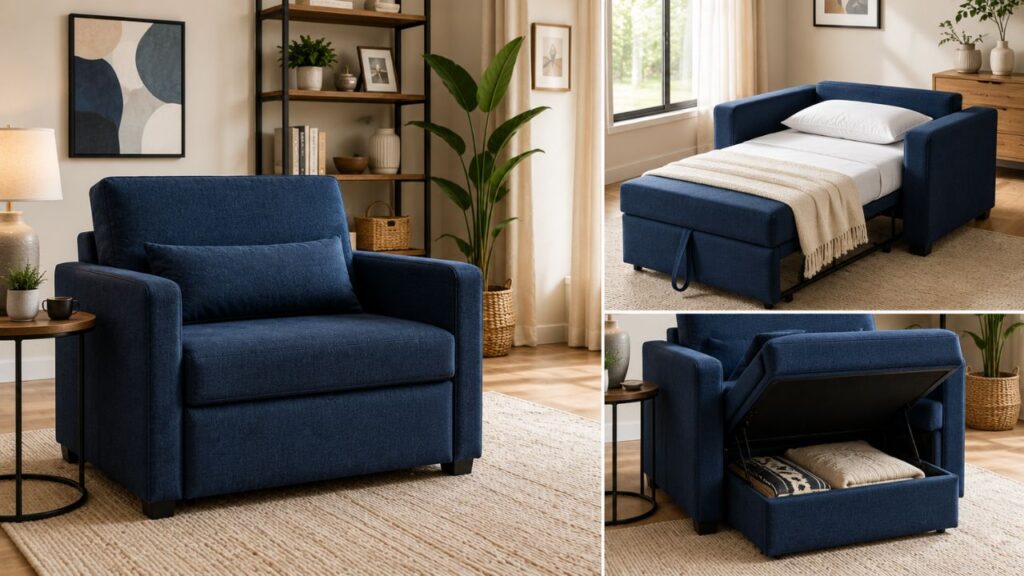
Types of Sleeper Chairs
Not all sleeper chairs work the same way. The conversion mechanism matters both for comfort and for how seamlessly it fits into daily life.
Fold-Out Sleeper Chairs
The most traditional type. The seat cushion and backrest unfold to lay flat, much like a miniature version of a convertible sleeper sofa. These are widely available and tend to be affordable, though the quality of the mattress inside varies widely. Some use a thin foam pad; better versions include a proper innerspring or memory foam layer.
Pop-Up Sleeper Chairs
A pop up sleeper chair works differently — rather than unfolding outward, the seat pulls forward and the back lowers to create a flat sleeping surface. These are compact, often easier to operate solo, and tend to have a more modern look. If you’ve searched for a pop up sleeper sofa in a smaller format, this is essentially that.
Chair and a Half Sleeper
Wider than a standard chair but not quite a loveseat, this style offers more sleeping room — often enough for a child or a petite adult. Think of it as a halfway point between sleeper chairs for adults and a sleeper loveseat.
Sleeper Ottoman Chair Combos
Some designs pair a chair with a matching ottoman that together unfold into a sleeping surface. These are popular for small apartments because the ottoman doubles as a footrest or coffee table when not in use as a bed.
Futon-Style Sleeper Chairs
Borrowing the mechanism from a futon sleeper sofa, these chairs use a hinge at the backrest that locks into flat position. They’re typically the most budget-friendly option and a staple of dorm rooms and studio apartments. A quality comfortable futon chair can be surprisingly livable if you choose the right mattress thickness.
Sleeper Chair Sizes: What to Expect
Sleeper chairs are naturally compact, but size varies more than people expect.
| Configuration | Typical Seat Width | Sleeping Surface |
|---|---|---|
| Standard sleeper chair | 32–38 inches | Twin or narrow twin |
| Chair and a half | 48–54 inches | Wide twin or small full |
| Sleeper ottoman combo | 30–36 inches | Twin |
| Futon chair | 32–40 inches | Twin |
For reference, a twin size sofa bed or twin pull out bed in a full sofa format offers similar sleeping width, so a sleeper chair in twin size is genuinely functional for one adult. If you need more room, consider sizing up to a sleeper loveseat or convertible loveseat sleeper, which offers full-width sleeping closer to a twin size pull out couch without dominating the room.
Materials and Upholstery: What Holds Up Best
The upholstery of a sleeper chair affects both appearance and longevity. Here’s how the main options compare.
Fabric Upholstery
Linen, polyester blends, microfiber, and performance fabrics are common. Performance fabric sleeper options are worth the investment if pets or kids are in the picture — they resist staining and are easier to wipe down. Velvet looks luxurious but shows wear faster. A linen sleeper sofa aesthetic translates well to chair format for a light, airy look.
Leather and Faux Leather
A leather sofa bed chair is durable, easy to clean, and timeless. Top-grain leather ages beautifully; bonded leather tends to peel over time. Faux leather sleeper options cost less and perform reasonably well in low-traffic spaces. If you love the look of a brown leather sleeper sofa but need something smaller, leather sleeper chairs are widely available in similar finishes.
Boucle and Textured Fabrics
Trending right now, boucle sleeper sofa textures have made their way into chair formats too. These look elevated and work beautifully in modern interiors, though they can be harder to clean.
The Comfort Question: Can You Actually Sleep in One?
Let’s be direct — sleeper chair comfort varies enormously, and it’s the thing most buyers regret not researching before purchasing.
The biggest issue is mattress quality. Many entry-level chairs include a 2–3 inch foam pad that feels fine to sit on but isn’t adequate for a full night’s sleep. This is the same complaint that plagues cheap sofa beds that are actually comfortable — or rather, the search for them. If sleep quality matters, look for these features:
- Memory foam layer: A sleeper sofa memory foam insert or a dedicated memory foam sleeper sofa mattress makes a significant difference. Even 4–5 inches of quality foam is workable for occasional use.
- No center bar: The bar issue that haunts hide a bed couch designs also affects some fold-out chairs. Look for sleeper sofa without bars construction.
- Dense base foam: Thin or low-density foam compresses quickly. Ask about foam density or ILD rating when possible.
For everyday use — not just occasional guests — you’ll want the same things people look for in a best sleeper sofa for everyday use: a proper sleeping surface, durable upholstery, and a frame that holds up to repeated folding.
Best Uses for a Sleeper Chair
Guest Rooms and Home Offices
The most natural fit. A sleeper chair in a home office lets the room function daily as a workspace while accommodating an overnight guest without a dedicated guest bed. Paired with a desk and a good lamp, it’s a smarter use of a small room than a sofa bed for guest room that takes up more floor space unnecessarily.
Studio and Small Apartments
In a studio apartment sofa bed setup, every square foot counts. A sleeper chair placed in a reading nook or corner can sleep a visiting friend while the main space stays open. This is where small space sleeper chair options shine — compact footprint, functional design.
Kids’ Rooms and Teen Spaces
A kids sleeper sofa in chair format is a popular choice for sleepovers. It’s manageable in size, easy for a kid to operate, and can serve as seating during the day. Durable, easy-clean upholstery is especially important here.
Media Rooms and Basements
A home theater sofa bed or media sleeper sofa setup often incorporates chairs as individual seating units. A couple of sleeper chairs in a basement give you flexible seating that converts when guests stay over.
What to Look For: A Practical Buying Checklist
Before purchasing, run through these considerations:
Frame quality
- Hardwood or kiln-dried wood frames last longer than particleboard or soft wood
- Ask about corner blocking and joint reinforcement
- A sturdy frame matters especially with repeated fold-in, fold-out use
Conversion mechanism
- Test the fold-out or pop-up mechanism in person if possible
- It should operate smoothly without excessive force
- Consider whether you’ll be doing this alone regularly
Mattress or sleeping surface
- Minimum 4 inches of quality foam for occasional use
- Memory foam or hybrid for regular use
- Check whether the mattress is removable or replaceable
Dimensions
- Measure your space carefully, including clearance needed when fully opened
- Check sleeping surface dimensions against who will be using it
Upholstery
- Match to your lifestyle: pets, kids, spill risk
- Consider ease of cleaning and long-term durability
Weight capacity
- Verify the manufacturer’s stated weight limit
Sleeper Chair vs. Other Space-Saving Sleep Solutions
It helps to see how a sleeper chair compares with the alternatives you might also be considering.
| Option | Space Required | Sleeps | Best For |
|---|---|---|---|
| Sleeper chair | Very small | 1 adult | Office, nook, small room |
| Sleeper loveseat | Small | 1–2 | Apartment, small living room |
| Full sleeper sofa | Medium | 2 adults | Living room, guest room |
| Queen sleeper sofa | Large | 2 adults | Dedicated guest space |
| Futon sofa | Medium | 1–2 | Dorm, studio, casual space |
| Murphy bed | Wall space | 1–2 | Studio, dedicated guest room |
A sleeper sofa vs futon debate often comes down to aesthetics and daily comfort. The same applies to sleeper chairs — a futon-style chair converts more simply but may look more casual; a fold-out upholstered chair reads as real furniture.
If you’re deciding between a sleeper chair and a convertible loveseat sleeper, ask yourself: how many guests, how often, and how much floor space can you spare? One frequent overnight guest who stays for a week will be more comfortable in a loveseat. An occasional single guest who stays one or two nights? A quality sleeper chair is perfectly fine.
How to Make a Sleeper Chair More Comfortable
Even a mid-range sleeper chair can sleep well with a few easy improvements — the same logic applies to how to make a sofa bed more comfortable in larger formats.
- Add a mattress topper: A 2-inch memory foam topper transforms almost any sleeping surface. Look for toppers designed for narrow or twin widths.
- Use proper bedding: Fitted sheets designed for sofa beds or twin mattresses help the bedding stay in place.
- Check the pivot point: If there’s a slight gap or ridge where the chair folds, a topper will bridge it.
- Swap the foam insert: Many chairs allow you to replace the included foam pad. A denser or thicker replacement cut to size makes a real difference.
Price Ranges: What to Expect
Sleeper chairs span a wide range depending on materials, brand, and mechanism quality.
- Under $300: Entry-level futon chairs and basic fold-outs. Functional for occasional use, limited durability.
- $300–$600: Mid-range with better foam, stronger frames, and wider fabric choices. Good for occasional guest use.
- $600–$1,200: Quality upholstery, improved sleeping surfaces, more design options. Suitable for regular use.
- $1,200 and up: Higher-end construction, premium fabrics, better long-term durability. Similar quality tier to luxury sleeper sofas in chair format.
For context, a best budget sleeper sofa in full size typically starts around $500–$700, so sleeper chairs often offer better value per dollar for single-person overnight needs.
FAQ
What is a sleeper chair?
A sleeper chair is a piece of furniture that functions as a regular armchair during the day and converts into a single bed when needed. The conversion mechanism varies — common types include fold-out, pop-up, and futon-style designs.
Are sleeper chairs comfortable to sleep on?
Comfort varies significantly by model. Chairs with thick memory foam sleeping surfaces and no center bar are the most comfortable. Budget options with thin foam pads are better suited to very occasional use. Adding a mattress topper can improve almost any model.
What size bed does a sleeper chair make?
Most sleeper chairs convert to a twin or narrow twin sleeping surface — typically around 38–40 inches wide and 72–75 inches long. Chair-and-a-half models offer a wider surface, often comparable to a small full.
How much space does a sleeper chair need when open?
When fully extended, most sleeper chairs require 50–70 inches of floor depth depending on the chair’s seat depth and the length of the folded-out sleeping area. Always measure your room with clearance in mind before purchasing.
Can an adult sleep comfortably in a sleeper chair?
Yes, with the right model. Adults up to average height sleep comfortably in a quality sleeper chair with adequate mattress thickness. Taller adults (over 6 feet) may find the sleeping surface slightly short and would benefit from a sleeper loveseat or twin size sofa bed instead.
How is a sleeper chair different from a futon?
A futon typically refers to a sofa-style frame with a bifold mattress that converts by tilting the backrest flat. A sleeper chair is specifically chair-sized and often uses a different fold-out or pop-up mechanism. Both serve similar purposes; futon chairs tend to be simpler and less expensive.
What’s the best upholstery for a sleeper chair in a high-traffic home?
Performance fabric or microfiber are the most practical for busy households with kids or pets. They resist staining, hold up to cleaning, and tend to maintain their appearance longer than velvet or untreated linen blends.
Is a sleeper chair worth it for a home office?
For most home office setups, yes. A sleeper chair adds overnight sleeping capacity without requiring a dedicated guest room. It works as seating daily and converts quickly when needed. It’s one of the most practical investments for a dual-purpose room.
Final Thoughts
A sleeper chair is one of those furniture investments that earns its place quietly — it does two jobs without demanding extra space or constant attention. Whether you’re outfitting a studio apartment, creating a functional home office, or just trying to have a guest-ready option that doesn’t eat your living room floor, a well-chosen sleeper chair delivers.
The key is not settling on the first option you see. Take the conversion mechanism, sleeping surface quality, and upholstery seriously. A chair that feels comfortable to sit in is only half the story — the sleeping experience is what guests will actually remember. Prioritize those factors, match the style to your existing space, and you’ll end up with a piece that genuinely earns its spot in your home for years.