There’s a reason people stop mid-sentence when they walk into a room with a good stone fireplace. It’s not just the fire. It’s the weight of the stone, the way light catches on rough edges, the sense that the room was built around this one feature instead of the other way around. I’ve walked through more renovation projects than I can count, and the fireplace conversation almost always starts the same way: “I want something that feels like it’s always been here.”
That’s harder to pull off than it sounds. A stone fireplace can look like a design magazine spread or it can look like a strip mall steakhouse, and the difference usually comes down to a handful of decisions most homeowners never think to ask about. This guide walks through those decisions in plain language, from the actual parts of a fireplace to the tradeoffs between natural stone, cast stone, and plaster surrounds, plus real cost ranges and mistakes I see repeated on nearly every project.
Why Stone Still Wins Against Every Trend
Tile trends come and go. Painted brick had its five minutes. But stone fireplaces keep showing up in every “timeless home features” list a design editor publishes, and there’s a reason for that beyond aesthetics. Stone is one of the few materials that looks better with age, not worse. A little soot, a little wear on the hearth edge, a slight variation in tone from one piece to the next — none of it reads as damage. It reads as character.
If you’re gathering stone fireplace ideas for a renovation or new build, the first thing to settle isn’t the look. It’s the function. Is this fireplace doing structural work, holding up a chimney and venting real combustion gases? Or is it decorative, wrapped around a gas insert or an electric unit? That single question determines almost everything else — what materials are safe to use, how much clearance you need, and what a contractor is legally allowed to install.
Understanding the Parts of a Fireplace Before You Design Anything
I ask every client the same question before we talk finishes: do you know the parts of a fireplace you’re actually working with? Most people can point at “the front” and “the mantel,” but the assembly underneath decides what kind of stone or surround will actually fit.
Here’s the basic anatomy, front to back:
- Firebox – the interior chamber where the fire burns or the insert sits
- Hearth – the horizontal stone or masonry base extending in front of the firebox, required by code to be non-combustible
- Surround – the vertical facing material directly around the firebox opening
- Mantel – the shelf or ledge above the firebox, often the focal decorative element
- Chimney breast – the projecting wall structure that houses the flue
- Flue and damper – the venting system that carries smoke and gases out of the home
Every design choice you make — stone type, mantel depth, how far the surround extends — has to respect this structure. A gorgeous fireplace mantel surround installed with the wrong clearance from the firebox isn’t a design flaw, it’s a fire code violation waiting to happen.
Natural Stone Fireplace: The Real Thing, With Real Tradeoffs
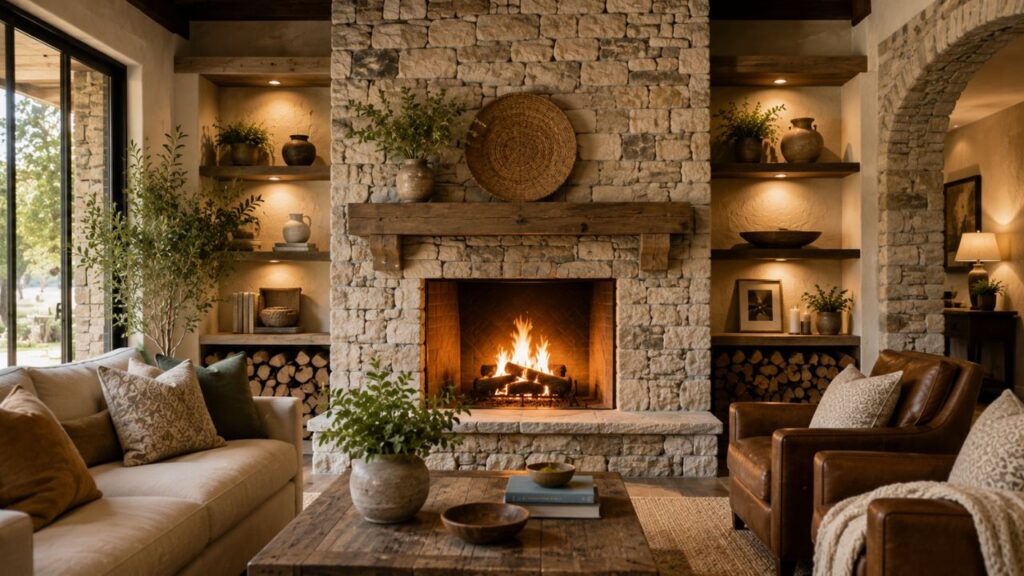
A natural stone fireplace is quarried material — granite, limestone, slate, fieldstone, travertine, or river rock — cut or split and set by a mason. It’s the gold standard for a reason: no two pieces look identical, and the texture holds up to direct heat and decades of use without fading or cracking the way some manufactured products eventually will.
When people ask for natural stone fireplace ideas, I usually walk them through three broad looks:
- Fieldstone or ledgestone – irregular, stacked pieces with visible mortar lines, common in farmhouse and lodge-style homes
- Cut limestone or travertine – smoother, more formal, often used in transitional or European-inspired living rooms
- Slate or river rock – darker, more textured, frequently chosen for rustic or mountain-cabin aesthetics
A natural stone fireplace surround typically costs more upfront than manufactured alternatives, largely because of weight and labor. Real stone needs structural support behind the wall in most retrofits, and skilled masons aren’t cheap in any market. But the long-term value holds — real stone doesn’t off-gas, doesn’t fade under UV exposure near a bright window, and tends to add resale value that manufactured veneer often doesn’t match one-for-one.
Cast Stone Fireplace: The Middle Ground Nobody Talks About Enough
A cast stone fireplace is manufactured from a concrete-based mixture poured into molds designed to replicate the look of carved limestone or natural stone. Done well, it’s genuinely hard to tell apart from the real thing at a glance, especially once it’s installed, painted, and aged a bit.
A cast stone fireplace surround makes sense for a specific type of project: formal mantels with carved detail, columns, or ornate scrollwork that would cost a fortune to hand-carve from solid stone. Cast stone lets you get a Georgian or French-inspired mantel silhouette without commissioning custom stone carving, which can run into five figures depending on complexity.
The tradeoff is durability nuance, not durability failure. Cast stone is plenty strong for interior use, but it can be more prone to hairline cracking over decades compared to solid quarried stone, particularly in homes with significant foundation settling. It’s also noticeably lighter, which is actually an advantage in renovations where the existing wall framing can’t support the load of full natural stone veneer.
Plaster Fireplace Surround: Soft, Modern, and Often Misunderstood
A plaster fireplace surround has become one of the fastest-growing choices in modern interior design, and it deserves more attention than it usually gets in stone-focused guides. Plaster — typically a lime or gypsum-based finish applied over a substrate — creates a soft, matte, almost sculptural look that pairs beautifully with minimalist and Scandinavian-influenced interiors.
It isn’t stone at all, technically, but it’s worth including here because so many homeowners comparing options end up choosing between a textured stone look and a smooth plaster one. Plaster surrounds are lighter, less expensive to install than full masonry, and easy to shape into rounded, organic forms that stone can’t achieve without significant carving cost. The downside: plaster is more vulnerable to chipping and requires careful sealing near the firebox opening to handle heat cycling.
Comparison Table: Stone Fireplace Materials at a Glance
| Material | Look | Typical Cost Range | Best For | Maintenance |
|---|---|---|---|---|
| Natural stone | Authentic, varied texture | $$$–$$$$ | Lodge, farmhouse, luxury builds | Low, occasional resealing |
| Cast stone | Carved, formal detail | $$–$$$ | Traditional, French country | Low, watch for hairline cracks |
| Manufactured stone veneer | Lightweight, consistent | $$ | Budget-conscious remodels | Low |
| Plaster | Smooth, sculptural | $$ | Modern, minimalist spaces | Moderate, avoid chips |
Fireplace Stone Options by Room Style
Not every home wants the same texture on the wall. Fireplace stone options vary enormously depending on the era and mood of the house, and matching material to style is where most projects either click or fall flat.
Living room stone fireplace ideas tend to fall into a few recurring categories worth knowing before you shop:
- Modern rustic stone fireplace designs pair rough, oversized stone slabs with clean steel mantels or floating wood shelves — a deliberate contrast between raw and refined that reads as intentional, not accidental
- Traditional stacked stone with a wood mantel works in colonial and craftsman homes without fighting existing trim
- Floor-to-ceiling stone accent walls built around a central firebox have become the most requested look in new construction over the past few years, according to several regional builder surveys tracking buyer preference
- Whitewashed or limewashed stone softens a heavy material for coastal or Scandinavian-leaning interiors
If you’re renovating rather than building new, fireplace stone ideas should also account for existing ceiling height. A stone chimney breast that reaches a low eight-foot ceiling can feel cramped; the same design in a ten-foot great room feels intentional and grand. Scale matters more than most people expect going in.
Stone Around the Fireplace: How Far Should It Go?
One of the most common questions I get is how much stone around fireplace openings should actually extend. There’s no single correct answer, but there are real guidelines worth following:
- Extending stone to the ceiling creates a dramatic focal wall and works well in rooms with strong sightlines from the entry
- Stopping the stone at mantel height keeps the fireplace as one feature among several, which suits smaller living rooms better
- Wrapping stone around the sides of the chimney breast, not just the front face, adds depth and reads as more custom than a flat front panel alone
A good rule of thumb from years of walkthroughs: if the fireplace is the only strong architectural feature in the room, let the stone go big. If there’s already a statement window, a vaulted ceiling, or built-in shelving competing for attention, keep the stone contained so the room doesn’t feel over-designed.
Fireplace Surrounds: Choosing the Right Frame for the Fire
Fireplace surrounds do more design work than people give them credit for. The surround is what your eye actually lands on, more than the stone field around it, because it frames the firebox opening directly.
A well-proportioned stone mantel should generally sit with its top surface between 54 and 60 inches from the hearth, adjusted for ceiling height and TV placement if a television will hang above. Several manufacturers, including well-known names like Omega Mantels, produce prefabricated mantel shelves in wood, cast stone, and stone-composite finishes that installers can mount without custom fabrication — a solid option for homeowners who want a finished look without commissioning a custom carve.
Custom Stone Fireplace vs. Prefab Fireplace: What’s Actually Different
This is where a lot of confusion sets in, so let’s separate the two clearly.
A custom stone fireplace is built on-site by a mason, piece by piece, matched to your specific room dimensions, chimney structure, and stone selection. Every custom stone fireplace is genuinely one of one. It costs more, takes longer, and requires a skilled tradesperson, but it also means the final result fits your space exactly rather than being adapted to it.
A prefab fireplace, on the other hand, is a factory-manufactured firebox unit — often gas or electric — designed to be installed with minimal on-site construction. So what is a prefab fireplace in practical terms? It’s essentially a self-contained heating unit with its own venting system, built in a factory, shipped to the site, and set into a framed opening rather than built from the ground up with masonry. Homeowners often surround a prefab fireplace with stone veneer to get the visual weight of a full masonry build without the structural cost of supporting real stone and a full masonry chimney.
Here’s the honest tradeoff:
- Custom stone fireplace builds offer unmatched authenticity and resale appeal but come with higher cost, longer timelines, and structural requirements (footings, load-bearing considerations)
- Prefab fireplace units install faster, cost less, and often meet stricter modern emissions standards, but the stone surrounding them is veneer, not structural masonry
Neither choice is objectively better. A 1920s bungalow undergoing a historically accurate renovation usually calls for custom masonry. A new-construction living room where the builder needs a fast, code-compliant heat source often calls for a prefab unit dressed in stone veneer. Knowing which one you’re actually working with before you fall in love with a Pinterest photo saves a lot of frustration down the line.
Real Cost Ranges (Because Nobody Gives Straight Numbers)
Pricing varies heavily by region and labor market, but rough national ranges based on recent renovation project data look like this:
- Manufactured stone veneer surround: $2,500–$7,000 installed
- Natural stone veneer, full chimney breast: $8,000–$18,000+
- Full custom stone fireplace with structural masonry: $15,000–$40,000+
- Cast stone mantel and surround package: $3,000–$9,000
- Prefab gas fireplace insert with stone veneer surround: $5,000–$12,000
- Plaster surround finish over existing structure: $1,800–$5,000
These numbers shift with stone type, chimney height, and whether structural work is needed to support the added weight — always get at least two local quotes before assuming a national average applies to your project.
A Quick Case Study: What Happens When Scale Gets Ignored
A few years back, a family I worked with had fallen for a photo of a floor-to-ceiling stacked stone fireplace in a cabin with fourteen-foot vaulted ceilings. Their own living room had an eight-foot ceiling and a wide sliding door taking up most of one wall. They wanted the exact same natural stone fireplace treatment, full height, same stone type.
We built a scale mockup with painter’s tape on the wall before ordering a single piece of stone. At full height in their actual room, the stone consumed almost the entire visible wall and made the ceiling feel noticeably lower than it already was. We ended up stopping the stone about ten inches below the ceiling line and adding a simple wood cap, which kept the texture and warmth they wanted without the room feeling boxed in. The lesson holds for almost every fireplace project: photos rarely include ceiling height or room proportions, and copying a look exactly without adjusting for your own space is one of the fastest ways to end up disappointed with an expensive installation.
Matching Stone Color to Light and Climate
Stone color reads differently depending on the light hitting it, and this gets overlooked constantly. A warm sandstone that looks rich and golden in a south-facing room with afternoon sun can look flat and gray in a north-facing room that only gets indirect light. Before committing to any fireplace stone options, it’s worth requesting physical samples and viewing them in the actual room, at different times of day, rather than trusting a showroom display lit with warm halogen bulbs designed to flatter every sample equally.
Climate matters too, though less obviously. In humid coastal regions, porous stones like certain limestones can be more prone to staining or efflorescence — a chalky mineral deposit that appears as moisture moves through the stone. A qualified mason or stone supplier can recommend a sealant schedule suited to your specific climate and stone type, and this single maintenance step prevents most of the discoloration issues homeowners eventually complain about years later.
When to Bring in a Structural Engineer
Not every stone fireplace project needs an engineer, but certain situations genuinely do:
- Adding a full natural stone veneer to an existing wall that wasn’t originally designed to carry masonry weight
- Extending a chimney breast taller than the original structure
- Any project in an older home where the existing foundation or floor framing shows visible settling or cracking
- Multi-story installations where stone veneer is being added above the ground floor
A short consultation, often a few hundred dollars, can save a homeowner from a far more expensive structural failure years down the road. This is one area where cutting corners rarely pays off, no matter how tempting it is to skip the fee on a project that already feels expensive.
Common Mistakes Worth Avoiding
- Skipping the structural assessment. Natural stone is heavy. A wall that can hold drywall can’t automatically hold 400 pounds of stacked stone.
- Ignoring scale. A tiny stone accent on a massive chimney breast looks like an afterthought rather than a feature.
- Mismatching grout and mortar color. Bright white mortar against dark stone reads cheap; a tone closer to the stone reads custom.
- Forgetting the hearth extension code requirement. Many jurisdictions require a specific non-combustible hearth extension in front of any wood-burning firebox — check local building code before finalizing dimensions.
- Choosing stone before choosing the mantel. The mantel style often dictates which stone textures actually look intentional together.
Frequently Asked Questions
What is the best stone for a fireplace surround? It depends on the look you want and your budget. Granite and limestone are popular for their durability and heat resistance, while fieldstone and river rock suit rustic or cabin-style rooms. There isn’t one “best” stone — there’s a best stone for your specific room and climate.
Is a natural stone fireplace more expensive than cast stone? Generally yes. Natural stone costs more due to weight, quarrying, and skilled labor for installation, while cast stone offers similar visual detail at a lower price point with slightly less long-term durability in carved elements.
Can you put stone around an existing prefab fireplace? Yes, in most cases. Stone veneer can be added around a prefab fireplace as long as clearance requirements from the manufacturer are respected, since prefab units have specific heat clearance ratings that stone installation can’t violate.
How far should stone extend around a fireplace? There’s no single rule, but full floor-to-ceiling coverage suits rooms where the fireplace is the primary feature, while stopping stone at mantel height works better in smaller or busier rooms with other focal points competing for attention.
Do plaster fireplace surrounds hold up well over time? With proper sealing and careful use, yes, though plaster is more prone to chipping than stone and requires gentler cleaning and occasional touch-up compared to masonry surfaces.
What is a prefab fireplace exactly? A prefab fireplace is a factory-built firebox and venting unit, typically gas or electric, installed into a framed opening rather than constructed on-site from masonry. It’s faster and often less expensive to install than a fully custom stone fireplace.