A neighbor cornered me at a backyard barbecue last summer holding a cushion that had survived three kids, two dogs, and an entire Ohio winter left outside by mistake. She wanted to know what it was made of. The answer, unsurprisingly, was sunbrella fabric.
I’ve spent the better part of a decade working around outdoor furniture, marine upholstery, and fabric sourcing for small manufacturers, and if there’s one brand name that gets thrown around more than any other in that world, it’s this one. People type it into Google a dozen different ways — sun brella, sunbrells, sumbrella, you name it — but they’re all searching for the same thing: a fabric that won’t fall apart after one rainy season.
This guide is the one I wish existed when I first started fielding these questions. No fluff, no recycled marketing copy. Just what the fabric actually is, where it comes from, what it costs, and whether it earns its reputation.
What Is Sunbrella Fabric, Really?
Sunbrella fabric is a solution-dyed acrylic textile manufactured by Glen Raven, a textile company headquartered in Glen Raven, North Carolina, that’s been in business since 1880. The brand itself launched in 1961, originally developed for boat awnings before it found its way onto patio furniture, umbrellas, and eventually living rooms.
The name has become almost generic in casual conversation, the way people say “Kleenex” instead of tissue. That’s part of why you’ll see so many spelling variations floating around search bars — sun brella, sunbrells, sumbrella — all pointing back to the same Glen Raven product line.
What Is Sunbrella Fabric Made Of?
This is probably the single most common question I get, so let’s settle it clearly. The core material is 100% solution-dyed acrylic fiber. That phrase matters more than most shoppers realize, because it’s the entire reason the fabric performs the way it does.
With ordinary dyed fabric, color is applied to the surface of an already-woven fiber. With solution dyeing, pigment is mixed directly into the acrylic solution before the fiber is even extruded, so the color runs all the way through each individual thread. That’s what is sunbrella fabric made of at a molecular level — pigment baked into the fiber itself rather than painted on top of it.
The practical result: when the fabric fades slightly over years of sun exposure, it fades evenly rather than turning blotchy or streaky the way printed outdoor fabric often does.
Sunbrella Performance Fabric: What “Performance” Actually Means
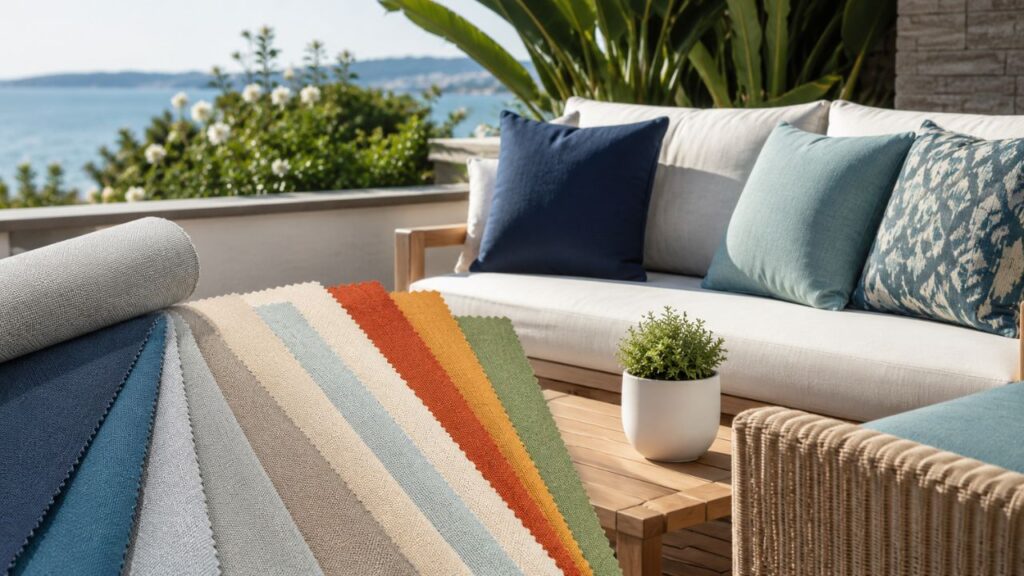
Marketing departments love the word “performance,” so let’s define it in concrete terms instead of vague ones. A sunbrella performance fabric typically delivers:
- Resistance to UV degradation for years of direct sun exposure
- Water repellency due to a fluorocarbon-free finish applied during manufacturing
- Resistance to mold and mildew growth, since the fiber itself doesn’t hold moisture the way cotton or rayon blends do
- Colorfastness that holds up against chlorine, salt spray, and pool chemicals
- Breathability that keeps cushions from feeling like sitting on a plastic bag in July
None of that means the fabric is indestructible. It’s not stain-proof in the way people sometimes assume, and it’s not immune to mildew if debris and standing water sit on it long enough. But compared to standard polyester or cotton-poly patio fabric, a sunbrella performance fabric is playing a different game entirely.
Sunbrella Indoor Fabrics vs. Outdoor Fabrics
A lot of people don’t realize this brand makes two distinct product families, and mixing them up leads to disappointment.
Outdoor collections are built for direct weather exposure — patio cushions, umbrellas, boat tops, awnings. These fabrics are heavier, more water-resistant, and priced accordingly.
Sunbrella indoor fabrics, sometimes marketed under lines with names like “Sunbrella Idea” or similar indoor-specific collections, are engineered for upholstery inside the home. They’re softer to the touch, come in a wider range of textures and patterns, and are designed to coordinate with interior design rather than survive a hurricane.
If you’re shopping for a sunbrella fabric sofa for your living room, you want the indoor line. If you’re re-covering deck furniture, you want the outdoor line. Retailers occasionally blur this distinction in product listings, so it’s worth double-checking the specific collection name before you buy.
Sunbrella Cushions and Outdoor Cushions: Where Most People First Encounter This Brand
For most homeowners, the very first contact with this brand happens through sunbrella cushions on a patio set, a porch swing, or a boat seat. It’s become something close to the industry standard for premium sunbrella outdoor cushions, and there’s a reason big-box store cushions rarely last past two summers while these do.
A few things worth knowing before buying replacement cushions:
- Foam matters as much as fabric. Even the best sunbrella outdoor cushions will mildew from the inside out if the foam core isn’t open-cell and quick-draining. Look for cushions that pair the fabric shell with marine-grade or quick-dry foam.
- Piping and stitching are the weak point. Thread used in construction isn’t always as UV-resistant as the fabric itself. Cheaper manufacturers cut corners here, and that’s usually where seams fail first.
- Custom cushions cost more but fit better. If you have an odd-shaped chaise or built-in bench seating, made-to-order sunbrella cushions from a local upholsterer often outlast off-the-shelf options.
Sunbrella Fabric Sofa and Upholstery Fabric: Bringing It Indoors
The move toward using a sunbrella fabric sofa in actual living rooms — not sunrooms, actual living rooms — has picked up noticeably over the past several years, largely driven by families with pets, kids, or both. Furniture brands like Crate & Barrel, Pottery Barn, and several boutique upholstery shops now offer sunbrella upholstery fabric as a premium option alongside traditional cotton or linen blends.
Why would someone choose this over a classic velvet or linen sofa? A few honest reasons:
- Spilled wine, juice, or coffee wipes off rather than soaking in
- No worrying about direct sunlight fading one side of the couch near a window
- Pet hair and claws don’t snag the weave as easily as they do with looser fabrics
The tradeoff is texture. Sunbrella upholstery fabric has a slightly more structured, canvas-like hand feel compared to soft-spun cotton or chenille. Some people love that texture; others find it a bit stiff for a sofa they want to sink into. It’s worth touching a fabric swatch in person before committing to a full sofa order.
Marine Vinyl and Marine Canvas Fabric: The Boat-World Cousins
Anyone who’s shopped for boat seating has run into both marine vinyl and marine canvas fabric, and it’s worth clarifying how these relate to the acrylic textile this whole article is about.
Marine vinyl is a completely different material — a PVC-coated fabric, not woven acrylic. It’s used heavily for boat seat covers because it’s fully waterproof (rather than water-resistant) and easy to wipe clean. But it doesn’t breathe, gets uncomfortably hot in direct sun, and can crack over time in cold climates.
Marine canvas fabric, on the other hand, is much closer to what this article covers. In fact, the original 1961 product launch was specifically developed as a marine-grade canvas alternative for boat tops and awnings, which is genuinely the material’s origin story. Many boat owners today still choose acrylic marine canvas fabric over vinyl for bimini tops and enclosures because of the breathability and lower heat buildup.
Quick Comparison Table
| Feature | Acrylic Performance Fabric | Marine Vinyl |
|---|---|---|
| Waterproof vs. water-resistant | Water-resistant | Fully waterproof |
| Breathability | High | Low, traps heat |
| Feel in direct sun | Stays cooler | Gets very hot |
| Typical use | Cushions, upholstery, tops | Boat seats, high-moisture zones |
| Cleaning | Mild soap and water | Wipe clean, vinyl cleaner |
| Longevity outdoors | 5–10+ years | 3–7 years |
Color Spotlight: Black and Ocean Blue
Out of hundreds of available shades, two colors come up in searches constantly enough to deserve their own section: black and ocean blue.
Black is the quiet workhorse of the lineup. It hides dirt well, pairs with almost any exterior color scheme, and tends to show less visible fading over time simply because darker tones mask gradual color shift better than pastels do. It’s a common choice for modern outdoor sectionals and boat interiors alike.
Ocean blue leans into the coastal aesthetic this brand built its reputation on. It’s one of the more requested shades for marine canvas fabric tops and nautical-themed patio sets, and it photographs beautifully against white deck furniture or teak wood. If you’re going for that classic yacht-club look, ocean blue is usually the first swatch people reach for.
Is Sunbrella Worth It? A Straight Answer
Let’s address the two questions that probably brought a good number of readers here: is sunbrella worth it, and separately, is sunbrella fabric worth it for a specific project like a sofa or cushion set.
Here’s my honest take after years of watching both cheap and premium fabric age in real conditions.
It’s worth it if:
- You live somewhere with intense sun, humidity, or salt air
- You have kids, pets, or frequent outdoor entertaining
- You plan to keep the furniture for 5+ years
- You value fewer replacement purchases over a lower upfront price
It’s probably not worth the premium if:
- You’re furnishing a covered, shaded patio with minimal sun exposure
- You replace outdoor cushions every couple of seasons anyway for style reasons
- Budget is the primary constraint and the furniture is short-term (a rental property, a starter apartment balcony)
The math genuinely comes down to cost per year of use rather than price per yard. A cushion set that costs 40% more but lasts three times as long isn’t actually the more expensive option — it’s the cheaper one, once you run the numbers over a decade.
How to Clean Sunbrella Fabric the Right Way
Knowing how to clean sunbrella fabric properly is honestly what determines whether it lasts the 10 years it’s capable of, or half that. The good news: the process is simpler than most people expect.
For light, routine cleaning:
- Brush off loose dirt and debris
- Hose down the fabric
- Prepare a solution of mild soap (a natural, non-detergent soap works best) and lukewarm water
- Use a soft-bristle brush to work the solution into the fabric
- Rinse thoroughly, working from top to bottom so soap doesn’t dry back into the weave
- Air dry completely — never machine dry
For deeper stains or mildew: A diluted bleach solution (about one cup of bleach per gallon of water) can be used because the acrylic fiber, unlike cotton, doesn’t degrade from occasional bleach exposure. Let it sit briefly, then rinse well.
A few mistakes to avoid:
- Skip fabric softeners entirely — they break down the water-repellent finish over time
- Don’t scrub aggressively with stiff brushes, which can fray the weave
- Avoid drying in direct sun immediately after washing while damp; let it air dry in shade first when possible
- Reapply a fabric protectant spray every couple of years to restore water beading
Cushion covers can typically be removed and either hand-washed or run through a gentle cycle without hot water, though checking the specific product tag first is always the safer call.
Sunbrella Company, Glen Raven, and Sunbrella.com: Sorting Out Who’s Who
There’s understandable confusion about the corporate structure here, so let’s untangle it plainly.
Glen Raven is the parent textile manufacturer, founded in North Carolina in 1880. The sunbrella company operates as a brand and division under Glen Raven rather than as a fully separate corporation. When people search for glen raven sunbrella or sunbrella glen raven, they’re really asking about the relationship between the manufacturer and its flagship product line, and the answer is that they’re one and the same operation, just referenced by two different names depending on the context — the corporate parent versus the consumer-facing brand.
If you want manufacturer-direct information, warranty details, fabric care guides, or a dealer locator, sunbrella com is the official destination, and it’s generally the most reliable source over third-party retailer pages that sometimes carry outdated care instructions.
Sunbrella Customer Service
For warranty claims, fabric identification, or finding an authorized upholsterer in your area, sunbrella customer service is typically reached through the contact channels listed on the official site rather than through individual retailers, who often can’t resolve manufacturing-level issues like fading outside the expected range or seam defects. Keeping your original purchase receipt and fabric swatch on hand speeds up any warranty conversation considerably, since most residential fabric lines carry a multi-year limited warranty against fading.
Common Search Variations (And Why They All Mean the Same Thing)
If you’ve landed here searching sun brella, sunbrells, or sumbrella, you’re in the right place — these are simply common misspellings or phonetic guesses at the same Glen Raven brand name. Search engines are good enough now to catch the intent behind sunbrells or sumbrella and route people to the correct product information, but it’s worth knowing the correct spelling going forward so you can find official documentation, warranty pages, and authorized dealers without sifting through unrelated results.
Frequently Asked Questions
Is sunbrella fabric worth it for a first-time patio furniture purchase? For most climates with real sun exposure, yes. The upfront cost difference pays for itself in reduced fading and fewer cushion replacements within the first three to four years.
What is sunbrella fabric made of exactly? Solution-dyed 100% acrylic fiber, meaning the color is embedded in the fiber during production rather than applied afterward.
Can I use sunbrella indoor fabrics outdoors? No. Indoor collections lack the UV and water-resistant treatments of the outdoor line and will fade or mildew much faster if left exposed to weather.
How do I clean mildew off outdoor cushions? A diluted bleach and water solution, applied with a soft brush and rinsed thoroughly, is the manufacturer-recommended approach for the acrylic fiber used across the outdoor lineup.
Is marine vinyl better than fabric for boat seats? It depends on priority. Marine vinyl is fully waterproof and easier to wipe clean, but marine canvas fabric breathes better and stays cooler in direct sun.
Does the fabric fade over time? All outdoor fabric fades eventually under UV exposure, but solution-dyed acrylic fades far more slowly and evenly than surface-dyed alternatives.
Where can I buy fabric by the yard directly? Sunbrella com lists authorized dealers, and many upholstery and marine fabric retailers carry the line by the yard for DIY cushion or boat top projects.